


COMMENT: China vows to keep trading with Iran as US "economic D-Day" targets Tehran's lifelines
25 minutes ago
The arrest of over 30 business entrepreneurs associated with a religious order has reawakened some of the worst phantoms of Turkey’s recent past, especially after administrators were appointed to take over their businesses.
Gold by the kilo
A total of 32 individuals were remanded in custody on August 16, including the leader of the Suleymanci order, Alihan Kuris. Six other suspects were conditionally released. The detainees will face charges of forming a criminal organisation, money laundering and swindling public institutions to obtain tax rebates.
The 33 companies placed in the hands of administrators (kayyim) include the high street shoe chain Ayakkabi Dunyasi. Prosecutors claim to have detected surprisingly large transactions involving these companies, including cash-funded capital raises and transfers of up to $100mn abroad. Two hundred kilos of gold were reportedly seized in a police raid on an address associated with Kuris’s brother Hilmi Tuna Kuris.
The Suleymanci network is reportedly building a headquarters in Cologne, Germany, at a cost of $70mn.
Ghost of Gulen
The case calls to mind the attempted military coup of 2016, led by officers associated with the branch of the Nurcu sect loyal to the late self-exiled US resident Fethullah Gulen, which had deeply penetrated state institutions. The failure of the coup was followed by a crackdown which included the seizure of hundreds of companies owned or part-owned by Gulen’s adherents, such as Bank Asya and Koza Gold
Some of these firms were returned to their owners following legal proceedings; others remain in the trusteeship of the public-sector Savings Deposit Insurance Fund (TMSF) or have been closed or sold off. Sales of Gulenist companies and shareholdings have fetched some $1.5bn for the public purse.
Common denominators
Large or small, the many Sufi or Naqshbandi orders and brotherhoods have much in common. They typically run Koran courses, private schools and universities or student hostels, fostering reverence for their founders, recruiting followers for their particular – sometimes radical – teachings and traditions within Islam, and raising donations.
The orders function without legal status, regulation, records or accounts, guided by hereditary leaders. They also operate via the companies, tax-free charities, associations and media channels formally owned by their members. The wealth they accumulate is managed by trusted disciples, often in cash or real estate.
Political connections
These opaque entities have long rubbed shoulders with Islamist or right-of-centre politicians and political parties, delivering votes and support in kind in return for public tolerance, patronage and influence, including parliamentary candidacies and ministerial posts. Their associations and foundations are active in state schools under protocols with the Ministry of National Education.
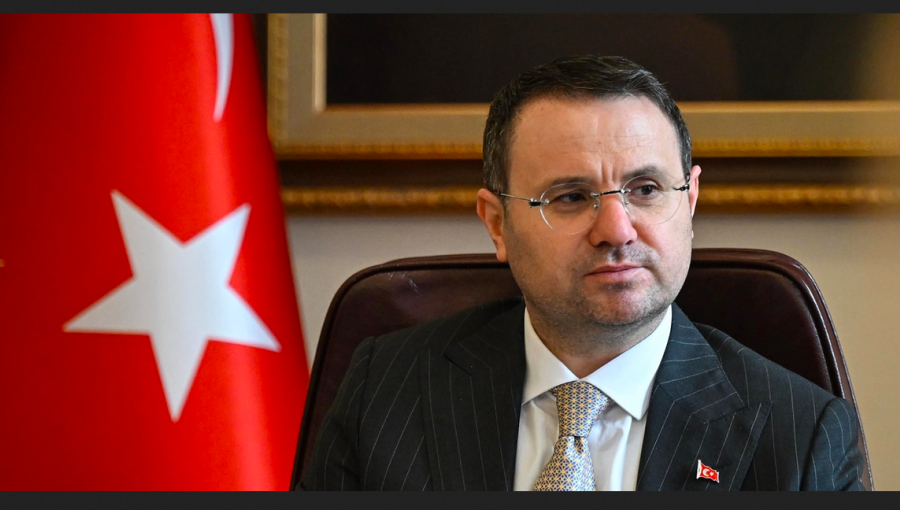
Former Istanbul chief prosecutor turned justice minister Akin Gurlek (Credit: adalet.gov.tr).
Svante Cornell, co-founder of the Institute for Security and Development in Stockholm, Sweden, has gone so far as to describe Turkish politics under President Recep Tayyip Erdogan’s ruling Justice and Development Party (AKP) as a coalition of religious brotherhoods and orders. The breakdown of the AKP’s symbiosis with Gulen may only have strengthened its relationship with other orders. According to Justice Minister Akin Gurlek, the current probe “is definitely not an operation against a religious view, a religious community or civil society organisations. This operation is entirely directed at a financial complex”.
Leadership battles
Opposition media have linked the investigation to the challenge that Alihan Kuris is facing for the leadership of the Suleymanist community from his cousin, Fatih Suleyman Denizolgun, a former AKP MP. The latter has accused Kuris of complicity in the death of the order’s previous leader, Ahmet Arif Denizolgun, in 2026. Now Denizolgun’s remains are to be exhumed to determine the cause of his death.
No action, meanwhile, has been taken against prominent members of the Menzil order, although evidence of murky finances and accusations of missing gold have surfaced since it was thrust into a three-way leadership contest by the death of “Sheikh” Abdulbaki Erol in 2023. The factions are fighting courtroom battles over Menzil properties in Turkey and the Netherlands.
The day of the kayyim
Of wider concern is the frequency with which administrators are being appointed to oversee the affairs of private organisations suspected of wrongdoing, but without any proven crime or convictions.
The most striking case is the removal of the elected leadership of the main opposition Republican People’s Party (CHP) by an Ankara court in May this year on grounds of alleged irregularities at a national convention. The party was then placed in the hands of former leader Kemal Kilicdaroglu. The CHP’s Istanbul branch had already suffered a similar fate.
Dozens of elected mayors from opposition parties have been deposed by the Ministry of the Interior in the past few years, mostly following their detention and pending investigations into corruption or other allegations. In cases where anti-terrorism legislation has been invoked, this has led to their replacement by Interior Ministry appointees.
Payments and poultry
Within the past 15 months, payments companies Papara, Papel and Klon have all been handed over to kayyim from the TMSF, along with other associated companies, pending investigations into their claimed involvement in unlicensed online betting and laundering of the proceeds.
June saw the appointment of “audit administrators” to 13 poultry companies “strongly suspected” of “unjustified” price increases. The 13 included household names like Brazilian-owned, Istanbul stock exchange-listed Banvit. Collectively, they accounted for about 80% of Turkey’s poultry meat supply. Announcing the news himself. Minister Gurlek praised the cooperation between the ministries of Justice, the Interior, Trade and Treasury & Finance. This followed dawn raids on the companies’ facilities and the detention of officials for questioning.
“Ownership risk”
The audit administrators were not to run the broiler farms but would have had veto rights over major decisions. However, their appointment was revoked within a week following court appeals and warnings from business leaders about the consequences for investor perceptions.
Officials of the Turkish Industry and Business Association (Tusiad), which represents many of the country’s largest companies, went on trial for “spreading false news” in 2025 after roundly criticising the state of the country. They later received suspended sentences. The poultry U-turn suggests it is highly unlikely that kayyim would ever be appointed to top-tier enterprises.
Even so, businesses, banks and investors might one day wake up to find businesses they work with or invest in being managed by an administrator. Veteran columnist Ruhi Sanyer has coined the phrase “ownership risk” to refer to this possibility. He recalls that minority shareholders were never compensated after the state seized two Uzan Group power companies back in 2003 for failing to fulfil their obligations under concession contracts. Shareholders in Gulen companies merely saw their shares plummet temporarily.
The IntelliNews PRO service includes access to reports, exclusive market data, and more news that decision-makers care about. Stay ahead of the market with IntelliNews PRO.
Sign Up Now


