
_19_1787148681.jpg)
_1787079338.jpg)

Croatia's foreign-owned banks face a 50% profit tax after their euro boom
17 hours ago
China has told Japan not to test its patience over nuclear weapons, in an exchange that has moved an Asian arms race from a strategist’s tabletop war-game to debates on policy priorities that foreign ministries are arguing about in public.
Beijing issue Tokyo with a stringent “do not play with fire” warning on August 20 after Japanese Prime Minister Sanae Takaichi launched a running debate on whether the country should drop its ban on having nuclear weapons – a ban imposed on Tokyo in the post-war 1967 constitution - a debate her predecessors would have shut down in a day.
Like Germany, non-aggression policies are baked into Japanese DNA - not only written into the fundamental law but deeply engrained into popular culture. To open a debate on obtaining weapons of mass destruction is a radical left turn for Tokyo – and made especially poignant as it comes in the month when Japan commemorates the victims of the Fat Man and Little Boy nuclear strikes eight decades ago.
Beijing is complaining but it’s not Chinese aggression in the Indo-Pacific region that is driving the debate: it is the war in Ukraine.
Four years of a major war in Europe have taught every government in the Global South the same lesson: the West does not attack countries that have nuclear weapons. Ukraine gave up the third-largest arsenal in the world in 1994 in exchange for assurances that proved worthless. No capital watching what has unfolded in the Donbas has failed to draw the conclusion: if you have the bomb, Nato won’t attack you straight on. What is happening in Asia now is the same logic arriving in a different theatre.
The lesson has not been lost on Chinese President Xi Jinping. China got a nuclear weapon about two decades after the US and the USSR, but since then has expanded its nuclear arsenal to some 600 warheads with plans to reach 1,000 by 2030, compared to the more than 3,000 that both the US and Russia hold. At the same time it is keen to limit the proliferation of these deadly weapons in the rest of the region. In a position paper submitted to the UN, China's foreign ministry asked that Japan's "dangerous tendency to seek nuclear weapons" be added to the agenda, arguing that Japan "has long produced and stockpiled plutonium materials far exceeding the actual needs of its civilian nuclear energy programme, giving it the capability to achieve a 'nuclear breakout' within a short period", the South China Morning Post reported on April 30. Chinese state media has since floated the argument that the international community should resolutely oppose Japan's pursuit of nuclear weapons with the same vigour that the Trump administration is opposed to Iran getting the bomb.
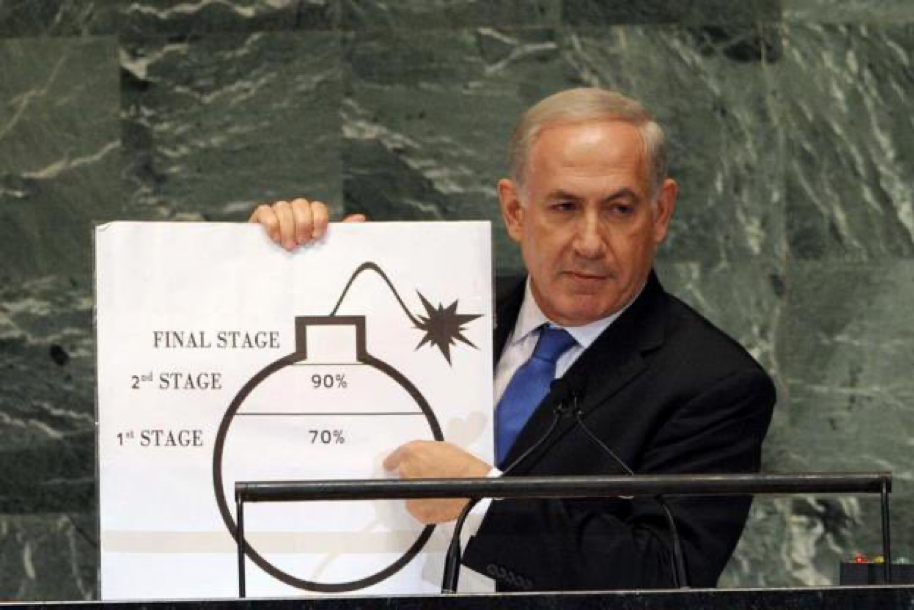
Plutonium is the elephant in the room. Tokyo cannot easily justify its mounting stockpile, accumulated over decades of reprocessing, as a purely civilian power project. The technical distance between a passive plutonium stockpile and an atomic bomb is a few months, not several years of processing and development. Successive Japanese governments have treated the ambiguity as a quiet deterrent in itself. (Iran’s 400kg of highly enriched uranium that is now sitting in a bunker under a mountain has played a similar role.) But now Takaichi has done something different - she has let people talk about it.
North Korea wild card
Japan marked the 81st anniversary of Hiroshima on August 6 and Nagasaki on August 9, the two dates on which the country's nuclear taboo is renewed each year, and it was in that week that the debate over the non-nuclear principles ran hardest. Chief Cabinet Secretary Minoru Kihara has restated the official line that Japan remains committed to the three non-aggression principles and to "advancing its efforts toward realizing a world without nuclear weapons".
What has changed is the neighbourhood. North Korea’s Kim Jong Un understood the Ukrainian lesson well before the war with Russia broke out. US President Donald Trump said on August 19 that North Korea has "57 very powerful nuclear weapons" and that he expects to meet Kim Jong Un before the end of the year, the Washington Post reports - an acknowledgement of Pyongyang’s three-decade-long nuclear development programme. One of the most backward economies on earth, having a bomb gives Pyongyang enough clout to pulling a personal meeting with the “most powerful man on earth” boosting Kim’s own prestigue in the process. He is going to love that.
The number of warheads Kim actually has remains unclear, but it is clear he controls a working nuclear weapon capability and is an existential threat to his immediate neighbours.
Pyongyang has regularly rubbed the message in. In August it launched yet another ballistic missile test that landed in the sea just outside Japan’s territorial waters. That was followed with a short-range launch on August 12 ahead of US-South Korean maritime drills, and separately attacked Japan over a Japanese missile test on August 6. In May the North changed its constitution to say a nuclear strike is automatically triggered if its leadership is decapitated – a direct consequence of Operation Absolute Resolve on January 3 where the US government kidnapped the sitting president of Venezuela Nicolas Maduro as well as the decapitation of the Iranian leadership in the first days of Operation Epic Fury that killed the Supreme Leader Ayatollah Ali Khamenei.
Iran’s nuclear ambitions
Tehran’s refusal to abandon the possibility of developing a nuclear weapon is what produced Operation Epic Fury, the US-Israeli assault that began on February 28, with the specific goal of removing Iran’s uranium stockpile and limiting its missile development and production programme. Ironically, Tehran has said it has no ambitions to develop a nuclear missile but insists on keeping a uranium enrichment capability for civilian purposes – Iran operates one Russian-built nuclear power station and has plans for a second.
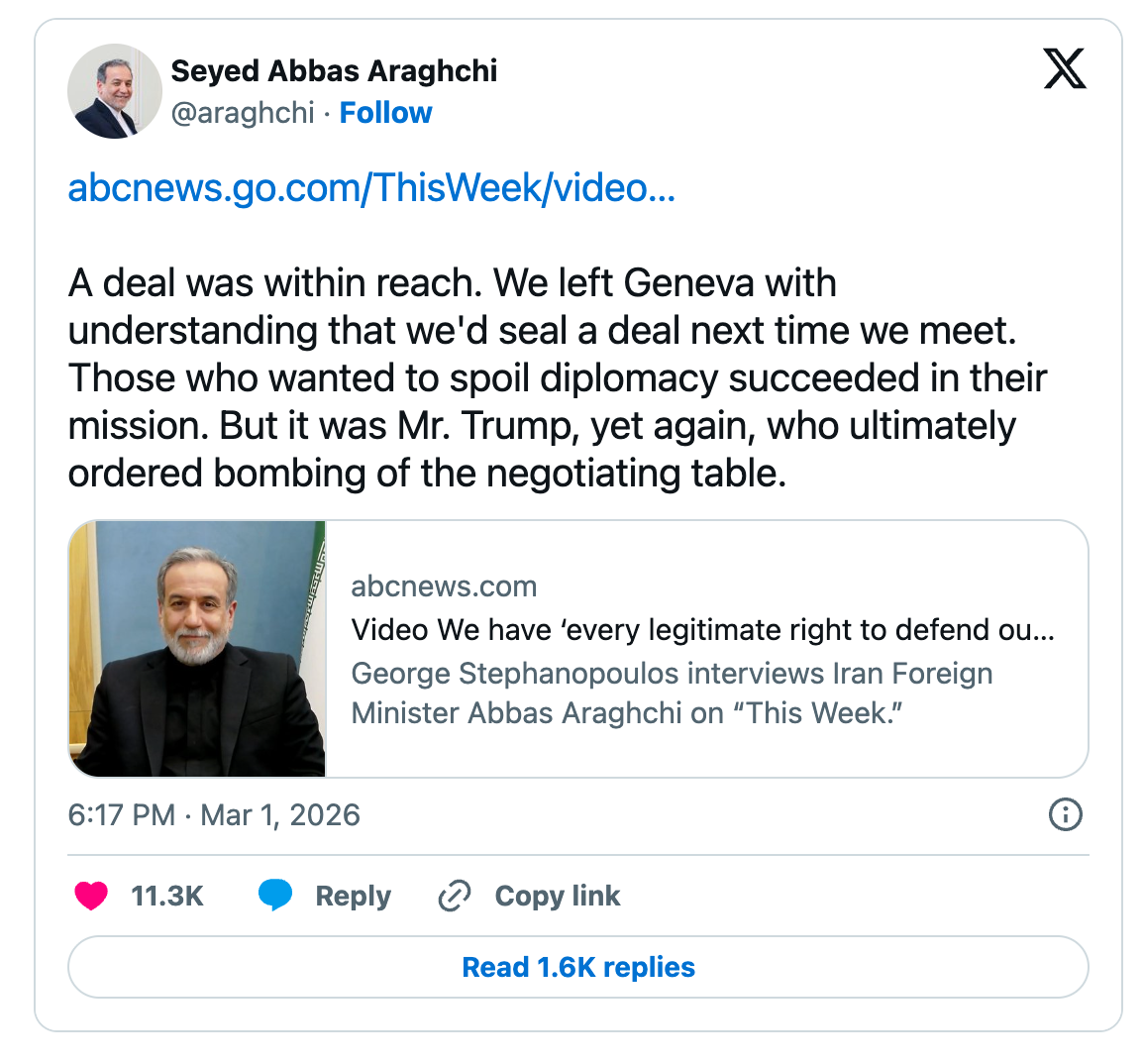
The fact that Iran was using its 400kg as negotiating leverage was confirmed at a meeting between Iranian Foreign Minister Abbas Araghchi and US envoys Steve Witkoff and Jared Kushner, mediated by Oman, in Geneva on February 26 – two days before Operation Epic Fury began – where he said a deal had been agreed that included giving up the uranium only to wake up a day later to the news of bombs falling on Tehran. Araghchi was furious.
“A deal was within reach. We left Geneva with the understanding that we’d seal a deal next time we meet. Those who wanted to spoil diplomacy succeeded in their mission. But it was Mr Trump, yet again, who ultimately ordered bombing of the negotiating table,” Araghchi said in a social media post.
IntelliNews asked what happens if the Geneva talks fail a fortnight earlier. The lesson Tehran drew from this fiasco, being attacked mid-negotiation, is you cannot trust the White House and the only thing it understands is force.
CRINK Alliance
Japan is rightly nervous about China which as IntelliNews has been reporting has become a lot more aggressive in the Indo-Pacific region, but adding to these specific concerns is the more general emergence of the CRINK alliance (China, Russia, Iran and North Korea) - a loose military cooperation between these four non-aligned powers that are being driven together by international sanctions and the escalating East-West clash. This is no small thing: between them they have half of all men under arms on the planet and they are all investing heavily into expanding their militaries. All three of China, Russia and North Korea have been actively supplying Iran with weapons and technology in its fight with the US to devastating effect. Tehran has taken “Command of the Reload” in the asymmetrical war: Iran can fire more drones and missiles at the US forces than they have air defences to stop them.
As IntelliNews reported in May, Russia and China describe their partnership as at the “highest level in history,” while North Korea's unlikely economic revival is being underwritten by both. Pyongyang is enjoying an unlikely boom thanks to the billions of dollars Moscow has been paying it for arms and soldiers. Russia is rearming Iran across the Caspian, beyond the reach of any Western navy. None of the four needs a treaty for Tokyo's problem to get worse.
Double front nightmare
The evolving CRINK military alliance has added urgency to the problem of what to do if Russia and China coordinate their attacks simultaneously attacking Nato members in Europe and the US-backed Taiwan in Asia. The short answer is: the Western allies don’t have a plan, The Atlantic just reported. This scenario has become even more scary after the US admitted that it has depleted its missile arsenal to catastrophically low levels after six months of campaigning in the Persian Gulf. At the same time, European Commission President Ursula von der Leyen’s €800bn ReArm programme to modernise Europe’s military has barely got underway.
Lithuania's president said in July that intelligence points to possible Russian provocations, and Vilnius has warned that the Baltic states and Poland could be next. Poland's Prime Minister Donald Tusk has already hinted that Warsaw could seek its own nuclear deterrent - the European version of the same argument Takaichi is allowing in Tokyo. And German Chancellor Friedrich Merz has floated the idea of nestling under the French nuclear umbrella.
Another reason for the epoch changing attitudes to WDMs is the last of the Cold War security infrastructure that used to contain these tectonic forces has just expired. New START missile deal was the last treaty capping US and Russian strategic warheads, but expired in February with nothing to replace it. There is now no legal ceiling on the two largest arsenals for the first time since 1972, and no forum in which a Japanese or Polish debate about going nuclear could be talked down. The end of START cleared the way for a new nuclear arms race which is already underway.
Cross the red lines
That brings the escalation back to Europe, where a British-built drone has cross another of the Kremlin’s redlines. Ukraine has been using the Nyan, a jet-powered strike drone designed and built in Wiltshire by Callen-Lenz, a BAE Systems subsidiary, for deep strikes into Russia, The Times reported on August 16. It carries just under 20kg over more than 250km at around 120 knots, and it has been used against Russian oil refineries.
Russian Foreign Minister Sergei Lavrov said this week that Moscow has the right to regard British involvement in strikes on Russian territory as “direct participation” in the war. Russia's embassy in London put it more concretely: "The deeper its involvement in the conflict and the greater its support for Kyiv's terrorist machinery, the higher the price it will pay," Forces News reported. Lavrov did not say what Russia would do.
So far, the argument goes, the West has been supplying its friend in Ukraine in its fight against Russia. But now British-made weapons are flying into Mother Russia proper and striking high value industrial and military targets, the Kremlin can argue that London is now actively attacking Russia via its proxy in Kyiv. That makes the factory in Wiltshire a legitimate military target. No one is expecting Russian missiles to start flying over “this green and pleasant land,” (although Wiltshire is in range of Russia’s new Oreshnik ICBMs), but the Kremlin does has a record of assassinations and sabotage attacks on British soil and elsewhere. Eventually, Russia will retaliate if enough of its red lines are cross.
Every Western escalation that goes unanswered tightens the CRINK ties. Every CRINK countemove sharpens the case in Tokyo, Berlin and Warsaw for beefing up their own defences. Japan is not in Nato. It is one of the alliance's four Indo-Pacific partners, which means the guarantees it relies on are American rather than collective - and American guarantees are precisely what the Ukrainian precedent has devalued. How to fill that gap is what Takaichi's debate is really about.
The IntelliNews PRO service includes access to reports, exclusive market data, and more news that decision-makers care about. Stay ahead of the market with IntelliNews PRO.
Sign Up Now


