Chinese BRI investment announcements in Africa rise 254% y/y in H1 to record $33.5bn
1 minute ago
Russia launched a wave of ballistic missiles at Kyiv overnight on July 26, striking a residential building in the capital, the Kyiv Independent reported, while Ukraine's air force said Russian forces attacked with 110 air assets in total.
Russia fired a selection of its most powerful missiles including: a Kh-59/69 guided missile, seven Iskander-M/S-400 ballistic missiles and 136 Shahed, Gerbera, Italmas and decoy Parodiya drones — of which air defences downed or jammed five of seven ballistic missiles, the guided missile and more than 100 drones, Ukrainska Pravda reported.
The exchange is the latest round in an escalating tit-for-tat: Ukrainian drones have repeatedly struck Wildberries logistics hubs deep inside Russia in recent days — hitting sites in Elektrostal and Tambov that Kyiv says double as military logistics depots — while Moscow has answered each time with some of its heaviest bombardments of the war, including one of its largest single barrages after a strike on Wildberries' St Petersburg warehouse.
A map circulated on X on July 22 tallying the damage so far showed 3 Wildberries warehouses destroyed, 2 damaged and 15 still standing, with 18 of Russia's 20 largest Wildberries warehouses within range of Ukrainian drones — leaving only the Novosibirsk and Vladivostok sites, both relatively small, out of reach.
In Ukraine, a Russian drone strike destroyed an Epicentr home-improvement hypermarket in Kryvyi Rih on July 26 — the third Epicentr store Russia has destroyed in the same region since the invasion began, according to Euromaidan Press, though no casualties were reported. Russian sources framed the site as a drone-component storage facility; Ukrainian reporting describes it simply as a hypermarket.
In Russia, a Ukrainian drone strike on tourist accommodation in Kyrylivka, in Russian-occupied Zaporizhzhia, killed civilians over the weekend — regional governor Yevgeny Balitsky said 12 people died, including four children, and called it a deliberate attack on civilians; other outlets have put the toll as low as eight. IntelliNews could not independently verify the casualty figures or the deliberate-targeting claim, which comes from a Russian regional official; both the Kirilovka strike and its death toll are corroborated by multiple international outlets, though exact figures vary.
Ukrainian President Volodymyr Zelenskiy separately said Russia has continued striking Ukraine's agricultural and bread-production facilities, warning that Moscow's blockade of Black Sea grain exports risks driving up food costs "in the Middle East, North Africa, and many other regions of the world" — a repeat, he said, of the food-security shock triggered by Russia's 2022 invasion.
Separately, job adverts have appeared at Russian companies for specialists in military mobilisation work, echoing similar postings that appeared shortly before Russia's September 2022 partial mobilisation — still the only general call-up of the war. It is too early to say whether the postings point to a fresh mobilisation drive after Russia's September parliamentary elections, but they are the clearest signal yet that one may be under consideration. Zelenskiy himself has pointed to the numbers behind that speculation: he says Russia has recruited 221,000 people to its armed forces so far this year, against nearly 225,500 casualties — including 131,000 killed — in the same period, with Ukrainian officials arguing that mismatch is what is now pushing Moscow toward a fresh call-up.
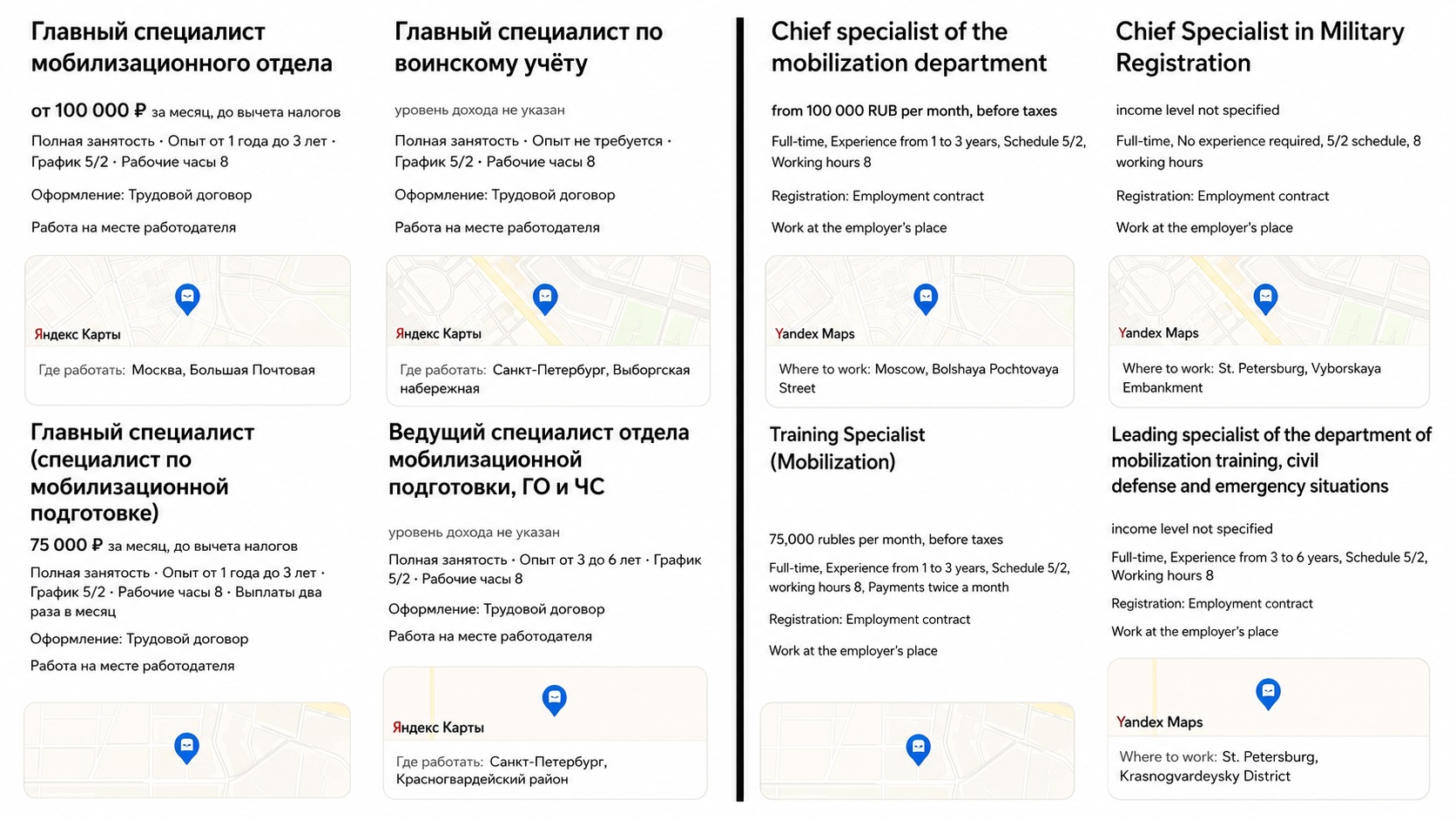
Job listings for 'chief specialist' roles in military mobilisation and registration departments, Moscow and St Petersburg (source: X).
The IntelliNews PRO service includes access to reports, exclusive market data, and more news that decision-makers care about. Stay ahead of the market with IntelliNews PRO.
Sign Up Now