


Nikkei surges 2.1% as chip and AI stocks lead gains
1 hour ago
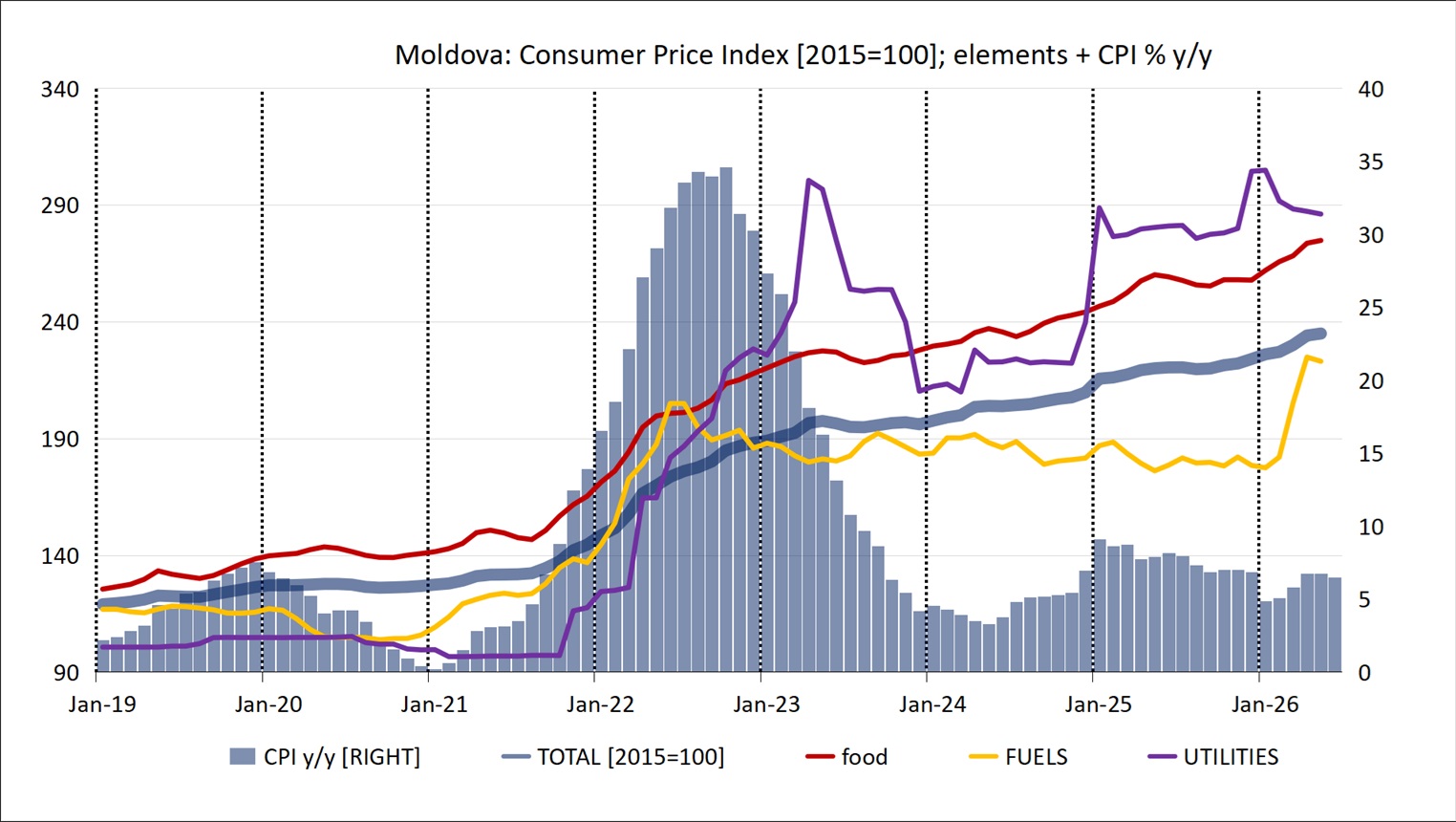
Consumer prices in Moldova (chart) fell by 0.1% month on month in June, the first monthly decline of 2026, according to data published by the National Bureau of Statistics (NBS). Despite the monthly easing, annual inflation remained elevated at 6.5%, with transport, energy and several food categories continuing to drive price pressures, and the monetary authority anticipates further inflation.
The monthly decline was led by lower food and fuel prices. Vegetable prices dropped by 12.2% from May, egg prices fell by 5.8%, and fuels became 4.6% cheaper. Diesel prices declined by 10.1% over the month, while petrol prices fell by 6.9%, contributing significantly to the overall decrease in the consumer price index.
The downward trend was partly offset by higher prices for other products and services. Fruit prices increased by 5.5% during the month, while milk and dairy products rose by 0.8%. Passenger transport services became 1.6% more expensive, including international air transport.
On an annual basis, transport-related items recorded the strongest price increases. Passenger transport fares were 27.7% higher than in June 2025, while diesel prices rose by 38.9%, petrol by 24%, and liquefied petroleum gas by 14.2%. Electricity prices increased by 15.2% over the same period.
Among food products, eggs registered the largest annual increase at 27.9%, followed by vegetables, bread and dairy products. In contrast, natural gas and district heating prices declined compared with a year earlier, helping to contain overall inflation.
Despite the moderation in June, the National Bank of Moldova expects inflationary pressures to strengthen again over the coming quarters. The central bank projects annual inflation to rise to around 8% in the third quarter of 2026 and exceed 8.5% by the end of the year before gradually easing back into its target range in the second quarter of 2027.
With this in mind, the BNM hiked the monetary policy rate to 7% in June, from 6.5% previously.
The latest data suggest that June's decline reflects temporary relief from lower fuel and seasonal food prices rather than a sustained easing of inflation, with the central bank continuing to anticipate renewed price pressures later this year.
The IntelliNews PRO service includes access to reports, exclusive market data, and more news that decision-makers care about. Stay ahead of the market with IntelliNews PRO.
Sign Up Now


