


Kia to invest $649mn in Mexico EV plant
3 hours ago
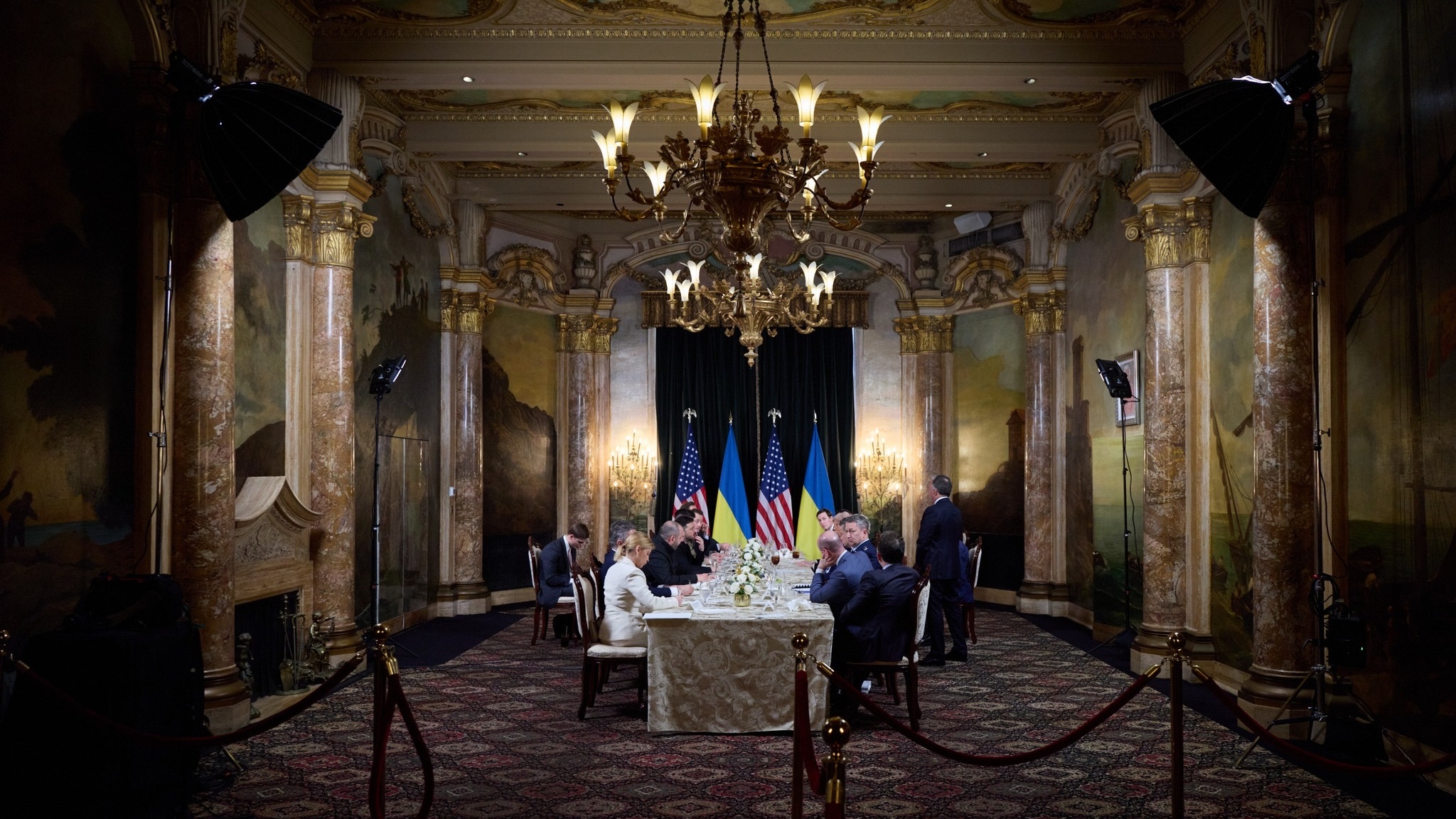
There was no breakthrough at the two-hour meeting between Ukrainian President Volodymyr Zelenskiy and US President Donald Trump at Mar-a-Lago in Florida peace talks on December 28 as negotiations remain stuck on the issues of land and security guarantees.
Trump said that a deal is “closer than ever” and that agreement on “95% of the points” had been reached, but “thorny questions” remain – especially over territory. Working groups are scheduled to take up the baton in the coming weeks and a deal still could be reached soon, Trump said in a joint press conference after the meeting.
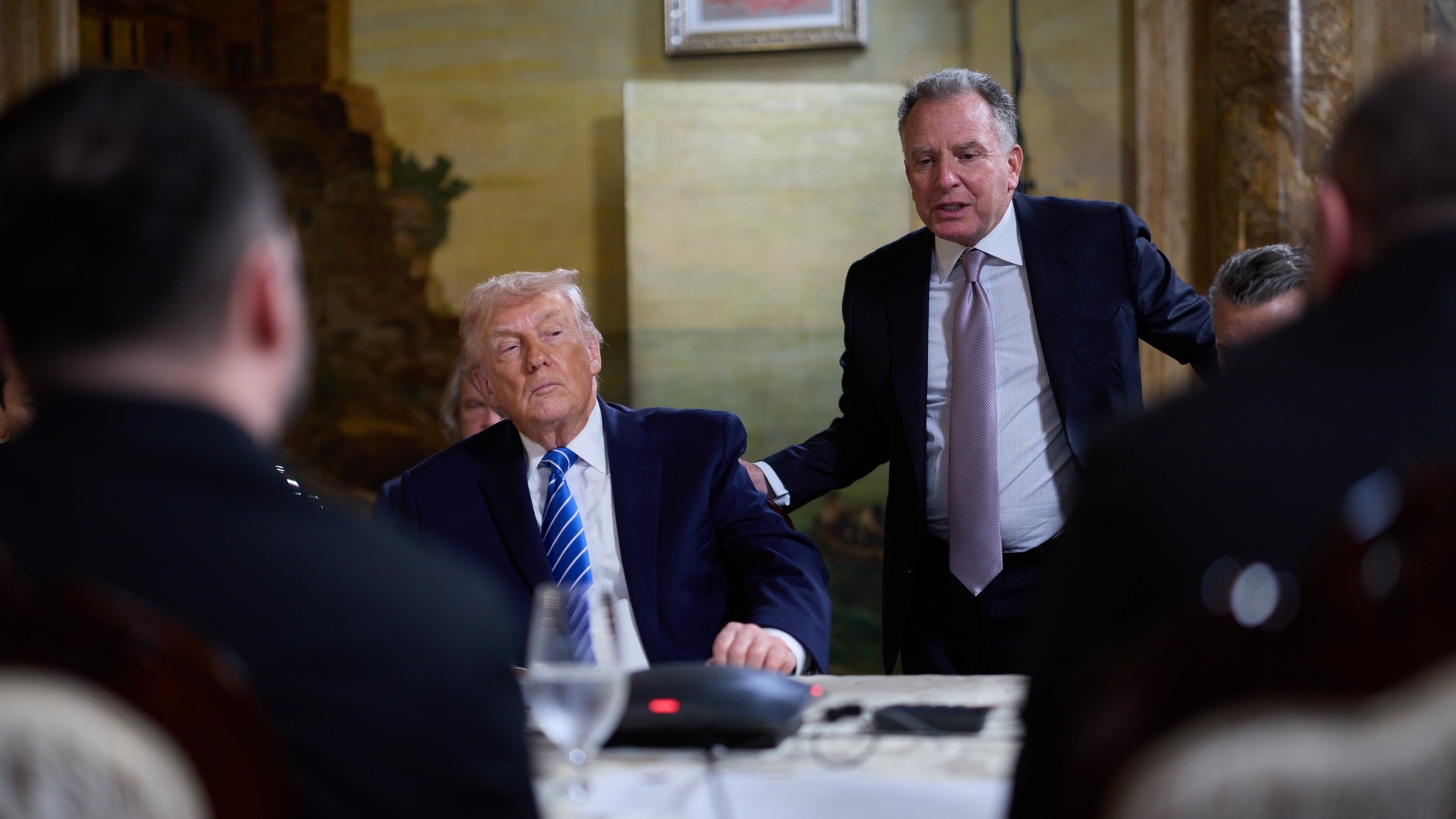
“I think land is the main issue. Some have been taken, some maybe up for grabs, maybe taken in the next few months. You're better off making a deal now,” Trump said, looking at Zelenskiy during their post-meeting press conference. “Ukraine has fought hard and brave. Russia wants it to end too. A lot of brave people have died, unfortunately.”
Despite the failure of the talks to close the final mile in their two positions, Zelenskiy put a brave face on it and praised the US team for the progress that has been made.
“I thank Donald Trump for a great meeting. We had a substantive discussion on all issues, and we much appreciate the progress achieved by American and Ukrainian teams in recent weeks,” Zelenskiy said. “Special thanks to Steve Witkoff and Jared Kushner for their engagement and full commitment, as well as to our team — first of all, to [the head of Ukraine’s negotiating team] Rustem Umerov and [Brigadier General and Deputy Commander of Ukraine’s armed forces] Andrii Hnatov.”
Zelenskiy said they discussed all the aspects of the peace framework and “achieved significant results.” They also discussed the sequence of further actions.
“We agreed that security guarantees are key on the path to achieving a lasting peace, and our teams will continue working on all aspects,” he said. “We agreed that our teams would meet as early as next week to finalize all discussed matters. We also agreed with President Trump that he will host Ukrainian and European leaders in Washington, D.C., in January. Ukraine is ready for peace.”
Despite the media circus, the talks remain stuck on the two most difficult points: land and security.
“Look, cutting through it all, an end to Russia's war is still a long way off. There are no agreements on security guarantees, no western partner of Ukraine ready and willing right now to pledge anything strong enough to deter Russia. And Trump, who continued today to heap praise on Putin and initiated a call with him before meeting Zelenskiy, is unwilling to do the tough work that is necessary to press Russia to negotiate an end to its invasion in earnest,” Kyiv correspondent for the Financial Times Christopher Miller said in a social media post. “Trump wants an end to the war, and he doesn't care how it happens. Putin has been very clear he wants to continue fighting. Ukraine, understandably, is unwilling to surrender and be subjugated to Moscow. So, where does this leave us? Far from peace and with a lot of work still to do.”
After the Trump phone call with Putin and the meeting with Zelenskiy, the Kremlin is sticking to its hard line: while there seems to be limited wiggle room on all the points on the 27-point peace plan (27PPP) thrashed out at a Moscow meeting on December 3 with Putin, the one point where the Kremlin is not prepared to compromise at all is on the question of the Ukrainian forces quitting the Donbas completely. In his call with Trump, Putin said Kyiv should abandon Donetsk “without delay”. Trump has taken himself out of this debate, saying that is a question for the “invaders and defenders to iron out”.
Security guarantees
Zelenskiy suggested that a lot of progress had been made on security guarantees, saying at pone point that “100% agreement” had been reached but gave no details.
The US has from the start of the 28-point peace plan (28PPP) offered Article 5-like security agreements. A draft version of the plan leaked to the press includes a military component in the bi-lateral agreement in a 10-year deal.
Zelenskiy’s 20-point peace plan (20PPP) submitted to the Kremlin on Christmas Eve ups that period to 15-years and according to Zelenskiy’s comments in Florida this increase has been agreed.
Zelenskiy described the security guarantees discussed with Trump as "strong," though adding that "for now, they are not permanent."
"I told (Trump) that the war has been going on for almost 15 years, and we would really like the guarantees to be longer," Zelenskiy said, The Kyiv Independent reported.
Zelenskiy reportedly was pushing Trump to extend it even longer to 30- to 50-years. Neither president commented on these details but suggested that talks on the details are ongoing. Zelenskiy called a US security deal potential a “historic decision”.
“The war has already lasted nearly 15 years,” Zelenskiy said. Trump responded that he would consider it but made no commitment. It remains unclear how the Kremlin views a bi-lateral security deal between the US and Ukraine.
EU peacekeepers plans
Plans for a three-party security guarantee between Ukraine, the US, and Europe, are also being discussed, but have made less progress, according to the comments by the two presidents.
Putin has been adamantly opposed to Ukraine’s Nato membership, but suggested during the failed 2022 Istanbul peace deal that the Kremlin would accept bi-lateral security pledges from Western partners, provided the size of Ukraine’s military was restricted. In the Istanbul talks the Kremlin called for a 85,000 man cap on the Armed Forces of Ukraine (AFU), however, recent reports suggest the Kremlin would accept a limit of 150,000 – about two thirds of the size of Ukraine’s pre-war standing army.
Europe has not offered similar security guarantees and has limited itself to “security assurances” that include funding for Ukraine’s budget, increasing investment into Ukraine’s domestic defence sector and sending a multinational peacekeeping force to Ukraine. Experts have warned that Europe is unable to provide adequate security for Ukraine without US help and might dangerously stretch and weaken Nato's own European defences if it tries, Reuters reports.
As bne IntelliNews reported, one possible compromise to solve this problem would be the Finlandisation of Ukraine. When Finland lost the Winter War with the USSR in 1939-1940 during WWII it had to cede 10% of its territory, adopt neutrality and accept caps on the size of its military. Today Finland maintains a small standing force of just under 30,000 men but has a massive reservist force of 900,000 well-trained and well-equipped men – 16% of its entire population – of which 280,000 can quickly be mobilised in the event of an attack, giving it one of the most powerful armies in Europe.
Putin call
Kremlin foreign policy aide Yuri Ushakov said a call between Putin and Trump just ahead of the meeting with Zelenskiy lasted one hour and 15 minutes and took place at Trump's request.
Moscow's interest in withdrawing Ukrainian troops from Donbas has virtually disappeared given the current pace of the Russian advance, Putin said a day before the Mar-a-Lago meeting.
"But today, judging by your reports, judging by the pace we're seeing along the line of contact, our interest in withdrawing Ukrainian military units from the territories they currently occupy is essentially zero. For completely different reasons," the president said, wearing a military uniform, at the Joint Group of Forces command post.
Trump also held a call with Putin ahead of a meeting with Zelenskiy earlier this month, when Ukraine was asking for Tomahawk missiles that went badly for Zelenskiy after Trump killed off suggestions that the US would supply these long-range and powerful missiles to Ukraine.
Ushakov said that for hostilities to end, Kyiv needed to make a "bold decision" in line with Russian-US discussions on Donbas, Reuters reports. "Given the current situation on the fronts, it would make sense for the Ukrainian regime to make this decision regarding Donbas."
"Donald Trump listened attentively to Russian assessments of the real prospects for reaching an agreement," Ushakov said. "Trump persistently pursued the idea that it was really necessary to end the war as soon as possible, and spoke about the “impressive prospects for economic cooperation” between the US and Russia and Ukraine that were opening up," Ushakov said, according to Reuters.
Trump has consistently pulled his punches on pressuring Russia since taking office in January. He has sent Ukraine no money and the one set of new oil sanctions he did impose in September have since been watered down and have little effect on curbing Russian oil exports, after Russian oil companies simply reshuffled their export routes. Trump has made it very obvious that he wants to do business with Russia and is reluctant to do anything to queer that pitch.
Referendum needed
Both Trump and Zelenskiy introduced some uncertainty over the need for a referendum for Zelenskiy to concede land to Russia. The Ukrainian president suggested it was possible to get the authority by simply passing a law in the Rada. It is widely believed that Ukraine will have to cede some of the occupied territories to Russia to bring the war to an end, but this is forbidden by the Ukrainian constitution.
Zelenskiy himself floated the idea of holding a referendum last year to get permission from the people to concede land, which came to nothing, however, in the last few weeks the president brought the need for a referendum up again, strongly suggesting that he was prepared to give territory in the Donbas away if needed.
Zelenskiy says that Russia is already preparing to enable voting by Ukrainians on occupied territories and inside Russia in any future Ukrainian elections or referendum — he claimed to have a fresh intelligence briefing, according to Iuliia Mendel, Zelenskiy’s former press secretary.
Zelenskiy thinks that Moscow's goal is to highlight “millions” of people there with voting rights, then declare results illegitimate if they don't like the outcome.
“Russia itself is illegitimate and will push messages about the illegitimacy of Ukrainian authorities no matter what,” Zelenskiy said, stressing the need for full security, observers everywhere, and safe conditions for any vote.
That will be difficult. A recent Kyiv International Institute of Sociology (KIIS) poll found that 75% of Ukrainians were against giving up unoccupied territory to Russia, although 72% would support concessions if that leads to peace.
If Zelenskiy called a referendum to get permission to cede the strip of Donetsk that Russia doesn’t control, that includes the formidable “Fortress Line,” to Russia the vote may fail forcing Bankova to fight on.
Now it appears that Bankova is preparing a backup plan. Rada MP and Zelenskiy-ally Danylo Hetmantsev said on December 28 parliament will be able to adopt “unpopular but necessary” decisions pertaining to ending the war, in what was widely seen as referring to the territory's question.
Trump also confirmed that the question of ceding territory could not only be decided by a Ukrainian referendum but also mentioned “legislative means” as an option under discussion.
Zelenskiy also said that if a referendum were held, presidential elections would be held concurrently. As bne IntelliNews reported, if elections were held tomorrow, Zelenskiy would likely lose to his two main political rivals, former commander-in-chief General Valerii Zaluzhnyi and Kyrylo Budanov, Ukraine’s spy master and chief of the Main Directorate of Intelligence of the Ministry of Defence of Ukraine. Growing authoritarian traits, the Energoatom corruption scandal and more recently a vote-selling scandal by his Servant of the People deputies have badly tarnished his standing with the electorate.
Speculation was swirling in Kyiv on the day of the Mar-a-Lago meeting, as the local press asked if the US played a role in the fresh vote-selling raids on MPs from the ruling Servant of the People party by National Anti-Corruption Bureau of Ukraine (NABU) that is partly funded by USAID. The fresh scandal is deeply embarrassing for Zelenskiy and announced just as he arrived in Florida for a crucial peace deal negotiation with Trump.
No ceasefire
Still, a referendum remains unlikely as it will be almost impossible to organise. Zelenskiy is calling for a 60-90 day ceasefire to create the space to hold a nation-wide poll, something the Kremlin has rejected, saying it is afraid that Brussels would use any pause in the war to resupply the Armed Forces of Ukraine (AFU) which has been steadily losing ground in the face of an Armed Forces of Russia (AFR) assault.
The Kremlin said the same day that Putin told Trump by phone that the Kremlin would not support the European-Ukrainian push for a temporary ceasefire ahead of a settlement.
"The main thing is that the presidents of Russia and the United States hold similar views that the option of a temporary ceasefire proposed by the Ukrainians and the Europeans under the pretext of preparing for a referendum or under other pretexts only leads to a prolongation of the conflict and is fraught with renewed hostilities," Ushakov said.
During the post-meeting press conference, Trump also rejected the European suggestion of a ceasefire, saying the political solution must be found first – a reversal for Trump who was the originator of calls for a 30-day unconditional ceasefire at the start of talks in February in Riyadh. He changed tack and came round to the idea of a peace deal first after meeting with Putin at the Alaska summit on August 15.
When asked to comment on his call with Putin, Trump backed the Russian position saying: “Not a ceasefire, and that's one of the points that we're working on right now. No, not a ceasefire. [Putin] feels that. Look, you know, they're fighting, and to stop, and then if they have to start again, which is a possibility. He doesn't want to be in that position. I understand that position," Trump said during the joint press conference.
"The [Russian] president feels strongly about that or something, but I think we're finding ways that we can get around that. But I understand President Putin from that standpoint. You know, you have to understand the other side. And you know, I'm on the side of peace. I'm on the side of stopping the war," the US leader added. "I think that's a problem that's going to get solved," he concluded.
Working groups
Working groups are scheduled to meet this week to continue working on “all aspects” and those groups have been expanded. Ukraine is ready for peace," said Zelenskiy.
Trump is expecting the deal to be finalized in a few weeks and announced the expansion of existing working groups. To Special Envoy Steve Witkoff and Trump’s son-in-law Jared Kushner he added Secretary of War Pete Hegseth to the negotiating team that will pick up negotiations with Russians.
Hegseth’s addition is notable as he belongs to the hawkish group in the White House that believes Ukraine has already lost the war and needs to concede to Putin’s demands to quit the Donbas.
EU call
While no European leaders were present at the Mar-a-Lago meeting, European Commission President Ursula von der Leyen reportedly participated by phone. Zelenskiy also debriefed a number of EU leaders and Nato General Secretary Mark Rutte by phone after the meeting.
Zelenskiy told European leaders that he did not expect Russia to drop its maximalist demands or agree to Ukraine’s proposed 20PPP plan. He called on the US to increase the pressure on Russia, according to two people briefed on their call, the Financial Times reports.
The sources said Ukraine is prepared to withdraw forces from the front line if Russia does the same by the same distance, creating a Korean DMZ-model suggested by the White House as a possible compromise, Zelenskiy told the European leaders. But for this to work Zelenskiy wants reliable security guarantees in exchange that would clearly set out what Kyiv’s allies would do should Moscow break the peace again.
Military spending & peacekeepers
In lieu of Article 5-like strong security guarantees, especially from Europe, the 20PPP includes a “cap” of 800,000 men on Ukraine’s military that would create by far the largest army in Europe, which a post war Ukrainian government could ill afford. Zelenskiy also called for stable funding for Kyiv’s armed forces as well as support for its air defence and European peacekeepers in Ukraine, the FT sources said.
The Kremlin has already ruled out Nato-linked peacekeepers in Ukraine which was abandoned in April as unworkable, but has been revived more recently as the EU searches for a way to guarantee Ukraine’s security without committing to an Article 5-like treaty that contains a military aid component.
Two days before the Mar-a-Lago meeting, Russian Foreign Minister Sergei Lavrov repeated earlier remarks saying Nato-linked peacekeepers in Ukraine were unacceptable to the Kremlin Reuters reports, which would treat them as combatants and hunt them down.
"We cannot consider any options" when it comes to European peacekeepers, he said during a visit to Qatar. "Trump said that a decision on the deployment of peacekeeping forces would only be possible with the consent of both sides. Apparently referring to us and Ukraine. Nobody has asked us about this," said Lavrov.
Separately, Lavrov said that Europe has become the “biggest obstacle” to bring the war to an end and has accused Brussels of warmongering.
Zaporizhzhia nuclear power plant (ZNPP)
The Zaporizhzhia nuclear power plant (ZNPP) has also emerged as a sticking point. Currently under Russian military control, the US is proposing the power station, the largest in Europe, be jointly owned and managed by a Russia-Ukraine-US consortium.
Zelenskiy has rejected that idea, but said he is open to a Ukraine-US joint venture in which the US would be free to sell its power to Russia. Putin has said that Russia is eyeing ZNPP to power a giant datacentre and said that he was willing to sell Ukraine power generated by ZNPP at “very cheap prices.”
In the days before the Mar-a-Lago meeting Russia and Ukraine agreed a temporary ceasefire in fighting near the station to effect repairs after it was damaged in the fighting, posing a meltdown threat as it needs constant power to maintain its cooling units.
Lights on in Kyiv
As Zelenskiy travelled to Florida, the lights were back on Kyiv after an intense bombardment on December 27 plunged half a million households into darkness. The blackout in Kyiv is another point of pressure being brought on Zelenskiy ahead of the key talks with Trump, designed to encourage him to capitulate.
As bne IntelliNews reported, the fierce barrage before the talks was an implicit warning by the Kremlin that if the talks to reach a peace deal fail, Russia could turn up the pressure on Bankova and knock out the crucial ultra-high voltage 750kV substations, which if destroyed can black out entire cities just as temperatures fall below zero.
Power has been restored to 748,000 families in Kyiv, authorities reported on the day of the meeting, following a devastating Russian attack on the Ukrainian capital at the weekend.
Almost all of Ukraine’s non-nuclear power stations have already been disabled and Russia carried out over 1,100 attacks on Ukraine’s rail infrastructure this year, equal to the combined total in 2024 and 2023 - hitting trains, control towers, depots, the bridges the trains pass under and the substations powering the network.
The IntelliNews PRO service includes access to reports, exclusive market data, and more news that decision-makers care about. Stay ahead of the market with IntelliNews PRO.
Sign Up Now


