


Russia's central bank sells record 44 tonnes of gold in 1H26
13 hours ago
Iran has announced tax exemptions for families with three or more children under the country's Family Support and Youth Population Law, state media reported on April 18.
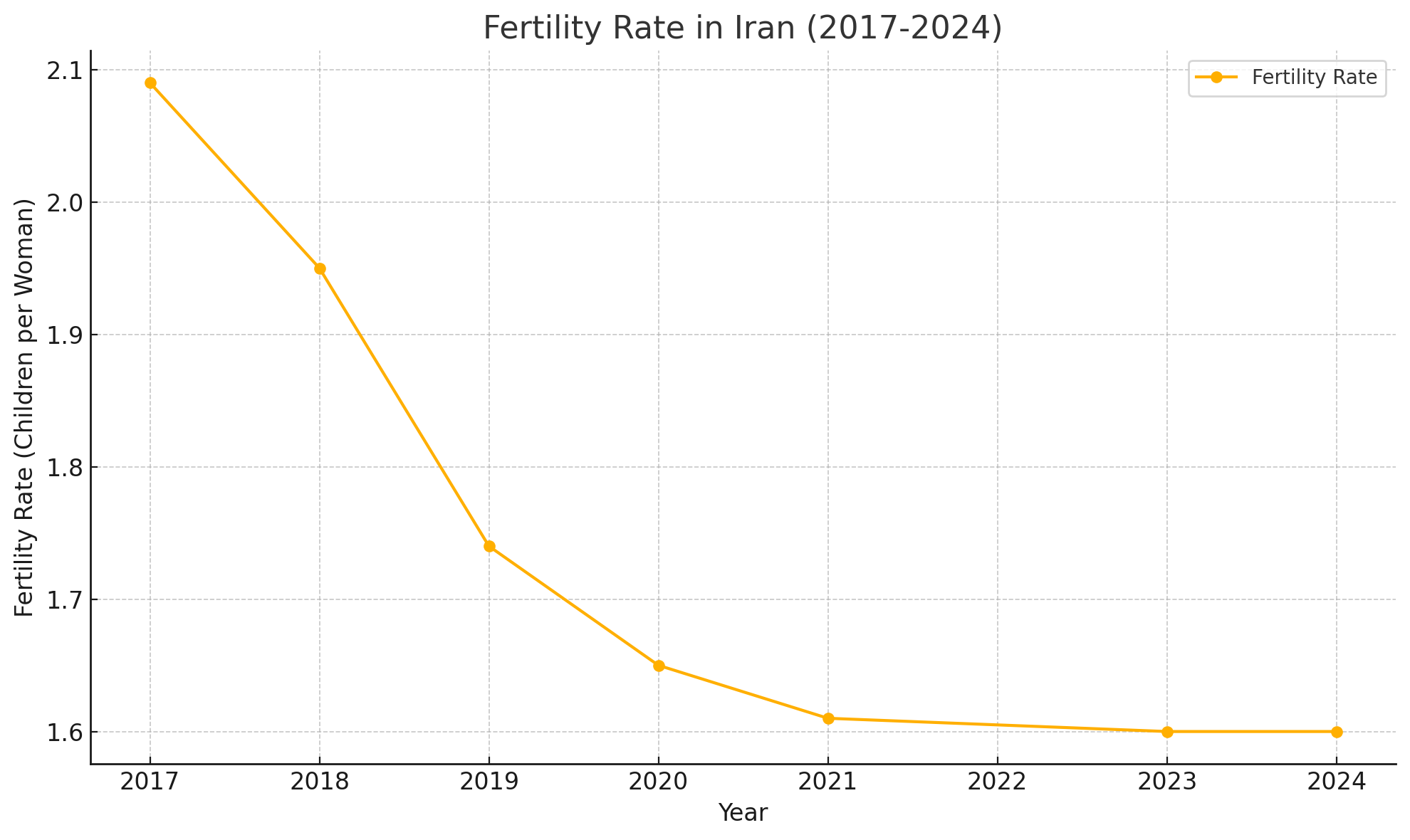
The announcement comes as the Islamic Republic's total fertility rate is around 1.6–1.7 births per woman in the latest available estimates, well below the replacement level of 2.1.
The TFR rate is estimated at 1.36 for the 2020–2025 period, according to IntelliNews, and is expected to be significantly lower in Tehran and other major cities, where the cost-of-living crisis has affected people's ability to marry and have children.
Families with a third child or more born after Aban 1400 (October-November 2021) will receive a 15% increase in their annual tax exemption for each such child, in addition to the standard annual income tax exemption under Article 84 of the Direct Taxes Law.
The tax administration said it had circulated fertility rate data for all Iranian cities for 1402 (2023-24) to the relevant units for implementation that year. A list of cities with fertility rates above 2.5 in 1403 (2024-25) has been set as the basis for applying the legal provisions during 1404 (2025-26).
The measure is drawn from clause "sad" of Note 6 of the 2023-24 state budget law, which links the tax benefit to children born after October-November 2021.
Iran's fertility rate has fallen sharply over recent decades, from around 6.5 births per woman in the 1980s to below replacement level in the 2020s.
A country generally needs a replacement rate of 2.1 children or above to sustain its population. Ideally, a country needs a total fertility rate of 2.7 or higher to indicate growth. Iran has consistently experienced negative growth over the past several years as part of a broader trend across the region.
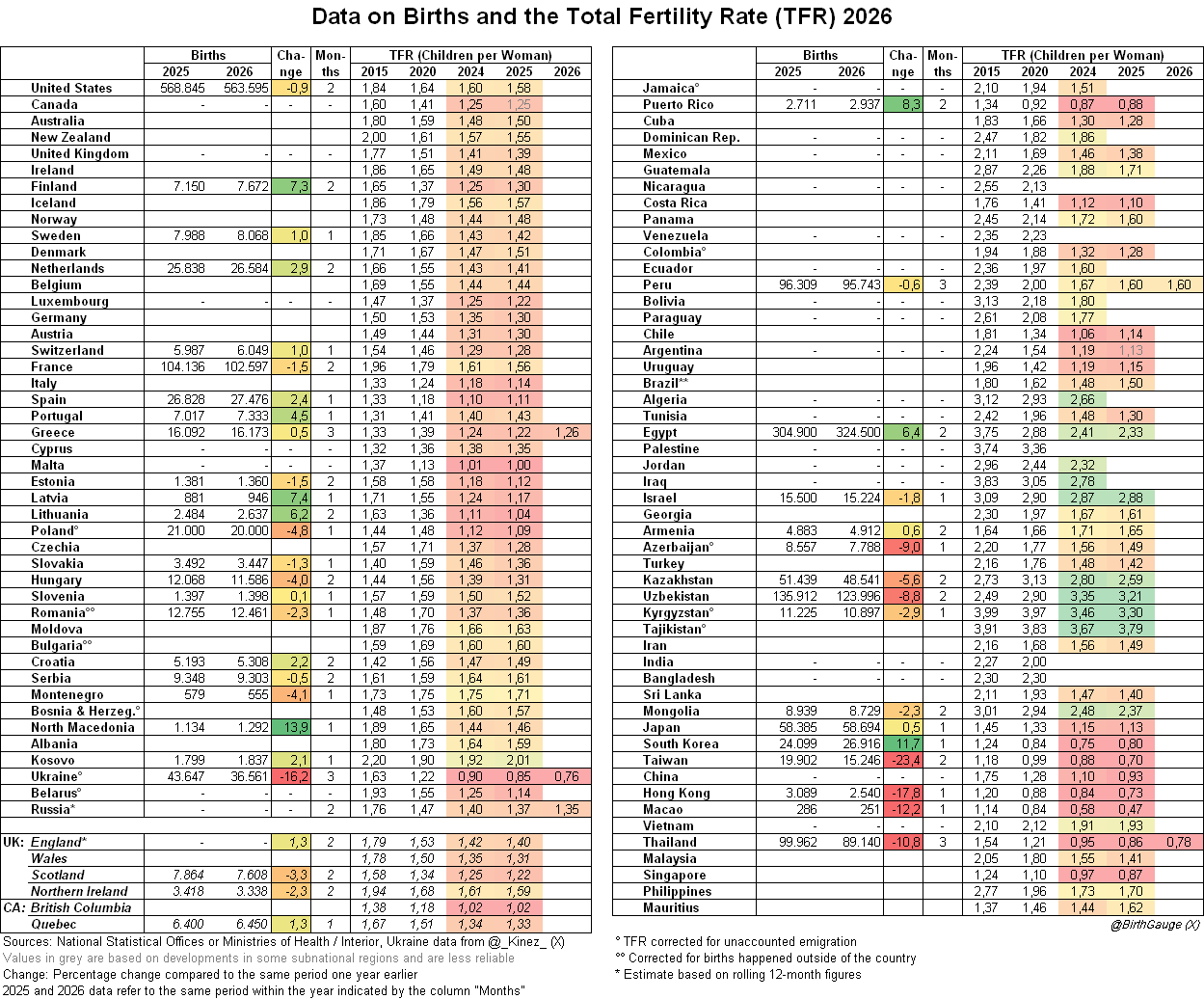
Compared with fellow Persian-speaking countries, Tajikistan and other Central Asian countries, Iran continues to lag behind its regional counterparts, according to the independent monitoring service Birth Gauge, which uses official statistics and UN data to track birth rates. According to the chart below, in 2025, Tajikistan had a TFR rate of 3.79, one of the highest in Asia.
The youth population law introduced a package of fiscal incentives, loans and benefits aimed at reversing the decline, though implementation has been uneven amid sanctions, high inflation and the ongoing war with the United States and Israel.
In 2025, Iran's annual birth rate will fall below 1 million for the first time, the deputy health minister announced.
The country stands at a demographic crossroads, transforming from what was once the Middle East's youngest society a mere two decades ago into one racing towards an ageing population at an unprecedented pace.
The population situation is particularly acute in the Caspian bordering Gilan Province, where deaths now exceed births, according to official data in February 2025. In the past 10 months, Gilan recorded 14,300 births compared with 16,000 deaths, provincial governor Hadi Haghshenas told reporters at a national multiple births event in Rasht.
"Gilan's population growth rate stands at just 0.08%," Haghshenas said, warning that the province's distinct ethnic groups, including Talesh, Gilak and Galesh communities, face potential demographic decline. "If each family in Gilan doesn't have at least two children, these ethnic groups will be at risk [of extinction]."


