
Every year, thousands of travellers from Uzbekistan and the other four states of Central Asia apply for a UK tourist visa. Yet for many, the process, supposedly nationality-neutral, ends in frustration: applications are refused, often on the basis of insufficient presented proof of financial means or because of doubts about the applicant’s intention to return home.
The big challenge for the would-be traveller is certainly not in booking suitable flights or hotels, it’s in meeting the UK Home Office’s strict and sometimes opaque financial requirements. While the rules are meant to ensure visitors can support themselves and will depart the UK after their stay, applicants frequently encounter confusion and inconsistency in how the rules are applied.
A deeper question also presents itself: how can a consular officer really know a person’s spending habits or intentions? Do they assume visitors will live lavishly, ignore careful budgeting or mismanage funds?
Tourists often plan meticulously, researching affordable accommodation, local food and travel routes to maximise their experience. Yet, refusals under the UK’s Sections V4.2 to V4.6 of Appendix V: Immigration Rules for Visitors suggest that officers make judgments without ever getting a grasp of how an applicant actually spends their time or money. The gap between assumption and reality can feel arbitrary, even discriminatory.
Such concerns reveal why many feel the visa system is unfair and may unintentionally disadvantage travellers from certain countries. They also raise broader questions about whether the UK’s visa system aligns with the country’s image as a welcoming destination that encourages tourism, cultural exploration and international engagement.
Understanding UK tourist visa requirements
To visit the UK as a tourist, most foreign nationals must apply for a Standard Visitor visa. The official guidance from the UK Home Office emphasises three main points: financial self-sufficiency, intent to return and travel plans. Applicants must prove they can financially support themselves during the visit, demonstrate strong ties to their home country and outline their itinerary, including accommodation and flights.
Unlike some countries that state a clear minimum bank balance, the UK does not specify an exact financial threshold. Instead, consular officers evaluate applications on a case-by-case basis. They consider bank statements, employment history, property ownership and travel records to decide whether an applicant meets the criteria. While this flexibility allows officers to account for individual circumstances, it can also make outcomes unpredictable.
For would-be tourists from Uzbekistan, the cost of applying is significant. The online application fee is some $181, followed by a mandatory Visa Application Centre service charge of £76.50, roughly $100 at current exchange rates. On top of this, VFS Global, which handles UK visa applications in Uzbekistan, offers additional services such as help uploading documents, passport delivery and premium appointments for extra fees that vary depending on the service chosen.
Altogether, a family of four could easily spend several hundred dollars just to submit their applications, paying the sum long before booking flights or accommodation. These upfront costs increase the pressure on applicants to provide detailed proof of funds and make the process feel not only bureaucratic but financially burdensome. Many report that the combination of high fees and uncertainty makes planning a trip to the UK stressful and, in some cases, prohibitive.
The lack of a fixed minimum bank balance has drawn criticism. Applicants often struggle to know whether they have “enough” money or whether their documents sufficiently demonstrate intent to return. As a result, refusals can take on an arbitrary feel and such perceived subjectivity creates anxiety and frustration, even among those who have carefully prepared their applications.
Visa refusal stats and patterns
UK Home Office and visa data show that refusal rates for UK visitor visas vary by nationality, and applicants from some countries face much higher rejection rates than others.
Overall, in 2025, about 23% of Standard Visitor visa applications were refused, meaning roughly one in four applicants did not receive a visa, with refusals made even in cases where the applicant applied carefully and paid all associated fees. In the same period, about 77% of visitor visas were granted from more than 2mn applications processed.
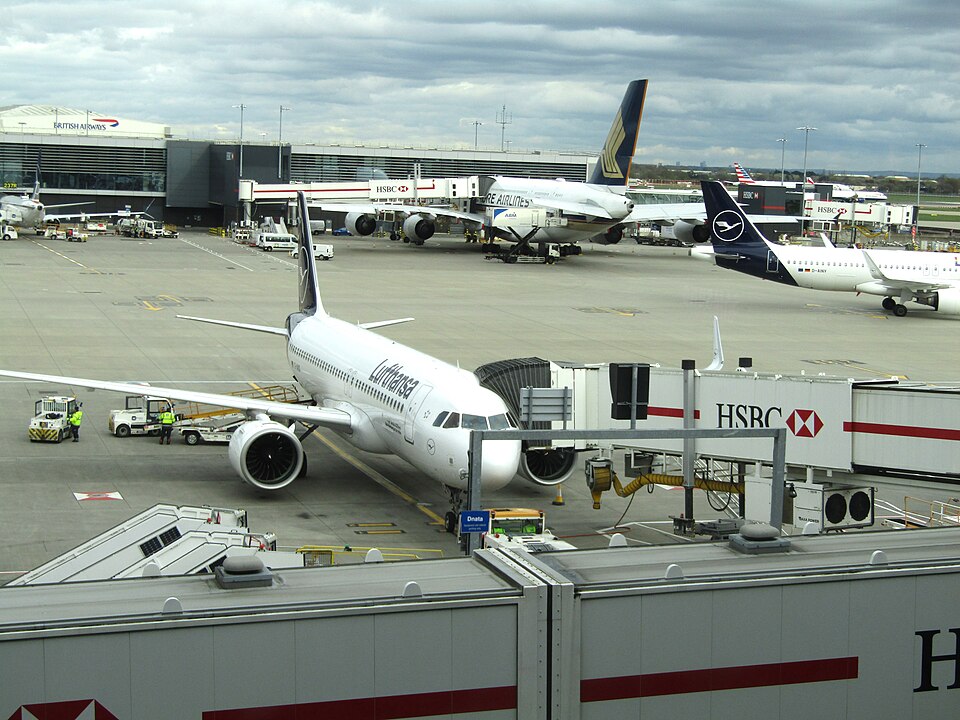
London Heathrow Airport. If a UK visa application official concludes there is some evidence the applicant intends to not return home after the holiday period, a visa is denied. But applicants often find the assessments too subjective (Credit: Colin Smith, geograph.org.uk, cc-by-sa 2.0).
Although specific approval and refusal rates for Central Asian nationalities (such as Uzbek or Kazakh) are not broken down in the publicly available Home Office data, broader patterns do suggest substantial variation by country of origin. Patterns in the data reveal that applicants from wealthier or countries closely connected to the UK tend to have much higher success rates than those from lower‑income regions. For example, figures for 2025 show that visitor visa approval rates range from above 99% for some Gulf countries like the United Arab Emirates, to around 82 % for India and nearly 55 % for Algeria. Applicants from nations with limited travel histories or less formalised financial documentation tend to fall closer to the lower end of this spectrum.
These figures suggest that the outcome of a visitor visa application is not only influenced by individual circumstances but also reflects broader trends associated with economic conditions, travel history and document standards in different regions.
Consular officers consider factors like the applicant’s financial documentation, employment stability and ability to prove intent to return home. Small mistakes such as missing information, unclear bank details, or insufficient evidence of ties to the home country can lead to a refusal even when basic eligibility criteria appear to be met.
Common reasons for refusal include insufficient financial evidence, incomplete documentation and lack of convincing evidence that the applicant will return home after their visit. Even when applicants provide detailed bank statements or letters showing employment and family ties, small errors or missing information can lead to a refusal.
Immigration experts note that while UK visa rules are technically nationality‑neutral, the way they are interpreted and applied can indirectly disadvantage applicants from certain regions, particularly those with informal economic systems and less extensive travel histories. Although exact refusal rates for Central Asian countries are unavailable, data analysis suggests that applicants from the region may experience higher-than-average rejection rates compared with nationals from wealthier or more globally mobile countries.
Challenges for Central Asia applicants
Applicants from Uzbekistan, Kyrgyzstan and other Central Asian countries face unique challenges in the UK tourist visa process, partly due to local economic and financial practices. Many people in the region work in informal jobs or rely on cash‑based transactions, which are harder to document. In some families, savings and property are held collectively rather than in one person’s name, which does not easily match the formal documentation expected by UK consular officers.
These structural differences matter because UK visa decisions heavily depend on bank statements, employment history and clear financial documentation. For most nationalities, providing consistent six‑month bank statements is a baseline expectation — yet in Central Asia, irregular income deposits or limited banking history can raise doubts for officers assessing the application. Combined with the fact that overall refusal rates for UK visitor visas sit at about 23% overall, the documentation challenges increase the likelihood that applications from regions with informal financial systems receive more scrutiny.

Excruciating. The heavy demands of the UK tourist visa application process wear down applicants (Credit: Geofjarvis, cc-by-sa 4.0).
Formal employment verification is another hurdle. Self‑employed individuals, freelancers and small business owners, common profiles in Central Asia, may not have typical pay slips or contracts that align with UK visa officers’ expectations. In comparison with countries such as India or China, where large numbers of visitor visas are processed and success rates can exceed 90%, the lack of similarly robust formal documentation systems can put some Central Asian applicants at a disadvantage even when they meet the practical criteria to fund their trip.
Property ownership and family ties to the home country are frequently cited in visa guidance as strong evidence of intent to return. However, cultural variations in asset ownership such as shared extended‑family property or collective savings, can complicate assessments. Again, given that the UK Home Office doesn’t publish specific approval or refusal rates for Central Asian nationalities, it’s difficult to quantify exactly how the outlined factors affect outcomes.
Nonetheless, patterns seen in broader visa data, where applicants from regions with less formalised documentation practices tend to cluster closer to the lower end of approval rates suggest these challenges are real and meaningful.
Refusal letter arrives despite sufficient funds
The subjective nature of financial evaluation in the visa application process is a major source of frustration for applicants. One refusal letter illustrates how an application can be denied even when the applicant demonstrates sufficient funds to cover their trip. Officers questioned whether the applicant had access to enough money to cover their planned expenses in the UK, despite their provision of evidence of savings and income.
This raised the question: How much is “enough” for UK officers to approve a visa? Who decides this threshold, and why is it not clearly communicated to applicants beforehand? Travellers often prepare meticulously, yet the criteria remain opaque, leaving them unsure if their resources are considered adequate.
One might even say that consular officers exercise considerable discretion when assessing applications. What one officer considers sufficient proof of financial stability, another might question, reinforcing perceptions of unfairness. For applicants from developing economies or regions with informal banking systems, it can feel as though the system assumes the worst, treating legitimate applicants with scepticism simply because their financial documentation does not match expected Western norms.
It is quite clear that the critic can reasonably argue that the system indirectly favours applicants from wealthier nations with stable employment and formal banking systems.
For applicants from countries like Uzbekistan and other parts of Central Asia, the lack of clear guidelines on financial sufficiency can make even well-prepared applications vulnerable to rejection.
Some applicants wonder whether the Home Office expects them to borrow, lend or somehow “prove” funds in ways that feel a bit random, highlighting the gap between official requirements and the lived realities of applicants.This tension raises broader questions about whether the UK visa process fairly balances security and risk with transparency and equitable treatment.
International comparisons
In the United States, official refusal‑rate data for the B‑1/B‑2 visa used for tourism and business visits show very high denial rates for Central Asian applicants:
Uzbekistan: 64% denied
Turkmenistan: 59 % denied
Kazakhstan: 46 % denied.
Tajikistan: 45 % denied.
Kyrgyzstan: 39 % denied.
These figures reflect US Department of State data on tourist‑type visa refusals and indicate more than half of applications by citizens of two Central Asian countries are rejected.
Schengen visa data show a much lower average refusal rate overall compared with US visitor visas. In 2024, Schengen countries granted about 84% of short‑stay visa applications, leaving a 16% refusal rate across all nationalities.
Available statistics for citizens of Uzbekistan illustrate this more positive trend:
Uzbek nationals submitted more than 46,000 Schengen visa applications in 2023, of which about 16.5% were refused, meaning more than 83% were approved.
This suggests that for many Central Asian applicants, Schengen visas are comparatively easier to obtain than US B‑1/B‑2 visas and in many cases potentially easier than UK visitor visas.
Emotional impact of refusal compounded by financial strain
As mentioned, the denial of travel approval often comes at the end of expensive application and travel preparation demands.
A refusal can erase months of planning, saving, and anticipation. For many, the loss is not just monetary but deeply personal, affecting relationships and family plans.
Tourist favourite Piccadilly Circus, London. Tight and opaque visa conditions are dashing the travel dreams of legitimate applicants (Credit: Richard Cooke, cc-by-sa 2.0).
Many call for the UK Home Office to provide clearer guidance and more transparent criteria for those requesting a visa. Publishing recommended financial thresholds and acceptable documentation could reduce subjective decisions and perceptions of bias.
Clearer instructions would help applicants prepare effectively, reducing unnecessary refusals and increasing fairness. Improved transparency could also enhance the UK’s reputation as a welcoming destination for international tourists.
Ultimately, balancing security with fairness requires policy adjustments that account for global economic diversity. Recognising that financial documentation and economic norms vary widely across countries is key to creating an equitable process.
Financial requirements for UK tourist visas are intended to protect both visitors and the host country, yet the subjective interpretation of documents and the lack of transparent criteria leave many applicants from Central Asia and similar regions mired in uncertainty. Is it fair that travellers face repeated refusals despite careful preparation? Could the system be seen as discriminatory when economic norms and documentation practices vary so widely across countries?
Should people spend hundreds of dollars given the high chance of being denied?
Policymakers face the challenge of balancing security with fairness. Greater transparency in financial requirements, clearer guidance, and more consistent evaluations could make the process more predictable while still protecting borders. Ultimately, the question remains: is the UK worth the struggle, or do these barriers risk alienating exactly the travellers it wishes to welcome?
Don’t just follow the news—understand it.
The IntelliNews PRO service includes access to reports, exclusive market data, and more news that decision-makers care about. Stay ahead of the market with IntelliNews PRO.
Sign Up Now

