



Ukraine's bank profits fall by nearly a third as wartime windfall fades
22 hours ago
Russia is enjoying an unexpected energy windfall from the conflict in Iran, but soaring oil revenues are proving insufficient to offset mounting fiscal pressures and a rapidly slowing economy, according to the latest Kyiv School of Economics (KSE) Institute Russian chartbook for May.
The report paints a picture of an economy increasingly dependent on wartime spending and high commodity prices while facing deepening structural weaknesses that even the surge in Gulf war-related oil revenues may not be able to resolve.
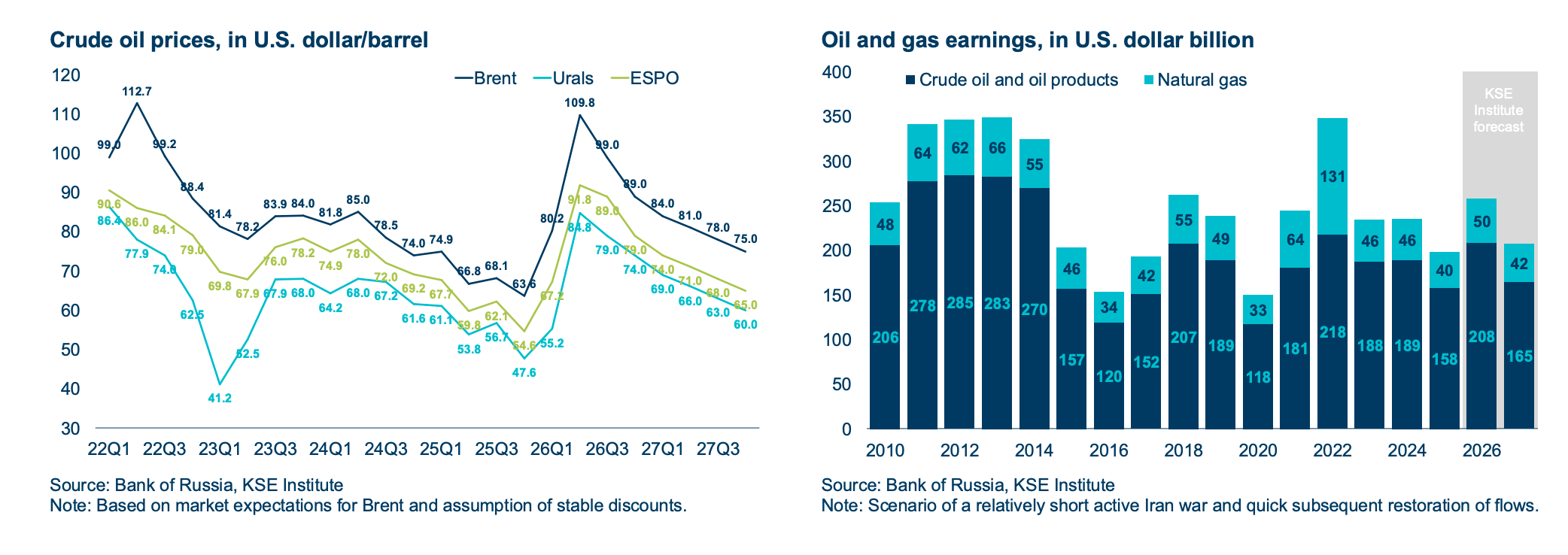
The immediate beneficiary of the conflict in the Middle East has been Russia's oil sector. As fears of supply disruptions pushed global crude prices sharply higher, the price of Russian oil rose from $43.7 per barrel in January and $47.4 in February to $78.3 in March and $95.1 in April.
The increase translated directly into higher export earnings. Russia's oil export revenues rose from an average of $10.4bn per month in January and February to approximately $19.1bn-$19.2bn in March and April, nearly doubling within two months.
"The Iran war's impact on Russia is increasingly materializing," the report said, but unless the high prices are sustained all year, the windfall will not be enough to close the burgeoning budget deficit.
Because Russia's taxation system calculates oil extraction taxes using the previous month's prices, the benefit only appeared in public finances with a delay. Base oil and gas revenues doubled in April compared with March as the earlier rise in export prices filtered through to the budget.
The surge in foreign currency earnings has also strengthened the ruble, which appreciated to around RUB71 against the dollar, its strongest level since early 2023. While that helps contain inflation, it also limits the budgetary benefits of higher oil prices because export revenues convert into fewer rubles. Because oil prices in the budget are denominated in dollars, but spending is denominated in rubles, the government is the biggest loser from a strong ruble as it means less ruble-cash to spend.
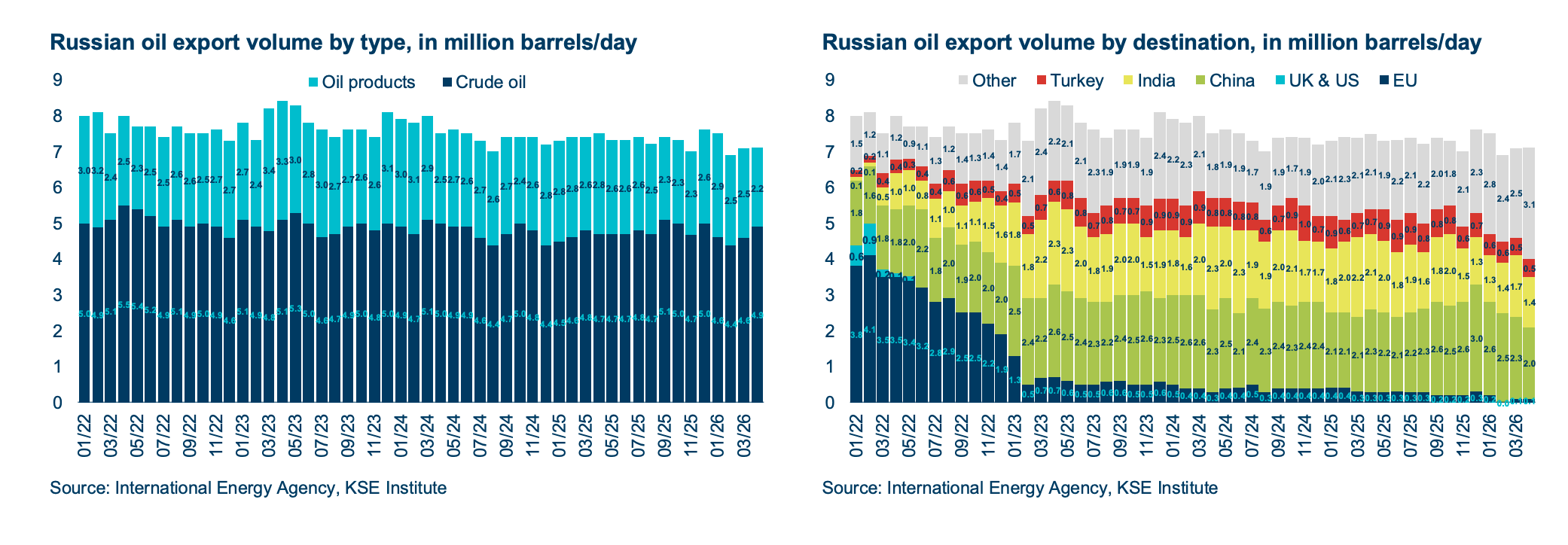
Moreover, sanctions continue to constrain Russia's ability to increase production volumes, preventing the country from fully capitalising on the higher price environment.
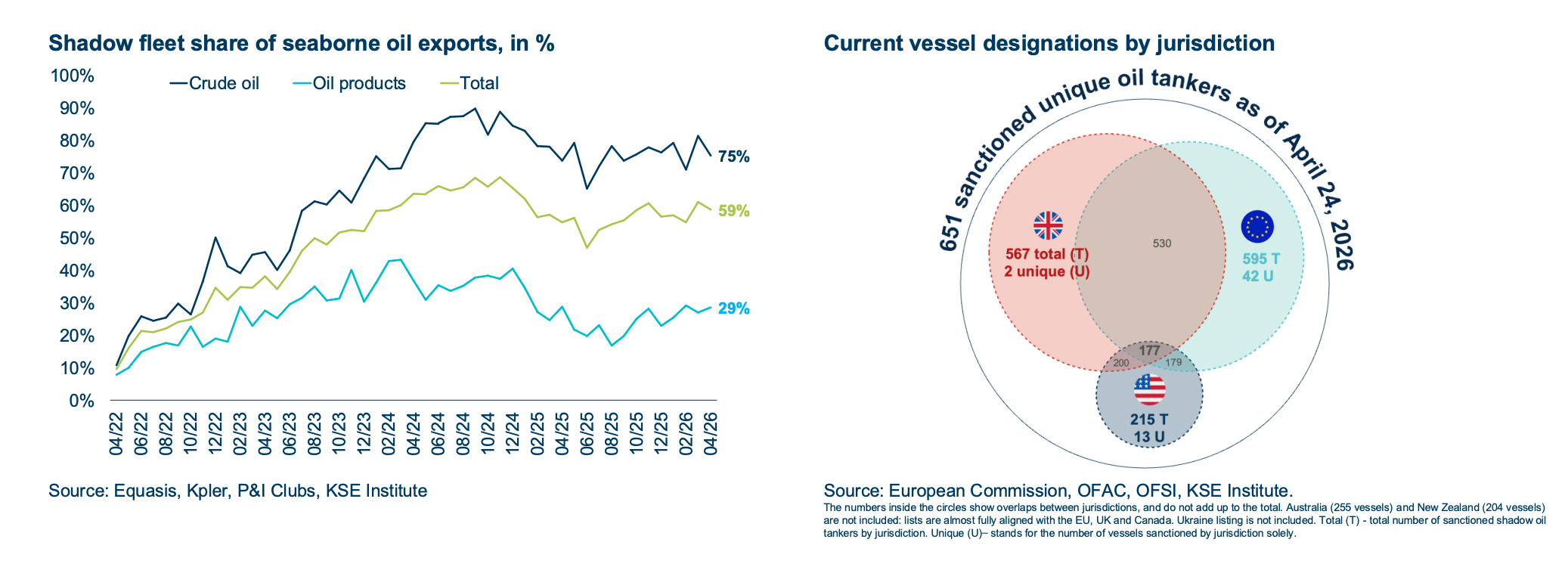
"Russia has not been able to benefit more from high prices as production expansion is hindered by sanctions," KSE noted. The EU's ban on petroleum products refined from Russian crude oil in third countries has sharply reduced the flow of Russian-linked fuel into Europe, but significant loopholes remain and products derived from Russian oil continue to reach other Western markets, KSE reports.
The temporary boost from energy markets has done little to address the government's growing fiscal challenges. According to the report, non-oil-and-gas revenues remain weak as economic growth stalls – VAT is by far the most important source of budget revenues, making up 40% of the total, while oil and gas revenues account for about 25% -- while spending continues to rise as an increasing share of the cost of the war is transferred directly onto the federal budget.
Higher oil prices have also created an additional burden. The government has been forced to increase subsidies designed to shield domestic consumers from rising fuel prices, offsetting some of the gains from stronger export earnings.
As a result, the federal budget deficit continues to widen. The government recorded a deficit of RUB1.3 trillion in April alone, bringing the cumulative shortfall for the first four months of the year to RUB5.9 trillion, or roughly $75bn and 2.4% of GDP. The official budget deficit target for this year was 1.6%, but Russian Finance Minister Anton Siluanov has already admitted that the Ministry of Finance (MinFin) is going to miss that target. The deficit figure is already double the level recorded during the same period in 2025 and already stands 55% above the government's full-year deficit target.
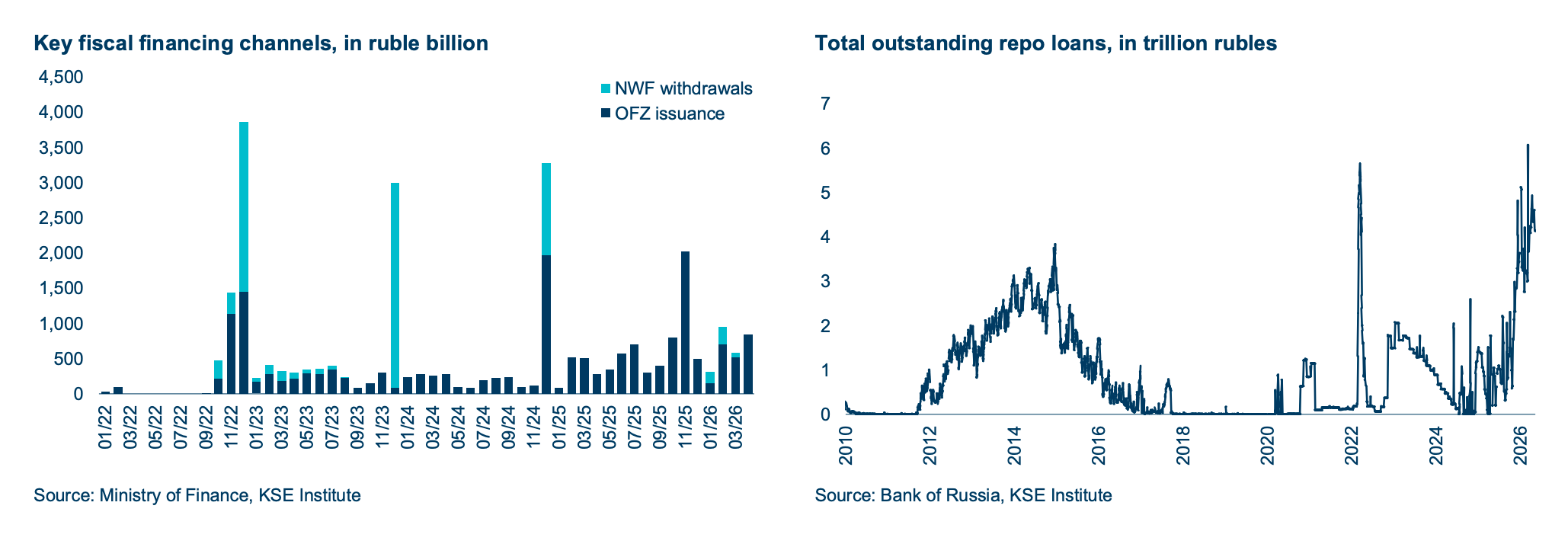
To finance the gap, MinFin has increased issuance of increasingly expensive OFZ domestic government bonds and drawn funds from the National Wealth Fund (NWF), Russia's sovereign wealth vehicle. Yet these sources have proven insufficient. The total outstanding OFZ volume has risen from RUB20 trillion and is now approaching RUB30 trillion during the last four years.
According to KSE, the government was forced to draw an additional $41bn from other sources, including Treasury accounts, to cover funding needs during the first quarter.
"As these decline and there is no end in sight for Russia's budget challenges, domestic borrowing and/or NWF utilization will need to increase in the coming months," the report said.
Behind the fiscal deterioration lies an economy that is rapidly losing momentum.
After expanding by more than 4% annually in both 2023 and 2024, Russia's growth slowed sharply to just 1% in 2025. Preliminary estimates from Rosstat indicate that GDP contracted by 0.2% y/y in the first quarter of 2026.
KSE argues that the real decline was likely significantly larger because the contraction occurred against the weakest comparison period of the previous year.
"The economy is grinding to a halt," the report concluded.
The slowdown reflects a growing divide between Russia's military and civilian economies. Defence-related sectors continue to expand thanks to state spending, but large parts of the civilian economy have entered recession. High borrowing costs, labour shortages and declining private investment are weighing on activity as companies compete with the military-industrial complex for workers.
The Central Bank of Russia has succeeded in bringing inflation under control through a prolonged period of tight monetary policy. However, KSE warns that worsening fiscal conditions may prevent policymakers from cutting interest rates aggressively enough to revive private-sector growth.
"While war-related sectors still perform well, the civilian economy has entered a recession as the cost of capital remains high and businesses compete with the military for labour," the report said.
For now, higher oil prices are providing the Kremlin with a temporary reprieve. But KSE's analysis suggests that Russia's underlying economic problems have grown too large to be solved by another commodity boom. Even with oil prices near $100 per barrel, economic growth has stalled, the budget deficit is widening and the government is increasingly relying on debt issuance and reserve funds to sustain wartime spending.
In previous crises, Russia's vast energy resources often provided an escape route. This time, the report argues, the structural costs of war are proving far harder to overcome.
The IntelliNews PRO service includes access to reports, exclusive market data, and more news that decision-makers care about. Stay ahead of the market with IntelliNews PRO.
Sign Up Now


