


Ukrainians' willingness to endure the war rebounds to 61%, KIIS poll finds
1 day ago
US military munitions stockpiles have shrunk sharply since the war with Iran began, with the five-month-old conflict now the main driver of depletion even for weapon systems the US had previously donated heavily to Ukraine, according to data compiled by the Center for Strategic and International Studies (CSIS) and published by Statista on August 10.
The figures underline how a second, simultaneous high-intensity conflict has strained US ammunition supply chains far faster than more than three years of arming Ukraine did on its own, reopening questions about Washington's capacity to sustain both commitments at once, Statista reports.
The clearest example is interceptor missiles: a total of 200 THAAD interceptors were fired between the start of the Iran war in late February 2026 and the end of July, versus just 150 used throughout the whole of 2025. Use of US air- and missile-defence munitions has risen sharply across the board since the war began, according to the CSIS data, noticeably depleting stockpiles built up over years in the space of months.
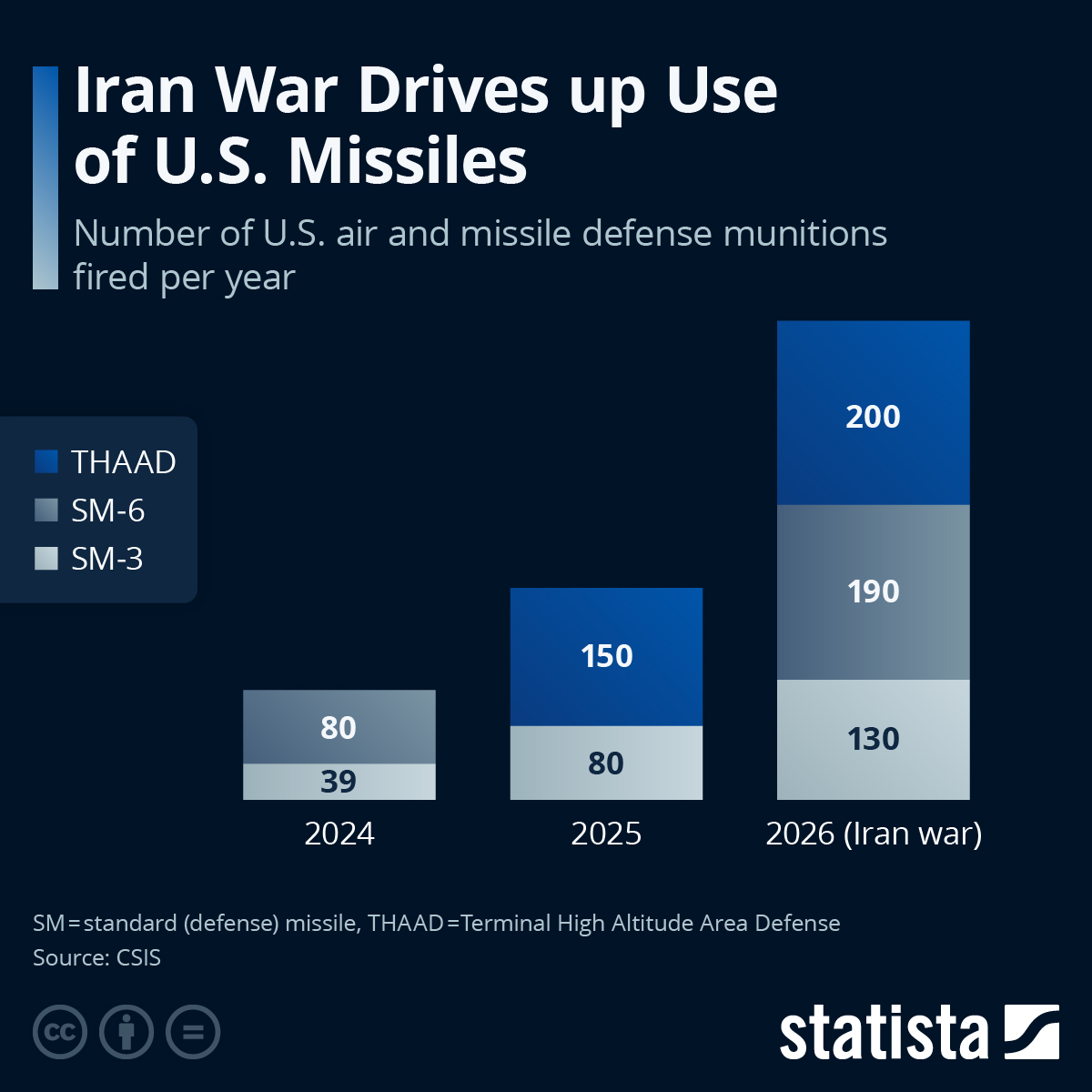
Iran war drives up use of US interceptor missiles. Source: Statista/CSIS.
For only one in four of the weapon systems the US has both donated to Ukraine and also used in Iran, CSIS found Ukraine to be the main cause of inventory depletion - for the rest, operations in Iran were the dominant factor. The finding suggests that, even where Washington's Ukraine commitments already drew down stocks significantly, the intensity of the Iran campaign has since overtaken it as the bigger drain on the same shared pool of munitions.
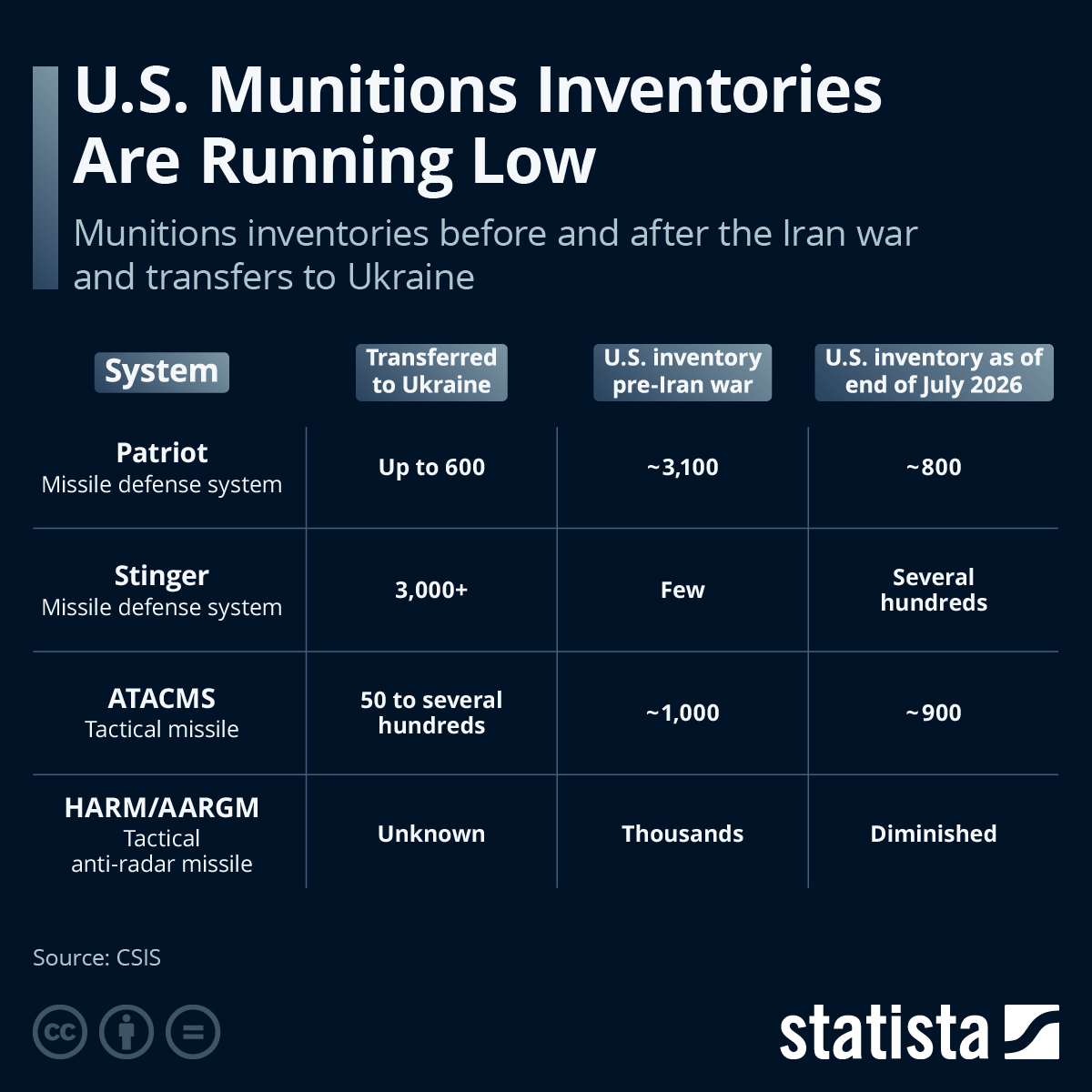
US munitions inventories are running low. Source: Statista/CSIS.
The strain adds another layer to Ukraine's own long-running struggle to secure enough Western air-defence ammunition, a shortage IntelliNews has documented as it has left Kyiv scouring global stockpiles for replacements even as US production struggles to keep pace with demand from two wars at once.
The IntelliNews PRO service includes access to reports, exclusive market data, and more news that decision-makers care about. Stay ahead of the market with IntelliNews PRO.
Sign Up Now


