


Iranian official warns Saudis “paper pact” on defence with Turkey, Pakistan is a dud
15 hours ago
Mongolia's next election cycle begins in less than a year with the presidential poll. The parliamentary elections will follow in 2028.
Even before campaigning has officially begun, politicians are already jockeying for position in the race to succeed President Ukhnaa Khurelsukh.
The growing field of potential candidates reflects widening divisions within the ruling Mongolian People's Party (MPP), with rival factions backing different contenders. Opposition party candidates are also beginning to emerge.
Divisions in the MPP are partly due to a turbulent period of leadership changes, including the resignation of two prime ministers in less than a year. Analysts say the current manoeuvring reflects competition for influence, which tends to spark populist decisions.
Frequent leadership changes have complicated efforts to pursue long-term economic reforms and have contributed to investor concerns about policy uncertainty.
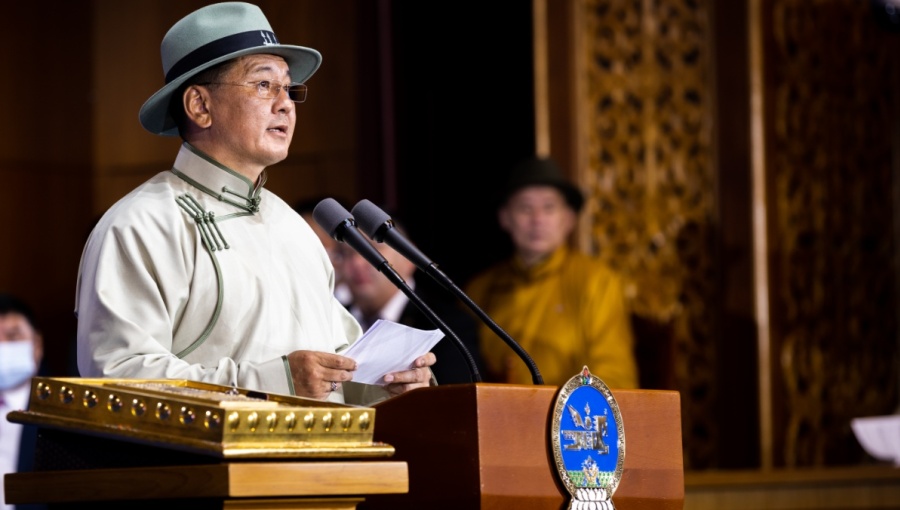
President Khurelsukh seen in 2021 at his swearing in to office.
However, the race to succeed Khurelsukh unfolds, it begins with the familiar framework, with the MPP in control of the government and the party organisation deeply rooted across the country. This time, however, divisions in the party have become more apparent.
"Power within the MPP is becoming more diffuse as attention shifts toward the post-Khurelsukh era," said Amar Adiya, editor of Mongolia Weekly, a business intelligence newsletter. "Political actors are positioning themselves for the next transfer of power."
The MPP has undergone repeated leadership changes over the past year following the resignations of prime ministers Oyun-Erdene Luvsannamsrai and Zandanshatar Gombojav. Thirty-nine year old Uchral Nyam-Osor took over as PM earlier this year.
Amar said the changes reflected an internal realignment within the ruling party rather than instability in Mongolia's political system.
Attention is now turning to who the MPP will nominate for president. A recent analysis by Odriin Sonin newspaper identified several possible contenders from the ruling party.
Former PM Zandanshatar is widely viewed as the leading contender. He is followed by Deputy Prime Minister Enkhbayar Jadamba, Foreign Minister Battsetseg Batmunkh and Defence Minister Byambatsogt Sukhbaatar.
An April poll by Ulaanbaatar-based research firm MEC showed Zandanshatar with the strongest voter support among potential MPP candidates.
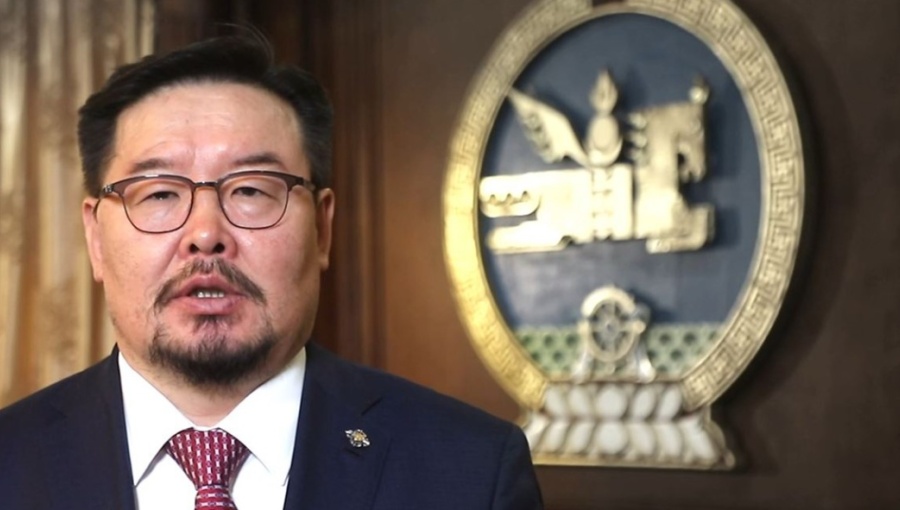
The early favourite to take the presidency is former PM Zandanshatar (Credit: parliament.mn).
Although Uchral has quickly become one of Mongolia's most influential politicians, he is constitutionally ineligible because presidential candidates must be at least 50 years old. Amar said he could nevertheless play an important role in shaping the party's eventual nominee.
Khurelsukh is widely expected to leave office at the end of his term. Constitutional amendments approved in 2019 limit Mongolia's president to a single six-year term, making another candidacy unlikely without significant constitutional changes.
"The more important question is how Khurelsukh manages his political influence after leaving office," Amar said. "His role in shaping the MPP's candidate selection process and the broader balance of power within the ruling party will probably matter more than speculation about a second term."
Julian Dierkes, a Mongolia expert and professor at the University of Mannheim in Germany, also expects a contested election rather than a constitutional change allowing Khurelsukh to seek another term.
"The MPP remains in factional turmoil," he said.
Looking back over Mongolia's recent presidents, Dierkes said the office can matter depending on who occupies it.
Former president Elbegdorj Tsakhia “had an agenda where he did add some strategic directions that I don't see in the other three [former] presidents, perhaps most notably democratisation efforts and a more active foreign policy," he said. "So my answer is, it depends on the candidates. I see one example of a president who made a difference and three where I don't see much of an impact."
The opposition Democratic Party (DP) is also preparing for the race, though analysts differ on whether it can capitalise on public frustration over inflation, rising living costs and economic concerns.
Mongolian daily Odriin Sonin identified party chairman Tsogtgerel Odon, former DP leader Gantumur Luvsannyam and former Prime Minister Altankhuyag Norov as possible contenders.
Amar said the Democrats' chances will depend less on personalities than on whether economic dissatisfaction grows over the coming months.
"The Democratic Party's greatest opportunity lies in public dissatisfaction over living costs and economic management rather than in any single candidate," Amar said.
Dierkes was less optimistic, saying he is not convinced the party currently has a candidate capable of mounting a serious challenge.
The smaller HUN Party could also influence the race, particularly among younger urban voters seeking an alternative to Mongolia's two largest parties.
Technology entrepreneur Enkhbat Dangaasuren, who finished second to Khurelsukh in the 2021 presidential election with about 20% of the vote, is among the party's potential candidates.
Amar said HUN is unlikely to seriously contend for the presidency but could influence the outcome by drawing support from reform-minded voters.
Dierkes said Enkhbat's strong showing in 2021 demonstrated demand for an alternative to the two traditional parties and said HUN could remain competitive if it again nominated a credible outsider.
A head-to-head poll conducted by MEC last month showed Khurelsukh remained Mongolia's most popular politician, followed by Tsogtgerel (DP) and Zandanshatar (MPP). Although relatively new on the political scene, Tsogtgerel’s popularity has grown quickly thanks to a pro-business agenda and an ability to unite factions in his party.
Despite strong copper and coal exports and healthy foreign exchange reserves, inflation, infrastructure bottlenecks, energy shortages and periodic fuel disruptions remain key voter concerns.
With nearly a year to go before the election, the campaign has already begun — not yet on the public stage, analysts say, but largely inside the ruling party, where the contest to succeed Khurelsukh is reshaping Mongolia's political landscape.
The IntelliNews PRO service includes access to reports, exclusive market data, and more news that decision-makers care about. Stay ahead of the market with IntelliNews PRO.
Sign Up Now


