


Uzbekistan's average monthly wage climbs 18% in 1H
3 hours ago
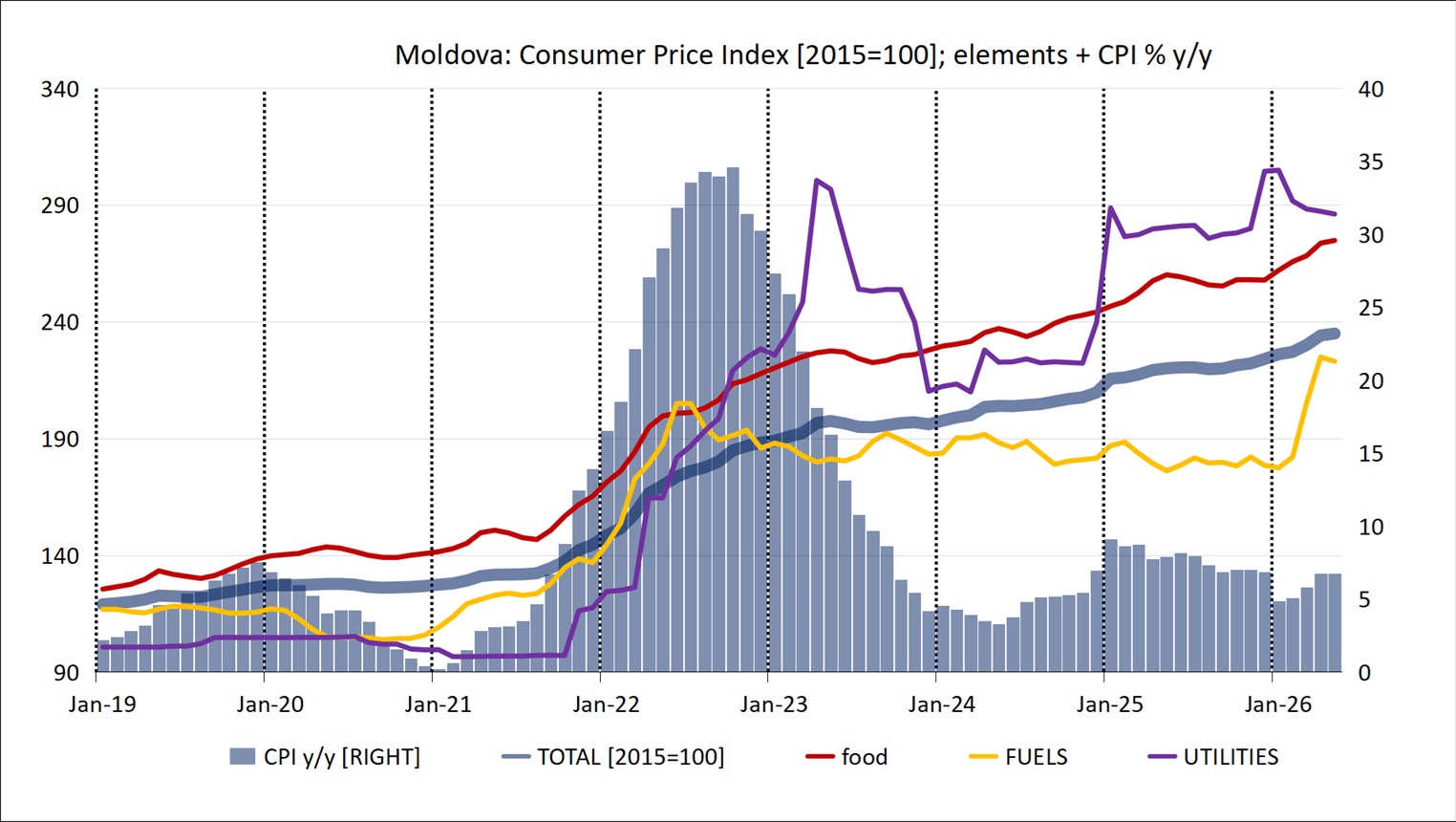
Consumer price inflation in Moldova (chart) remained unchanged at 6.8% y/y in May, after prices increased by 0.36% m/m, according to data published by the statistics bureau BNS. Core inflation, which excludes administered and volatile prices, has remained around 5% for the past six quarters despite repeated shocks from energy prices.
Food prices rose by 5.7% y/y in May, while non-food goods, including fuels, were 7.2% more expensive than a year earlier. Services prices increased by 7.5% y/y. Within the latter category, utility prices advanced by only 2.0% y/y, as a 15% increase in electricity tariffs was largely offset by a 14% decline in natural gas prices.
Inflation accelerated earlier this year after consumer prices increased by 1.3% m/m in March and 1.8% m/m in April. The rise was partly driven by fuel prices, which climbed by around 13% and 10%, respectively, in the two months. As a result, headline inflation increased gradually from around 5% y/y in January and February to 5.8% in March and 6.8% in April, where it remained in May.
To contain second-round effects, the National Bank of Moldova (BNM) raised its key policy rate in May to 6.5%, from 5.0% previously.
The central bank has also revised upwards its inflation outlook. In its latest Inflation Report, the BNM said annual inflation is expected to peak at 8.6% in the fourth quarter of 2026, compared with a 5.0% peak projected in February.
“The annual inflation rate over the forecast period will peak at 8.6% in Q4 2026 and will ease to 4.1% in Q4 2027 and Q1 2028,” the central bank said.
According to the BNM, the upward revision reflects higher expected prices for food, fuels and regulated tariffs, as well as the impact of the conflict in the Middle East on international markets. Before the revision, the bank warned that inflation would likely exceed the upper limit of its target corridor, 5% ± 1.5 percentage points, in the coming quarters.
Moldova previously experienced a surge in inflation in 2022, when annual price growth peaked at 34.6% y/y in October amid the regional energy crisis.
The IntelliNews PRO service includes access to reports, exclusive market data, and more news that decision-makers care about. Stay ahead of the market with IntelliNews PRO.
Sign Up Now


