


Iran's war spills into Saudi Arabia and Libya even as Hormuz talks edge toward a deal
1 hour ago
Russia killed at least three people, including a three-year-old boy, in a drone strike on the Kyiv-region village of Pukhivka overnight into August 9, President Volodymyr Zelenskiy said, as Russia combined the attack with a six-missile ballistic strike on Kyiv's civilian infrastructure that killed at least one more person.
"Last night, Russia killed three people in Pukhivka, Kyiv region, with drone strikes – a grandfather, a grandmother, and their grandson. The boy was only three years old," Zelenskiy wrote on social media, adding that four more people were hospitalised, including the child's parents and a neighbour wounded in a follow-up "double-tap" strike. "It was an ordinary residential building. The Russians could not have been unaware of this."
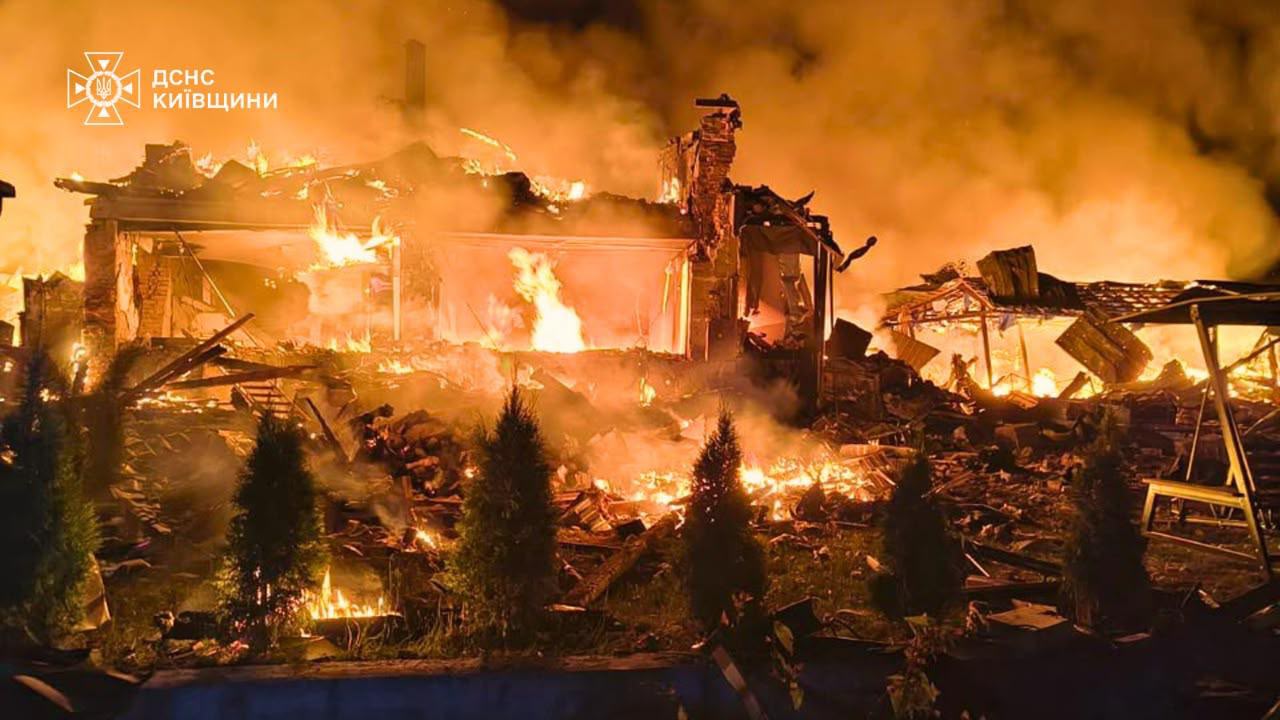
Firefighters battle a blaze at a residential building in Kyiv region after Russia's overnight strike. Source: DSNS Kyivshchyna.
Russia’s brutal tit-for-tat missile war continues with Kyiv taking the brunt of the onslaught, but the whole country is being affected as the Armed Forces of Russia (AFR) doubles the number of missiles fired at Ukraine and is increasingly targeting energy and crippling transport infrastructure. The Greater Odesa port also was subject to its biggest attack of the war that has brought Ukraine’s main connection to international grain and metal markets to halt. Experts estimate that Ukraine’s grain export revenue could be halved this year unless the ports are reopened soon.
Zelenskiy said the Donetsk, Kharkiv, Sumy, Dnipro, Zaporizhzhia, Odesa, Kherson, Mykolaiv, Chernihiv and Poltava regions also came under attack over the same period, and renewed his appeal for more Western air-defence hardware.
"Anti-ballistic capabilities, interceptor missiles for Patriot, SAMP/T, NASAMS, Hawk, and our F-16s – all of this works and helps protect lives when it is here, in Ukraine, rather than sitting in warehouses thousands of kilometres away," he said, calling for new sanctions specifically targeting Russia's ballistic missile production.
The EU had already moved in that direction on August 7, adopting a fresh package of sanctions explicitly linked to Russia's air campaign against Kyiv, according to the Kyiv Independent.
Ukraine strikes back
Ukraine's own strikes over the same 48 hours matched the scale of Russia's. Long-range drones hit two Russian oil refineries on August 8 — Rosneft's Syzran plant in Samara Oblast, more than 800km from the Ukrainian border, where locals reported at least three impacts on the plant's primary distillation unit, and the Ilsky refinery in Krasnodar Krai, where falling drone debris sparked a fire and injured five people, according to Ukraine's General Staff.
Ukraine's Unmanned Systems Forces separately said it struck 102 targets over August 6-7, commander Robert "Magyar" Brovdi reported, including six shadow-fleet vessels — two tankers and four dry cargo ships — plus 10 energy facilities, ammunition and fuel depots, radar systems and a Buk air-defence battery. A further 12 shadow-fleet vessels were hit in the Black Sea and Sea of Azov in the following two days, Ukraine's Unmanned Systems Forces said on August 8, taking the total struck since the campaign began on July 6 to more than 218 — up from 205 vessels reported as of July 31.
Russia's own drone barrage on Moscow has intensified too: mayor Sergei Sobyanin said 1,984 Ukrainian drones flew toward the Moscow region between August 1-8, with air defences destroying 82 as they approached the capital and the rest intercepted further out; a August 4 strike on Chekhov's Novosyolki industrial zone started several fires, including one serious blaze at a warehouse.
Russia launches biggest attack on Odesa to date
Russia launched what open-source analysts described as one of its largest single attacks on Odesa Oblast since the war began overnight into August 9, combining ballistic missiles, cruise missiles and drones against the port region even as the wider Kyiv barrage continued.
Roughly seven Iskander-M ballistic missiles, four Kh-31A supersonic cruise missiles and two P-800 Oniks anti-ship missiles were launched from Crimea, alongside dozens of Banderol and Geran-series drones, according to open-source milblogger AMK Mapping.
None of the missiles were intercepted; Ukraine's Air Force said only some of the drones were shot down. Kyiv Independent reported at least eight people injured, most with shrapnel wounds, and said Ukraine's largest private energy company, DTEK, reported power and water cuts across the city after energy infrastructure was hit.
Ukraine's own Air Force said Russia launched 219 targets nationwide overnight — 202 of them drones and Banderol loitering munitions, of which 174 were shot down or suppressed — and, unusually, did not disclose the total number of missiles fired, a departure from its normal reporting practice.
Local accounts said the strikes hit a substation in Usatove supplying port and industrial facilities, and a fuel-and-lubricants storage site serving Ukraine's armed forces and defence industry; Russia's own defence ministry said separately that it struck fuel storage tanks near Odesa and fuel and military-equipment depots at Chornomorsk port.
IntelliNews has previously reported that the drone war has increasingly shifted toward crippling ports and shipping infrastructure on both sides, and the Odesa barrage extends that pattern to one of Ukraine's most important remaining export gateways.
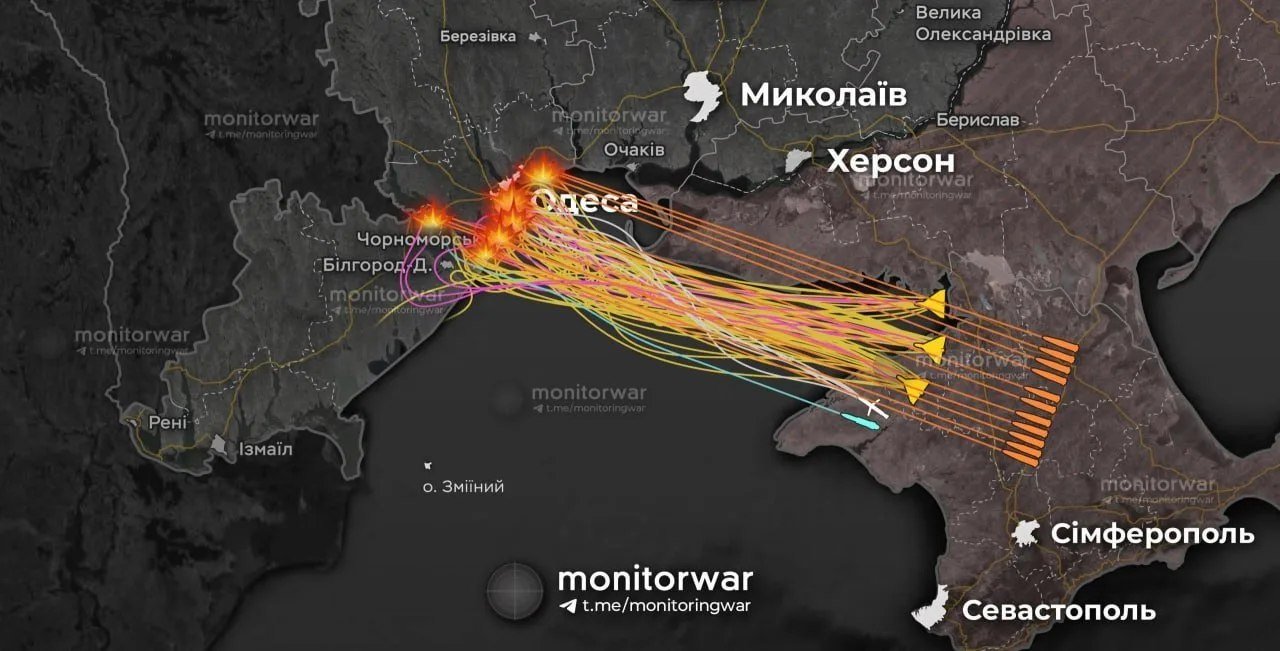
Ukraine - military missile strikes - Odesa port strikes, August 8, 2026.
A US-brokered truce over tankers
The Trump administration has become increasingly alarmed by the strikes against tankers in the Black Sea that threaten Kazakh oil exports and threaten to further destabilise the global energy markets.
Ukraine has privately agreed not to target some non-Russian oil tankers and Black Sea infrastructure critical to exporting Kazakhstan's crude, a US official told Bloomberg, following a meeting between senior US officials and Ukrainian leadership. Ukraine has set up points of contact allowing commercial shippers to share information and secure safe passage, the official said.
The arrangement follows a spate of attacks on vessels near the Caspian Pipeline Consortium (CPC) terminal at Novorossiysk that had chilled shipping activity in the area — the CPC terminal handles about 2% of global crude supplies and is Kazakhstan's main route to international markets, since the landlocked country has little alternative export capacity.
The tanker exemption is narrower than blanket immunity: it covers vessels carrying Kazakh crude only where they are not under Ukrainian sanctions, carry no Russian cargo and are not owned by Russian persons or entities, according to milblogger NOELreports.
Turkey tightens the Dardanelles
Turkey has imposed new restrictions on commercial vessels transiting the Dardanelles into the Black Sea, adding fresh uncertainty to one of the world's most important shipping routes as drone attacks on merchant vessels intensify, Bloomberg reported.
Turkey's General Directorate of Coastal Safety has temporarily suspended transit permits for some vessels bound for Novorossiysk, while other applications face longer approval times; Turkish authorities have not publicly explained the move.
The restrictions followed a second attack in a month on a Turkish-flagged vessel: a drone struck the interior of a Turkish bulk carrier operating near Novorossiysk on August 7, though the crew survived unhurt, according to the Turkish portal Haberdenizde.com and shipping-system operator Gemi Trafik, which said Ukrainian forces were responsible. Turkey's foreign ministry had already called on August 5 for both Russia and Ukraine to guarantee the safety of Black Sea navigation after the first such attack.
Russian foreign ministry spokesperson Maria Zakharova called the Ukrainian strikes "blatant robbery" on August 2 and said Moscow held both the perpetrators and organisers responsible — rhetoric that has done little to slow Ukraine's expanding campaign against what it calls Russia's shadow-fleet and port infrastructure.
The CPC terminal was shut for six to seven days in July, accounting for roughly a fifth drop in loadings, while Novorossiysk port itself was closed for a similar stretch, according to the account of one oil-market monitor — meaning overall Black Sea loadings fell by a comparable margin even before this week's attacks. CPC has continued operating despite the most recent drone strike on a loading vessel, as has Novorossiysk more broadly.
Pessimism grows
The mood among Western commentators tracking the war has turned more pessimistic as the conflict continues to escalate rapidly. Bloomberg columnist Marc Champion argued that delays in air-defence missile supplies — a shortfall he linked directly to competing demand from the US-Iran war — could eventually force Kyiv to accept terms it would otherwise reject.
“There are just three possible ways forward now,” he wrote: the West finds the interceptors Ukraine needs; Kyiv accepts Russia's demand to withdraw from Donbas; or the war continues at least into 2027, forcing Ukraine to endure “another, still more brutal winter.”
France and Italy are separately discussing sending some of their own SAMP/T air-defence systems to Ukraine, Champion noted, but their available stock of interceptors is smaller even than the US Patriot inventory Ukraine already depends on.
Russian accounts of the front line added a grimmer note. The Russian milblogger account, Military Summary, published drone footage it said showed forces in Sloviansk striking a pickup truck carrying Ukrainian personnel and, separately, a minibus in the same urban area — the account itself cautioned that such strikes “require careful target identification … particularly where civilians remain present.” No independent confirmation of the footage or its targets was available, and it should be read alongside IntelliNews' own prior reporting on Russian drones hunting civilians in contested Ukrainian cities, a pattern Ukrainian officials describe as a “human safari.”
The IntelliNews PRO service includes access to reports, exclusive market data, and more news that decision-makers care about. Stay ahead of the market with IntelliNews PRO.
Sign Up Now


