


Azerbaijan's H1 oil and gas exports fall in value despite volume gains
3 hours ago
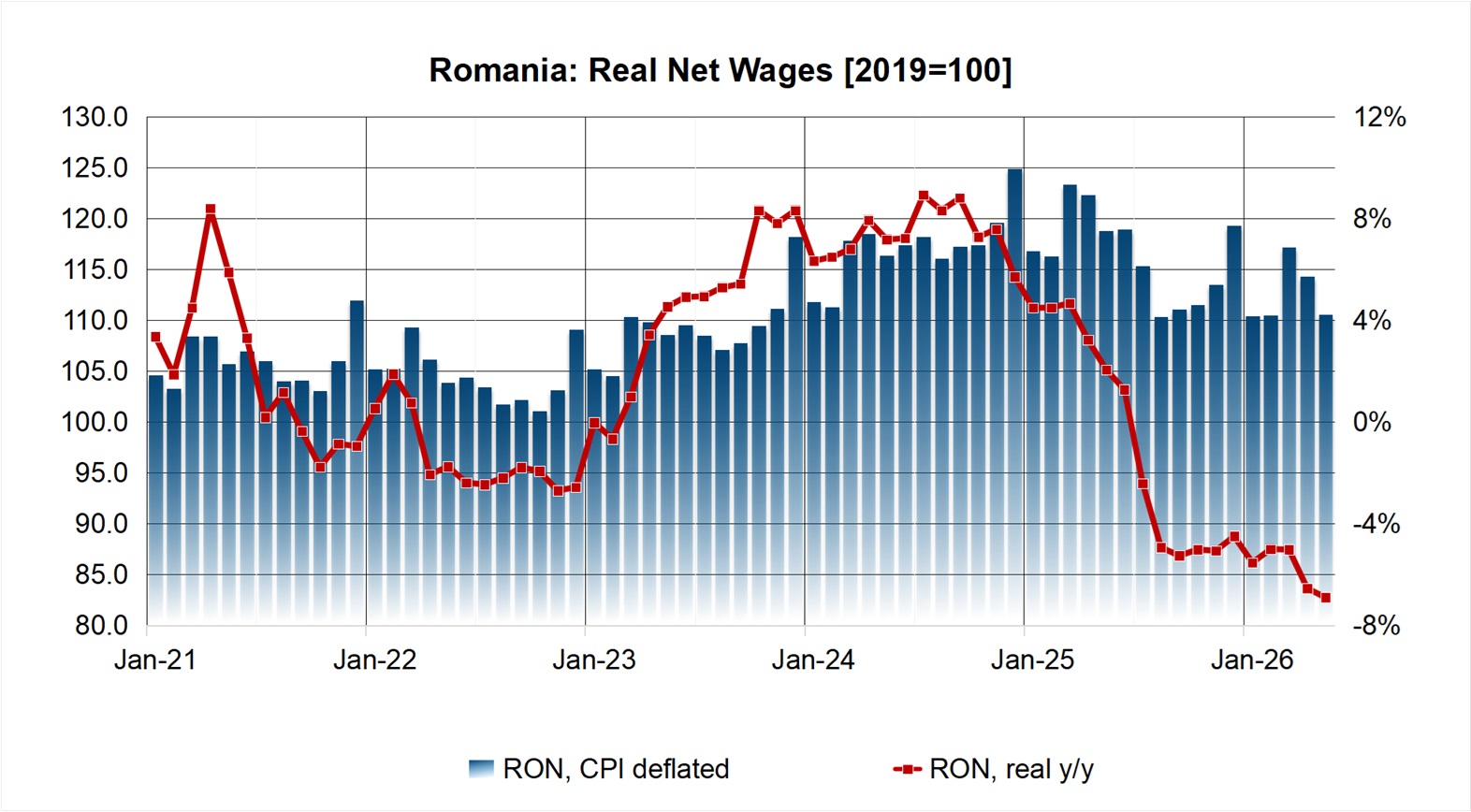
Romania's average net monthly wage (chart) increased by 3.2% year on year to RON5,684 (€1,086) in May, but accelerating inflation pushed real wages down by 6.9% y/y, the sharpest annual decline in purchasing power in the past decade, according to data published by the National Institute of Statistics (INS).
Consumer price inflation stood at 10.85% y/y in May, more than offsetting nominal wage growth.
Despite the sharp annual decline, real wages remain well above pre-pandemic levels. In absolute terms, the average net wage still stands around 10% above the 2019 average, although purchasing power has deteriorated significantly since the middle of 2025, when inflation accelerated following fiscal measures and the liberalisation of electricity prices.
Over the past three quarters, real net wages have broadly stabilised at around 110% of their 2019 level, excluding months when annual bonuses are paid. This compares with around 105% or less during 2021-2022, indicating that households have retained part of the fragile gains accumulated during the post-pandemic recovery despite the recent inflation shock. Compared to the sharp surge in real wages 2015-2020 (10% annual rise in real wages on average), this is, however, disappointing.
The squeeze on purchasing power nevertheless continues to weigh on consumer confidence. Retail sales have declined by around 5% since mid-2025, suggesting that households are responding not only to lower real income growth but also to heightened uncertainty over future earnings.
The outlook for wages remains mixed. In the public sector, salaries have been broadly frozen since November 2024 and, under the current framework, should increase from January 2027. However, the absence of political consensus on the new public sector Wage Law and wider public administration reform has created uncertainty over whether and in what form those increases will materialise.
Private-sector wage growth is also expected to remain subdued as weaker economic activity continues to limit companies' capacity to grant significant pay rises.
Romania's National Commission for Strategy and Prognosis (CNP), in its latest forecast published in February, expects real average net wages to decline by 1.9% in 2026 before returning to growth of 2.6% in 2027. The recovery is expected to be driven primarily by lower inflation rather than stronger nominal wage increases, supporting a gradual improvement in household consumption.
The IntelliNews PRO service includes access to reports, exclusive market data, and more news that decision-makers care about. Stay ahead of the market with IntelliNews PRO.
Sign Up Now
_0_1784176486.png)


