


Headline inflation in Uzbekistan cools slightly to 6.2% in August
3 hours ago
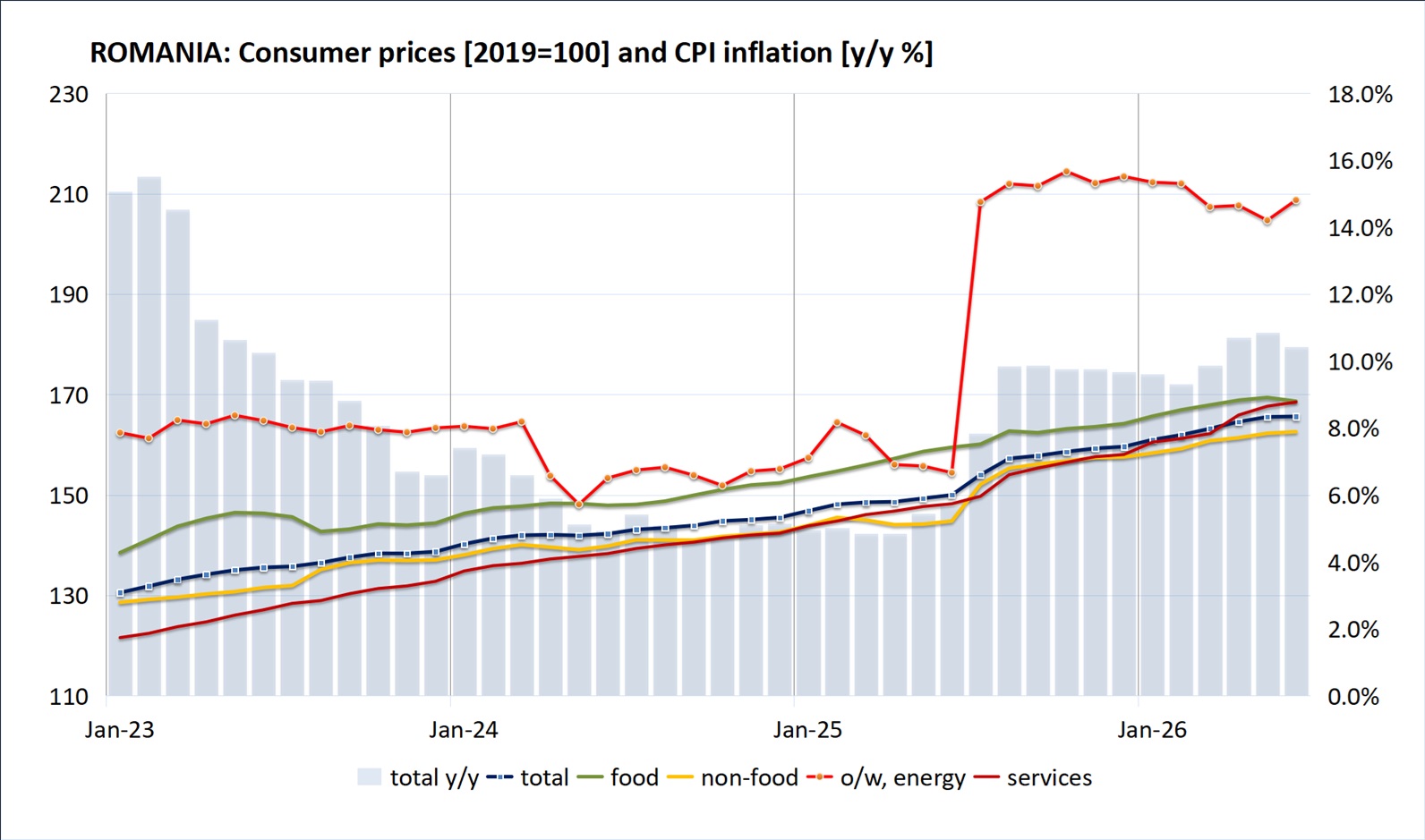
Romania's consumer prices (chart) were broadly unchanged in June, rising by just 0.06% month on month, while annual inflation eased marginally to 10.42% from 10.85% in May, according to data published by the National Institute of Statistics (INS).
The figures leave inflation poised for a sharp decline in the coming months as favourable base effects begin to take hold.
The annual inflation rate came in slightly below both Erste Group's forecast and the Bloomberg consensus median of 10.5%.
The National Bank of Romania (BNR) expects headline inflation to fall to 5.5% by the end of 2026, while independent forecasts point to a similar or slightly higher level. This implies consumer prices would rise by only around 1.7-2.1% during the second half of the year, compared with 3.8% in the first six months. The central bank projects inflation to slow further to 2.9% by the end of 2027.
Erste Group expects disinflation to accelerate over the summer, driven primarily by favourable base effects following last year's electricity price liberalisation and indirect tax increases. The bank identified volatile global fuel prices as the main upside risk to the inflation outlook.
Although the overall consumer price index was almost unchanged in June, individual price categories recorded significant movements. Subdued food prices show that, besides regulatory measures, austerity particularly affected low-income households, while the rising price of services and not-regulated non-food goods show still positive consumer sentiment in the more affluent households (supported by non-food sales having recovered during the first months of the year after severe drop in August and January).
Electricity prices rose by 2.2% month on month, ending seven consecutive months of declines. On an annual basis, electricity prices remained nearly 60% higher than a year earlier, contributing around 2.1 percentage points to the overall inflation rate. As electricity prices surged following market liberalisation in July 2025, the resulting base effects are expected to produce a marked decline in annual inflation from July onwards.
Food prices fell by 0.44% month on month, reflecting not only normal seasonal patterns but also broader easing in food inflation. Vegetable prices declined by 6.7% from May and were 2.6% lower than a year earlier, making a small negative contribution to headline inflation. Overall, food prices increased by 5.8% year on year, contributing around 1.9 percentage points to the annual inflation rate.
Services remained the fastest-growing component of the consumer basket, with prices increasing 13.7% year on year. Personal care services, including hairdressing, rose by 14.2%, while regulated rents in state-owned housing recorded one of the strongest increases, climbing 43.3% from a year earlier.
Non-food goods prices rose by 12.3% year on year, driven mainly by energy costs. Household energy prices—including electricity, natural gas and heating—increased by around 35% compared with June 2025, while fuel prices were 16% higher.
The latest data suggest that Romania has reached the turning point in its inflation cycle. With large one-off price increases from mid-2025 dropping out of the annual comparison, headline inflation is expected to fall rapidly over the coming months, although underlying price pressures in services continue to indicate persistent domestic inflationary momentum.
The IntelliNews PRO service includes access to reports, exclusive market data, and more news that decision-makers care about. Stay ahead of the market with IntelliNews PRO.
Sign Up Now


