


Ukraine's Coalition of the Willing launch a new Anti-Ballistic Missile Coalition at Paris summit
2 hours ago
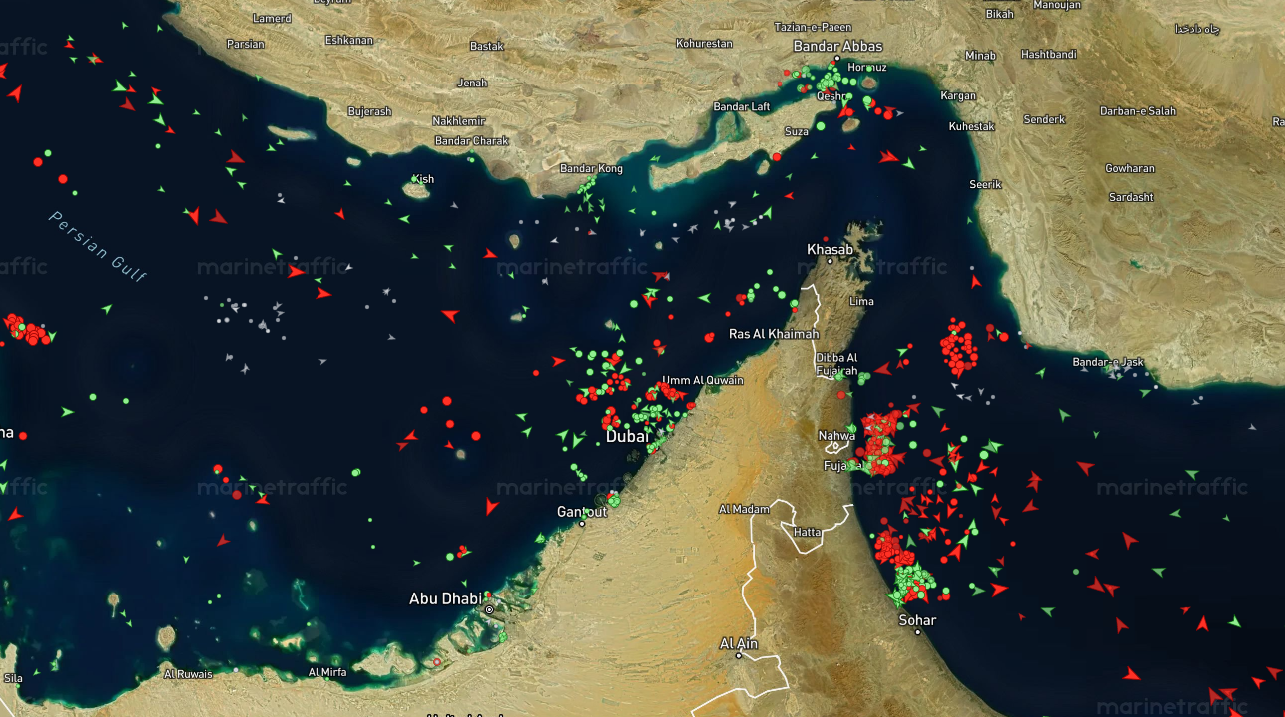
Dozens of tankers are anchored off the UAE's east coast and Oman rather than transiting the Strait of Hormuz, MarineTraffic ship-tracking data showed on July 14 seen by Newsbase.
The vessel positions reveal dense clusters of stationary tankers at the Fujairah and Khor Fakkan anchorages on the UAE's Gulf of Oman coast, with a further concentration off the Omani port of Sohar, while transit traffic inside the strait itself appears comparatively thin.
The pattern is consistent with owners and charterers holding vessels outside the waterway until the insurance and interdiction picture clarifies.
The congestion follows 24 hours in which the strait acquired two rival transit regimes. US President Donald Trump on July 13 declared the waterway open "with or without Iran", reinstated a blockade on Iranian shipping and announced a 20% levy on all other transiting cargo.
Iran's Islamic Revolutionary Guard Corps responded within hours, saying two supertankers had been struck and disabled after entering a mined corridor, and Iran's parliament has tabled a bill asserting Tehran's authority over the strait, adding to the rial-denominated toll regime introduced in April.
Individual vessel records illustrate both continuing flows and wartime disruption. The LPG tanker Monarch departed Qatar's Ras Laffan, the world's largest liquefied gas export complex, on July 11 bound for Quanzhou in China with an estimated arrival of August 1, indicating Qatari gas exports to Asia were still moving eastbound through the strait on the eve of the latest escalation.
The tanker Libra left Iran's Shahid Rajaei, the container and cargo port complex at Bandar Abbas, on July 13 bound for Kandla in India with an estimated arrival of July 17. A vessel departing Iran's principal port hours after Washington declared Iranian shipping subject to interdiction makes the ship an early test of whether and how the blockade will be enforced.
Other records point to prolonged idling. The LPG tanker Danuta I departed Dubai anchorage on February 27, at the outbreak of the war, yet reports an arrival at Khor Fakkan, a short coastal hop away, of July 15, suggesting the vessel has spent much of the conflict at anchor, although stale voyage data cannot be excluded.
The products tanker Ostria was meanwhile underway from Iraq's Khor Al Zubair towards an offshore holding position, indicating Iraqi refined product exports continue.
The tracking data cannot corroborate the IRGC's claim of strikes on two supertankers. The Guards said the vessels had switched off their navigation systems before entering the mined corridor, meaning they would not appear in AIS feeds, and transponder manipulation is in any case widespread in sanctioned Gulf trades. AIS positions are self-reported by vessels and the picture they give is indicative rather than comprehensive.
The strait carries roughly a fifth of global oil consumption and around a third of seaborne LNG trade. With Washington demanding a 20% levy and Tehran operating tolls under threat of mines and interdiction, shipowners, charterers and war-risk underwriters face pricing passage through a waterway claimed by two hostile authorities at once, and the anchorages filling up off Fujairah suggest many are declining to price it at all.
The IntelliNews PRO service includes access to reports, exclusive market data, and more news that decision-makers care about. Stay ahead of the market with IntelliNews PRO.
Sign Up Now


