


Vietnam banks shift lending towards longer maturities as SBV eases funding rules
6 hours ago
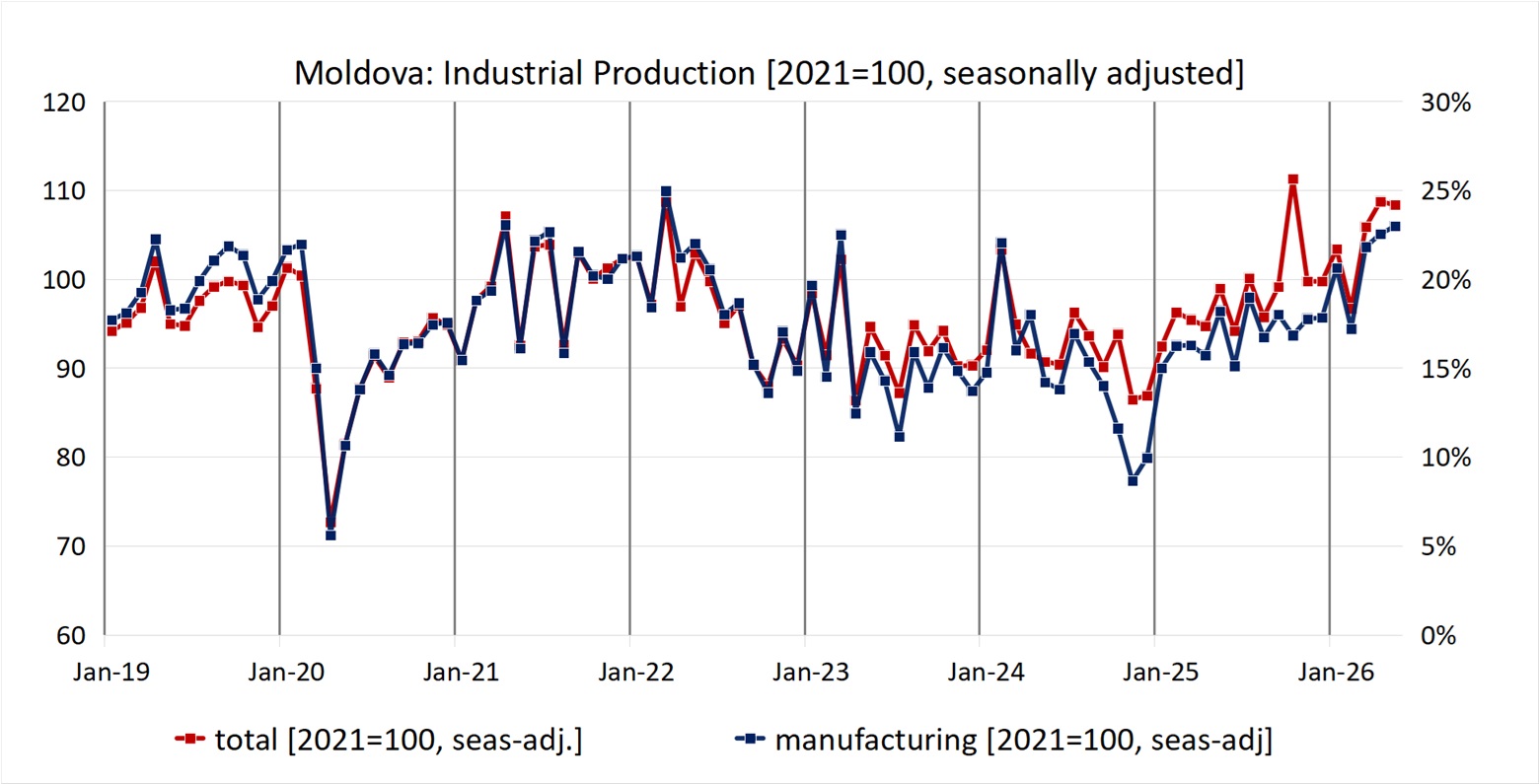
Moldova's industrial production (chart) increased by 7.3% y/y in January-May, driven by a 6.2% expansion in the core manufacturing sector and a 14.7% rise in utilities output, according to data published by the National Bureau of Statistics (BNS).
Manufacturing output in the first five months of 2026 stood just 0.8% above the level recorded in the same period of 2021, reflecting a relatively resilient performance against the backdrop of the prolonged weakness affecting much of European industry.
Manufacturing activity reached its highest level in four years in May after expanding by 8.2% y/y. The sustained growth recorded over the past 18 months has gradually offset the sharp contraction seen in 2022 and most of 2023, when the sector was hit by the consequences of Russia's war against Ukraine, including soaring energy costs, supply disruptions and weaker external demand.
Compared with January-May 2021, the country's key food and beverages industry expanded by 8.2% and served as the main growth driver. Several smaller manufacturing branches posted significantly stronger gains.
Output of machinery and equipment more than doubled over the period, while the manufacture of fabricated metal products and pharmaceuticals increased by more than 70%. Metallurgical production also rose by 53% compared with five years earlier. The growth was driven mainly by new production facilities.
By contrast, labour-intensive light industries continued to lose competitiveness. Output of electrical equipment also declined by 54% compared with January-May 2021, possibly reflecting the slowdown in the automobile industry, while the energy-intensive chemicals industry contracted by 24%.
Outside manufacturing, utilities output increased by 18% over the five years, reflecting the rapid expansion of domestic electricity generation, particularly from renewable energy sources.
While the continued recovery of manufacturing will largely depend on foreign investment, export demand and progress in Moldova's EU accession process, the utilities sector is expected to maintain its growth trajectory, supported by investments aimed at increasing energy self-sufficiency and reducing reliance on imported electricity.

The IntelliNews PRO service includes access to reports, exclusive market data, and more news that decision-makers care about. Stay ahead of the market with IntelliNews PRO.
Sign Up Now


