


US has burned through half Patriot, 80% of THAAD interceptors fighting Iran – CNN
2 hours ago

Hungarian deep-tech startup Edortech has developed ONLi, a patented tin-alloy anode platform designed to replace conventional graphite anodes in lithium-ion and sodium-ion batteries, promising significant gains in energy density, charging performance and manufacturing efficiency. The technology, developed over more than a decade before being spun out from the Bay Zoltán Research Institute into a commercial venture, is now entering industrial validation as the company seeks partnerships with battery manufacturers and automotive suppliers.
In an interview with IntelliNews, Edortech CEO Adam Vida discusses how the company overcame the longstanding challenges associated with tin-based anodes, why its technology can be integrated into existing battery production lines with minimal disruption, and how it aims to build a European supply chain for next-generation batteries.
IntelliNews: The ONLi technology promises a 70% volumetric energy density increase compared to standard graphite anodes. How does the continuous tin-alloy layer handle the historic material challenges of structural degradation and volumetric expansion during high-rate cyclability?
Adam Vida: Your question addresses one of the key scientific challenges of tin-based anodes. Pure tin indeed undergoes significant volumetric expansion during lithiation. We encountered the same challenge during the early stages of development while evaluating hundreds of different alloy compositions and process parameters.
Since the information you refer to was published, we have further improved the technology. Today, we are able to achieve up to a 100% increase in volumetric energy density compared with conventional graphite anode electrodes under our target cell configuration.
Our solution was not based on a single breakthrough, but on the optimisation of the alloy composition, the electrochemically active microstructure and the deposition morphology. The result is a continuous metallic alloy layer that accommodates the repeated volume changes while maintaining its mechanical integrity and electrical conductivity throughout cycling.
Although the volumetric expansion of our alloy remains somewhat higher than that of graphite, it is significantly lower than that of silicon-based anodes. More importantly, our ex-situ structural characterisation of cycled electrodes shows that the alloy remains mechanically stable after
repeated charge-discharge cycles, supporting high-rate operation without the severe degradation typically associated with high-capacity alloy anodes.
IntelliNews: Traditional cell manufacturing relies on powder-based compaction with binders and solvents. Since Edortech utilises a solid, binderless metal alloy layer, what specific modifications are required for existing roll-to-roll production lines to adopt your technology?
AV: One of the key advantages of our technology is that no major modifications to existing cell manufacturing lines are required.
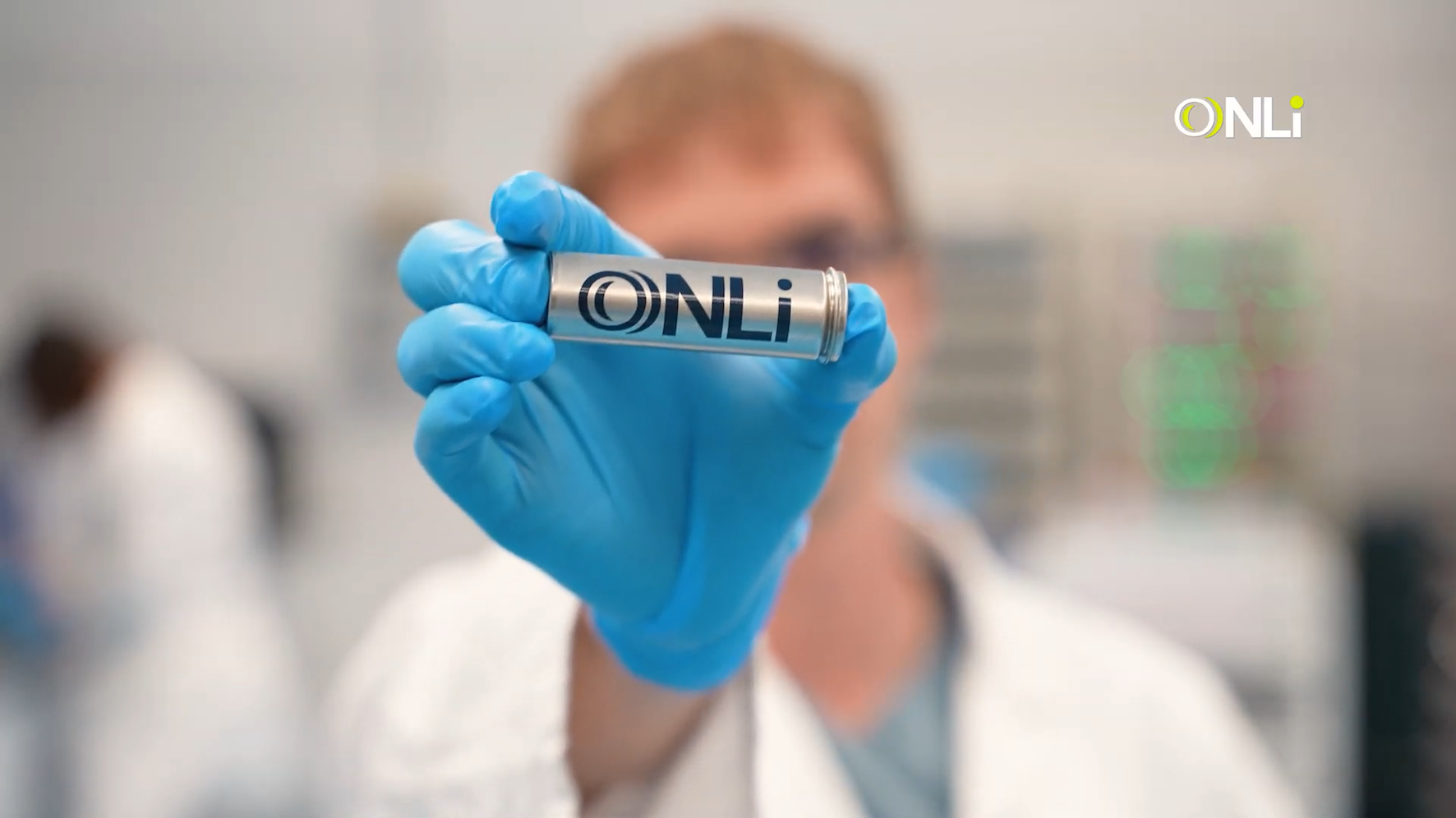
21700 cell assembled inhouse with ONLi anode electrode. / Edortech.
Edortech delivers a finished anode on copper foil in the dimensions (width / thickness) required by the customer. From the cell manufacturer’s perspective, our product enters the production flow at essentially the same point as a conventional anode electrode. The difference is that several upstream manufacturing steps become unnecessary. There is no slurry preparation, no coating, no solvent evaporation, no drying ovens, no binder system and no calendering. These process steps are replaced by our proprietary anode electrode manufacturing technology before the material reaches the cell producer.
Once the anode electrode is supplied, the remaining manufacturing process — including electrode slitting, stacking or winding, cell assembly, electrolyte filling, formation and ageing — remains essentially unchanged. This compatibility with existing roll-to-roll production infrastructure significantly lowers the barrier to industrial adoption and reduces the capital investment required to introduce higher-performance anode electrode technology.
We do not ask battery manufacturers to redesign their factories — we simply provide a ready to use anode electrode with good qualities.
IntelliNews: Your dual mandate as chief executive officer of Edortech and R&D director at the state-funded Bay Zoltán Research Centre is impressive. How are the intellectual property boundaries and research assets legally separated between the public institute and your commercial entity to satisfy international venture capital compliance?
AV: In fact, the two roles complement each other very well because they are clearly separated from both a legal and an operational perspective.
The Bay Zoltán Research Centre is Hungary's leading applied research and innovation organisation. Unlike universities or the Hungarian Academy of Sciences, our primary mission is not fundamental research but bridging the gap between scientific results and industrial products. We work closely with companies to transform research outcomes into commercially viable technologies.
Edortech is one of the Bay Research Centre's spin-off companies, established specifically to industrialise and commercialise the ONLi technology. The intellectual property required for commercial exploitation has been legally transferred to Edortech under formal agreements. As a result, Edortech owns and manages the IP portfolio, while the Bay Research Centre continues to focus on developing new technologies and supporting industrial innovation.
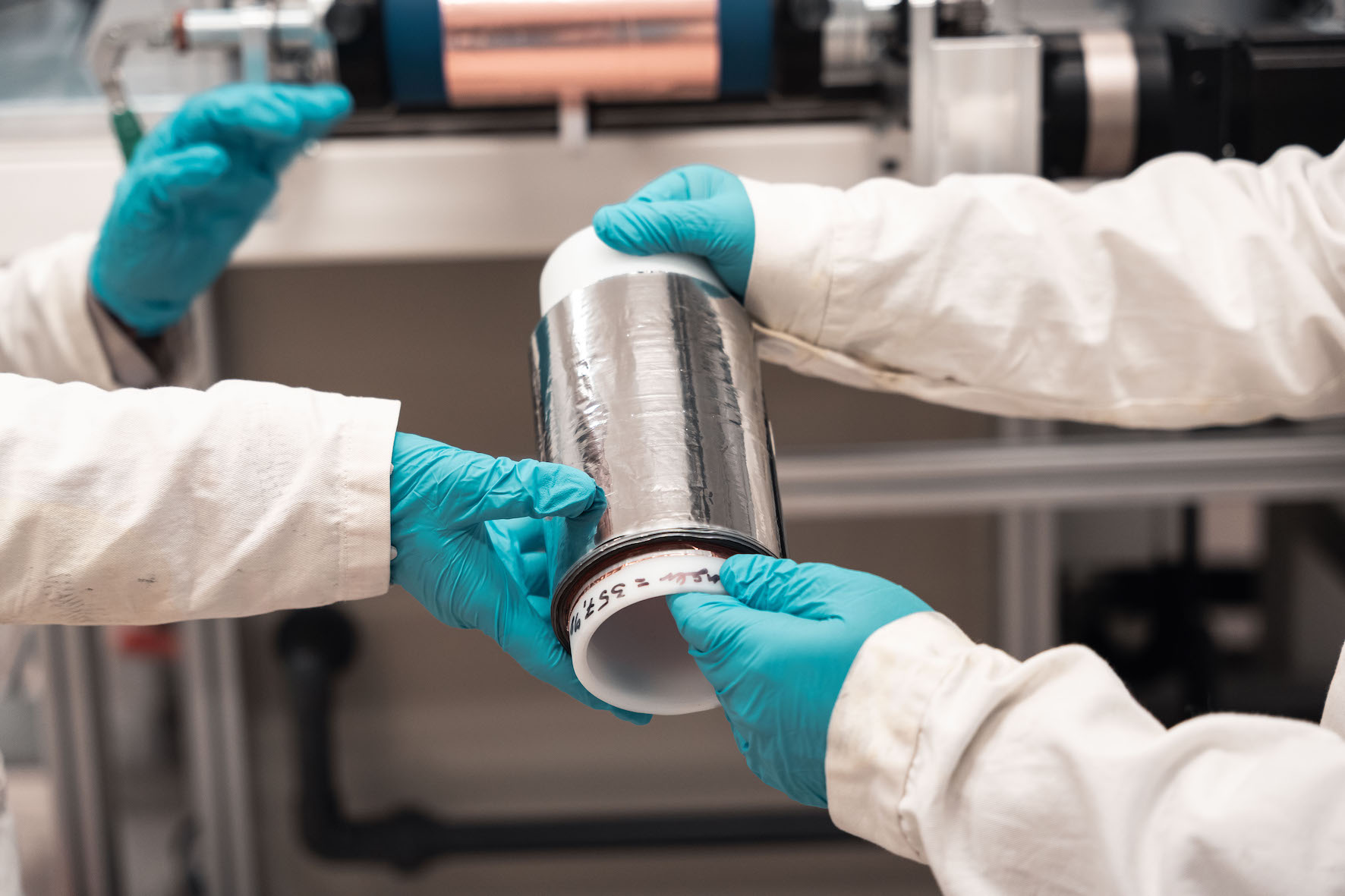
Ready to use ONLi anode electrode roll. / Edortech.
This spin-off model has been intentionally designed to create a clear separation between public research activities and commercial operations. It provides transparency for investors, establishes an unambiguous ownership structure for intellectual property, and enables venture capital investment under internationally recognised governance principles.
More broadly, this reflects the strategic transformation of the Bay Research Centre over recent years. Rather than measuring success solely by scientific publications, we increasingly measure it by the industrial impact of the technologies we develop, the companies we create, and the products that ultimately reach the market.
IntelliNews: The global battery supply chain is heavily consolidated, with major Asian manufacturers dominating graphite and silicon-carbon supply lines. What is the geopolitical sourcing strategy for the specific tin alloys required for the ONLi architecture, and how do you protect against raw material price volatility?
AV: One of Edortech’s strategic priorities is to build not only a new electrode technology, but also a resilient and sustainable supply chain around it.
Our sourcing strategy is based on diversification. The metallic raw materials required for the ONLi architecture are available from multiple regions, including Europe and North America, and can be sourced from both primary mining and secondary recycling streams. This significantly reduces geopolitical dependency compared with supply chains that rely on a limited number of countries or highly concentrated processing capacity.
Circularity is another fundamental principle of our technology. From the beginning, we designed ONLi with life-cycle thinking in mind, enabling the use of recycled feedstocks wherever technically and economically feasible. Several of our strategic partnerships are focused specifically on establishing regional supply chains based on European resources and recycled materials.
Regarding price volatility, we believe the best protection is not speculation, but flexibility. Because our technology is not dependent on a single supplier or a single geographic region, we can adapt our sourcing strategy as market conditions change. This provides greater resilience against fluctuations in raw material prices and geopolitical disruptions while supporting the development of a more secure European battery ecosystem.
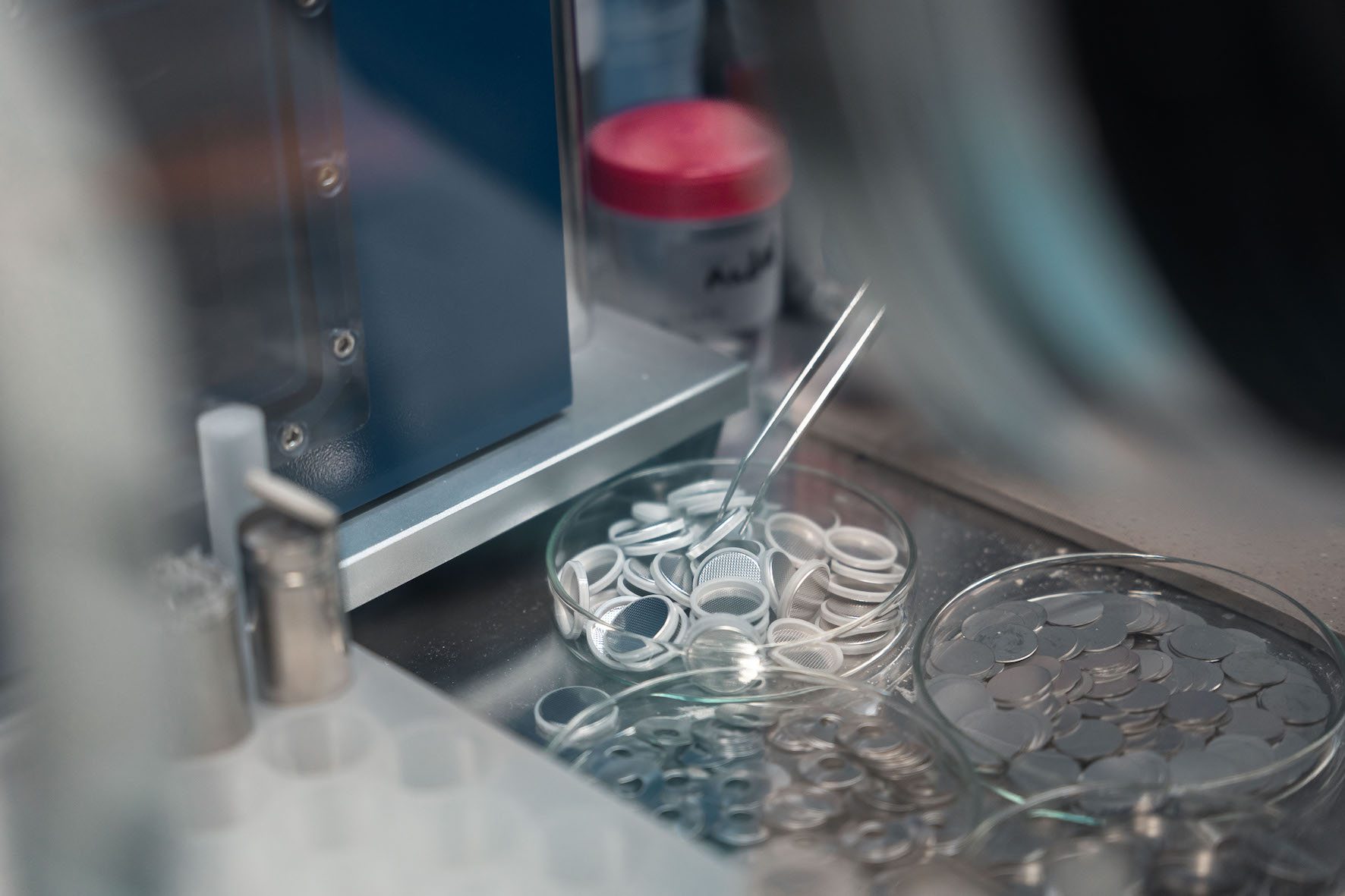
2032 coincell parts are ready to be assembled inhouse with the ONLi anode electrode. / Edortech.
IntelliNews: Fast-charging safety is a critical bottleneck for electric vehicles. Your documentation indicates that your electrochemical profile sits safely higher than the lithium deposition potential. Can you walk us through the thermodynamic stability of the ONLi anode under ultra-fast charging conditions?
AV: The fundamental advantage comes from the operating potential of the ONLi anode electrode. Conventional graphite stores lithium very close to the potential at which metallic lithium begins to deposit. Under ultra-fast charging, especially at low temperature or high state of charge, even a relatively small increase in electrochemical polarisation can push parts of the electrode into the lithium-plating regime.
The ONLi anode electrode’s metal alloy operates at a measurably higher potential relative to lithium metal. This creates a wider thermodynamic safety margin between normal lithium-alloying reactions and the onset of metallic lithium deposition. In practical terms, the electrode can tolerate greater charging overpotential before lithium plating becomes thermodynamically favourable.
There is also an important kinetic benefit. Our active material is formed as a continuous, highly conductive metallic layer directly on the copper current collector. This eliminates the binder-rich particle network used in conventional powder electrodes and reduces both electronic transport limitations and local current-density inhomogeneities. More uniform current distribution helps to minimise local hotspots where lithium deposition would otherwise be more likely to begin.
Of course, no anode chemistry can make fast charging independent of the full cell design. Electrolyte formulation, cathode behaviour, temperature management, electrode balancing and charging protocol all remain critical. However, the higher operating potential of ONLi provides a fundamentally more favourable electrochemical window for fast charging than graphite.
Our objective is therefore not simply to charge the electrode faster in a laboratory test, but to combine this intrinsic plating resistance with optimised electrolyte chemistry and cell engineering. That is the basis of our development programme targeting charging rates of up to 4C (or higher in special applications) while maintaining cycle life and safety.
IntelliNews: Many breakthrough battery chemistries perform exceptionally in laboratory conditions but fail during mass manufacturing scaling. What is the current manufacturing readiness level of your technology, and when do you anticipate full-scale automotive validation trials?
AV: This is probably one of the most important questions in battery innovation.
One of our strategic decisions was to remain in “stealth mode” until we had successfully reached TRL 6. Many promising battery technologies receive significant publicity after laboratory-scale demonstrations, but we deliberately chose not to communicate publicly until we had validated a manufacturing process capable of producing continuous electrodes under pilot-scale conditions.
Today, we operate two pilot production machines with a combined annual capacity of approximately 2 tonnes of anode material. These systems are not laboratory equipment — they are engineering platforms designed to validate continuous manufacturing, optimise process parameters and supply material for industrial qualification programs.
Our next milestone is the construction of our first industrial production module with an annual capacity of 100 tonnes, which we plan to commission by 2028. This will demonstrate the scalability of the technology while providing sufficient production volume for early commercial applications.
In parallel, we are conducting several independent validation programmes with international partners, including the Austrian Institute of Technology (AIT), TaiSan in the United Kingdom, an industrial partner in the United States and a Turkish battery manufacturer. Naturally, we also manufacture and test our own prototype cells, as this is essential for rapid development. However, we place particular value on independent third-party validation, because we believe the credibility of a new battery technology should be established by recognised external organisations rather than solely by its developer.
With respect to automotive qualification, it is important to recognise that the validation timeline depends not only on the anode technology but also on the qualification processes of automotive OEMs and cell manufacturers. Our current focus is therefore on completing industrial validation with our partners while preparing the technology for large-scale manufacturing.
IntelliNews: Given your stated objective to ensure that Hungarian innovations scale from a domestic base, what are the primary commercial obstacles you face when negotiating licensing agreements with global original equipment manufacturers (OEMs)?
AV: The biggest obstacle is actually not geography — it’s risk management.
The battery industry is understandably conservative. Cell manufacturers and automotive OEMs qualify materials through rigorous validation programmes because introducing a new electrode material affects the performance, safety and lifetime of the entire cell. As a result, every new technology must earn trust through data rather than promises.
Naturally, some partners are initially cautious when they hear about a tin-based alloy anode, simply because previous generations of tin anodes were associated with significant volume expansion. That is why we focus on complete transparency, independent validation and close technical collaboration. Rather than asking customers to believe our claims, we invite them to evaluate the technology themselves through joint testing programmes.
This approach has proven to be very effective. During the past few months, interest has accelerated significantly. We have established more than two dozen strategic cooperation agreements and are engaged in technical and commercial discussions with even more industrial partners worldwide. We see this as strong evidence that once companies have access to real performance data and understand the manufacturing compatibility of ONLi, the conversation quickly shifts from scepticism to implementation.
More broadly, we believe Europe needs more companies willing to bring breakthrough technologies from the laboratory to industrial production. Our ambition is not only to develop world-class battery technology in Hungary, but also to demonstrate that globally competitive deep-tech companies can be built and scaled from Central Europe.
IntelliNews: The gravimetric energy density of your cell shows an increase to 310 Wh/kg. How does this weight efficiency translate into the total pack-level economics for utility-scale grid storage platforms versus passenger electric vehicles?
AV: Based on our current results, these figures need to be updated. Since these numbers were published, we have achieved up to 340 Wh/kg in certain cell formats under our current development programme. However, we believe the truly transformative advantage of ONLi lies not only in gravimetric performance, but even more in its volumetric energy density, which can reach up to twice that of conventional graphite-based cells.
The economic impact depends on the application.
For passenger electric vehicles, higher gravimetric energy density enables either longer driving range at the same battery weight or a lighter battery pack delivering the same range. At the pack level, this can improve vehicle efficiency, reduce structural mass and provide greater flexibility for vehicle designers.
For stationary energy storage, however, volumetric energy density often becomes even more important than weight. More energy can be installed within the same container or building footprint, reducing balance-of-system costs associated with enclosures, infrastructure, installation and logistics. This can significantly improve the overall economics of utility-scale storage projects, particularly where available space is limited.
Another important advantage is versatility. The ONLi anode is compatible with both NMC and LFP cathode chemistries, and our platform is also being developed for sodium-ion batteries. This flexibility enables us to address multiple market segments with the same core technology, from premium electric vehicles to stationary energy storage and other specialised applications.
Rather than developing a single battery product, we see ONLi as a platform technology capable of supporting a broad portfolio of next-generation cell architectures.
IntelliNews: Since your anode layer is significantly thinner than conventional graphite alternatives (6 to 20 micrometres versus 110 to 250 micrometres), how do you ensure uniform thermal dissipation across the cell architecture during extended operational stress?
AV: The key lies in the thermal conductivity of the electrode architecture.
A conventional graphite anode is a composite material consisting of graphite particles, binder and conductive additives. Heat must propagate through numerous particle-to-particle interfaces before reaching the copper current collector, resulting in relatively poor thermal transport.
In contrast, the ONLi anode is a continuous metallic alloy layer deposited directly onto both sides of the copper foil. This creates a direct metal-to-metal thermal pathway with substantially higher thermal conductivity than a conventional graphite composite electrode. Our measurements confirm that this architecture enables significantly more efficient heat dissipation.
The active layer is also considerably thinner — typically 6-20 μm per side, compared with approximately 110-250 μm for conventional graphite anodes. The combination of a thin metallic layer and high thermal conductivity reduces thermal gradients within the electrode and promotes a more uniform temperature distribution during sustained high-power operation.
Naturally, the thermal behaviour of a complete battery cell also depends on the cathode, separator, electrolyte and cooling system. However, from the anode perspective, the ONLi architecture provides a fundamentally more efficient pathway for heat removal, which is one of the reasons we consider it particularly attractive for high-power and fast-charging applications.
IntelliNews: Prospective investors are highly focused on the full lifecycle of clean technology. What are the recycling and end-of-life processing advantages of a solid metal alloy anode compared to toxic, solvent-heavy powder compacts?
AV: We believe sustainability must be considered across the entire life cycle of the battery, from manufacturing to end-of-life recycling.
The first advantage appears during production. Our manufacturing process is fundamentally different from conventional slurry-based electrode fabrication. It operates in a closed electrochemical system, eliminating binder chemistry, solvent evaporation and the associated energy-intensive drying process. Water consumption is extremely low — typically only a few litres per day (most of it from evaporation), compared with the hundreds of cubic metres often required in conventional electrode production. The process also allows the electrolyte to be regenerated and reused, and we have developed proprietary know-how for this recycling procedure.
The second advantage concerns the battery itself. The ONLi anode is a continuous metal-on-metal architecture rather than a particle-based composite electrode containing binders and polymeric additives. This creates opportunities for simpler and more efficient material recovery at the end of the battery’s life. In parallel with our anode development, we are actively investigating recycling strategies specifically tailored to ONLi-based cells to maximise the recovery of valuable materials.
Finally, circularity begins with material sourcing. The metallic raw materials used in our process can already be obtained from recycled feedstocks, allowing us to build regional, circular supply chains instead of relying exclusively on primary raw materials. Our ambition is therefore not only to develop a higher-performance anode, but also one that is significantly more sustainable throughout its entire life cycle.


