


LONG READ: De-dollarisation gathering momentum, driven by geopolitics and ballooning debt fears
14 hours ago
Someone in northern Afghanistan near the Tajik border is targeting Chinese workers just across the river inside Tajikistan.
On November 26, three Chinese miners were killed in an attack in which assailants used a drone equipped with firearms and grenades, while on November 30, two Chinese roadworkers were shot dead.
It is difficult to say who is behind the killings or pinpoint their motive, but the violence has led to the highest-level contact between authorities of Tajikistan and Afghanistan since the Taliban returned to power in Kabul in August 2021.
Suspects
Right after the first attack, in Tajikistan’s southwestern Shamsiddin Shohin district, Tajik authorities blamed drug smugglers. The sparsely populated, rugged mountains along the Tajik-Afghan border are ideal territory for smuggling precious and semi-precious stones, weapons, cigarettes and narcotics.
Why smugglers would choose to kill Chinese workers at a gold extraction site was not explained, though there was some speculation the attack was made to revenge an incident that took place several days earlier.
During the night of November 20, Tajik border guards detected a group crossing from Afghanistan into Tajikistan. The guards then used an armed drone to attack the group, killing two of the intruders. Tajik border guards had never before used a drone in such a way. The day after the drone strike, the bodies and 116 packages of narcotics were found.
If revenging the deadly drone operation was the motive, it remains unclear why the perpetrators attacked a workers’ camp when a Tajik border station is not far away.
It was easier to believe the Chinese were not the intended target, but following the second attack, it became impossible to consider that the Chinese were simply collateral damage in a feud between Tajik border guards and smugglers.
In November 2024, there was an attack on a gold mining site, also in Shamsiddin Shohin district, which left one Chinese worker dead, and four wounded. A Tajik worker was also injured. As with the November 26 attack, Tajik authorities pointed the finger at drug smugglers, without addressing how it was that such individuals, presumably trying to slip by undetected along routes known to them, ended up losing their way and firing on a gold mining camp when they were discovered.
If not them, then who?
However, if it is not drug smugglers who are behind the armed assaults, who is?
Some information emerged that two people were apprehended in Afghanistan’s Maymai district for the shooting of the two Chinese roadworkers, but details about those detained or their motives has not been provided.
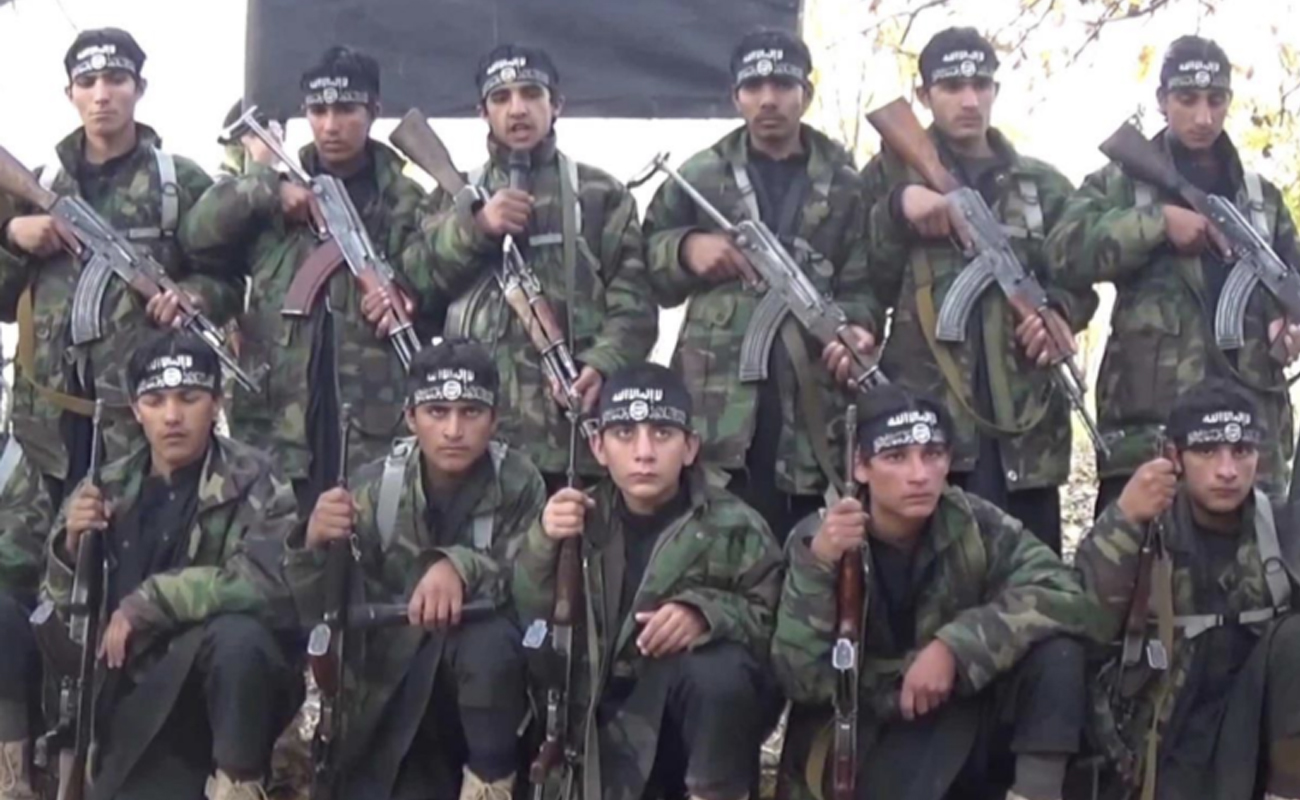
The ISKP would be expected to claim the attacks, if it was the perpetrator (Credit: Voice of Khorasan magazine).
The two most obvious suspects are militant-terrorist groups Islamic State of Khorasan Province (ISKP, or ISIS-K) and East Turkestan Islamic Movement (ETIM).
ISKP is based in Afghanistan. In its propaganda, it condemns China’s role in Afghanistan and Central Asia. The group has carried out attacks targeting Chinese nationals in Afghanistan, most notably a December 2022 attack on a Kabul hotel where Chinese diplomats and businessmen were known to regularly stay.
In May 2022, ISKP militants launched rockets from Afghanistan into Tajikistan, but there were no casualties or damage.
Notably, ISKP usually claims responsibility for its attacks. It would almost certainly have posted something on deadly attacks made on Chinese workers if it had carried them out.
ETIM is an Uyghur separatist group that was active in the chaos of Iraq and Syria 10 years ago. It showed up in Afghanistan shortly after US and allied forces entered the country. Many of its militants left for the Middle East. Some returned to Afghanistan after groups such as ISIS and others were beaten back in Iraq ad Syria. ETIM originated in China’s western Xinjiang Uyghur Autonomous Region (XUAR), which borders Central Asia. Its goal is the liberation of XUAR from China.
ETIM is an ally of the Taliban. But after the Taliban retook power just over four years ago, they promised all of Afghanistan’s immediate neighbours that they would not allow any militant groups present in the country to plan or carry out attacks on them. Taliban authorities have also given guarantees to Chinese officials that ETIM will not be allowed to carry out attacks on China, or on Chinese interests in Afghanistan.
In searching for the culprit behind the five Chinese workers’ deaths, there is another possibility. On December 2, Taliban Foreign Minister Amir Khan Muttaqi vaguely blamed groups trying to damage “positive relations” between Afghanistan and Tajikistan.
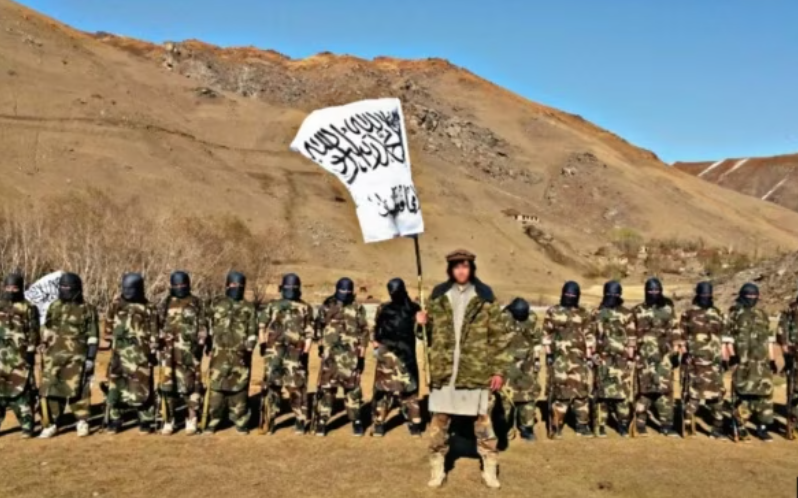
Terrorist group Jamaat Ansarullah group, which formed in Tajikistan, might be wary of improved relations between Dushanbe and Kabul leaving it high and dry (Source: social media).
There is at least one group that comes to mind here, namely Jamaat Ansarullah, a terrorist organisation from Tajikistan that allied with the Taliban to fight foreign and Afghan government forces.
At least several hundred Jamaat Ansarullah fighters are still in Afghanistan. In late 2021, when tensions between the Tajik government and Taliban were growing, some Jamaat Ansarullah militants were sent to reinforce Taliban fighters posted along the Tajik border.
In January 2024, there were reports that a Jamaat Ansarullah commander, Muhammad Sharifov, aka Mahdi Arsalon, was missing after leaving months earlier for Kabul. Some accounts said he was taken hostage by drug traffickers. Others explaining his disappearance claimed that the Taliban had thrown Arsalon in prison or even killed him.
Then in February 2024 there were reports of secret talks between Taliban and Tajik officials where the Taliban offered to act as mediators in talks between Tajik authorities and Jamaat Ansarullah in Afghanistan. However, Tajik government sources said Dushanbe was pressing for the group’s fighters to either be extradited to Tajikistan or for the Taliban to take measures to disarm and disband the group.
Ties between Tajikistan and the Taliban are improving. Some members of Jamaat Ansarullah might wonder if their group’s continued presence in Afghanistan might become part of the Tajik-Taliban negotiations. Raising tensions along the Tajik-Afghan border could help prolong Jamaat Ansarullah’s stay in Afghanistan.
One last possibility that could explain the killing of the Chinese workers focuses on Taliban fighters present by the Tajik border. Might some of these fighters have staged the attacks on their own?
Since late August, there have been two exchanges of gunfire between Tajik border guards and Taliban fighters. Several Taliban and possibly some Tajik border guards also were left dead.
In both clashes, the Tajik border guards involved were in Shamsiddin district, the same district where the Chinese mine workers were killed on November 26.
The attack on the Chinese roadworkers, meanwhile, occurred in Darvaz district, the next district east of Shamsiddin Shohin.
It could be that some Taliban fighters who lost comrades in the recent exchanges of gunfire with the border guards decided to create some pandemonium on the Tajik side of the border.
It is interesting that there are also Chinese workers on the Afghan side of the frontier, some of whom are also mining for gold, yet they were not attacked.
A silver lining
The return to power of the Taliban greatly displeased the Tajik government. Harsh verbal exchanges became the norm, but since autumn 2024, there have been some amicable contacts.
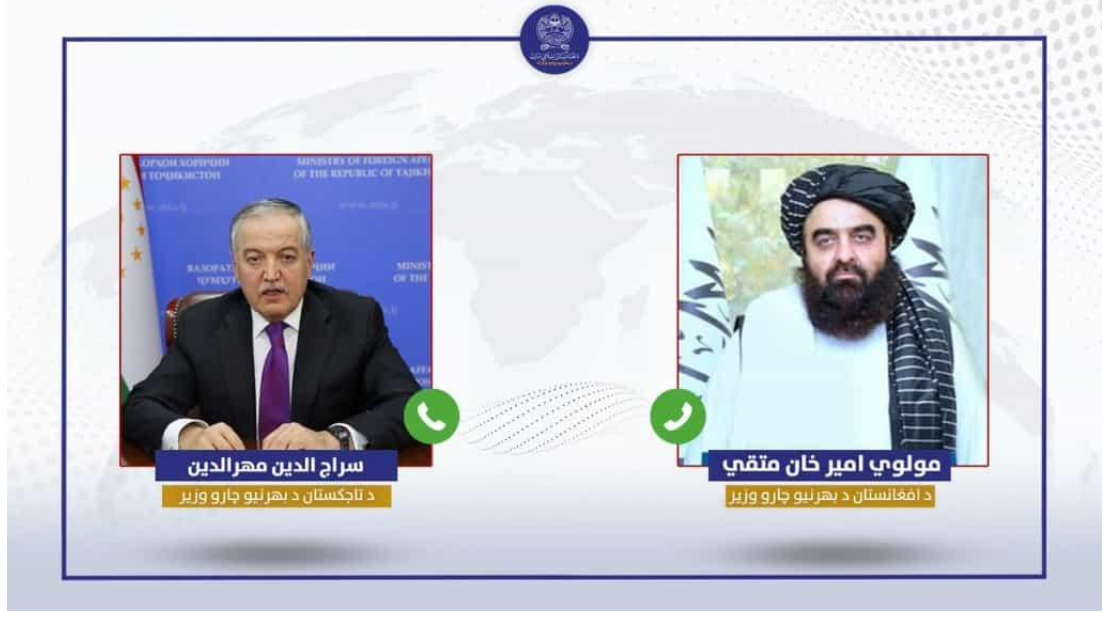
In an unprecedented phone call, the Taliban's top diplomat Mawlawi Amir Khan Muttaqi spoke with Tajik counterpart Sirajuddin Mehruddin (Credit: Pajhwok).
Tajikistan’s security chief Saimumin Yatimov made an unannounced visit to Kabul in September 2024. In May this year, the head of Afghanistan’s electricity utility attended a meeting in Tajik capital Dushanbe of counry representatives from the Central Asia-South Asia (CASA)-1000 power transmission project. The governor of Afghanistan’s northern province of Balkh met with Yatimov in Dushanbe in late October and a Tajik government delegation was in Kabul in mid-November.
The attacks on the Chinese workers met with condemnation from both Tajik and Taliban authorities.
The Taliban permitted a team from Tajikistan to inspect the suspected staging areas for the attacks inside Afghanistan. The Tajik and Taliban foreign ministers spoke by telephone on December 2. It was the first ever direct communication between the two.
China has called on Chinese companies and workers in Tajikistan near the Afghan border to leave the area. Beijing is waiting for answers about the perpetrators of the attacks.
Tajik President Emomali Rahmon ordered military and security forces to do everything possible to prevent another attack as Tajik authorities wait for answers from the Taliban.
Whom will the Taliban name as the culprit knowing they have to satisfy both the Tajik and Chinese authorities?


