


Linde LienHwa — a hydrogen pioneer in Taiwan’s energy transition
13 hours ago
Iran's capital, Tehran, will resume normal operations on December 3 after authorities lifted the air pollution emergency following improved weather conditions, Eghtesad Online reported.
Stagnant autumn weather, weak winds and falling temperatures have combined with industrial emissions, vehicle exhaust and widespread waste burning to produce a dense regional haze affecting hundreds of millions of people across Asia with Tehran often topping the rankings for polluted weather.
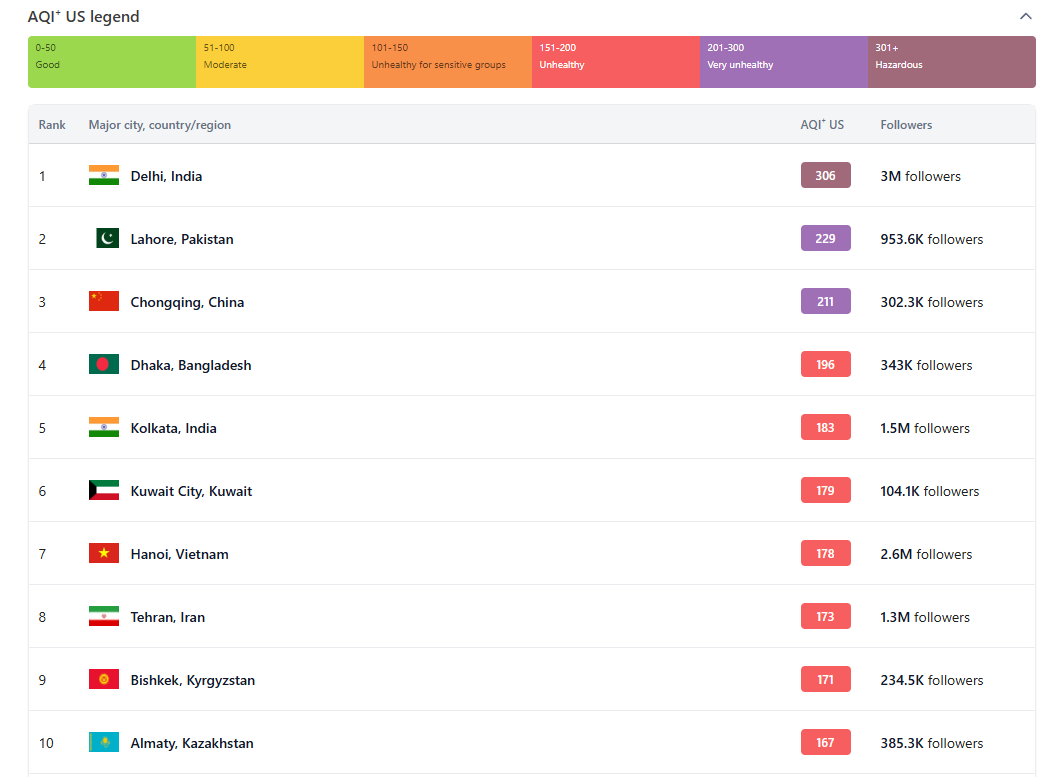
Snow on the Alborz mountain range and winds have helped push Tehran to the 8th-worst city for PM2.5 levels on December 2; however, it previously topped the charts throughout the previous week. India, China, Kuwait, and Pakistan have now passed the Iranian capital.
Hassan Abbasnejad announced on the afternoon of December 2 that schools, universities, and government offices would return to in-person attendance on December 3, following improved atmospheric conditions and reduced pollutant concentrations.
The decision came after the Tehran Province Air Pollution Emergency Working Group secretariat received forecasts from the provincial meteorological office indicating improving conditions across the region.
Tehran's state-controlled air quality index stood at 100 at 07:35 on Tuesday morning, within the yellow "acceptable" range, according to the Air Quality Control Company. However, the 24-hour average index remained at 157, in the "unhealthy for all" red zone.
Non-government-controlled pollution readers show higher recorded pollution levels, according to the Danish and Dutch embassies in Tehran, countering the official version, as shown in this image on December 2 at 12:00 GMT.
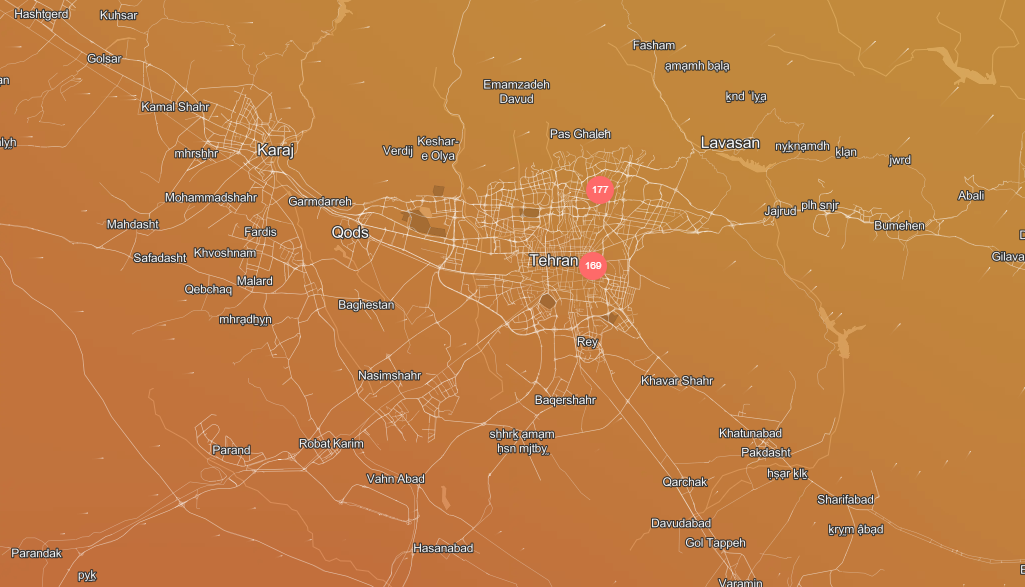
Iran's air quality index defines readings from zero to 50 as clean, 51 to 100 as acceptable, 101 to 150 as unhealthy for sensitive groups, 151 to 200 as unhealthy for all, 201 to 300 as very unhealthy and 301 to 500 as hazardous.
Tehran has experienced repeated pollution episodes this autumn, with the capital enduring a week of unhealthy air quality in late November that forced school closures and remote working for government employees.
Authorities have attributed the crisis to temperature inversion, lack of rainfall, ageing vehicle fleets and industrial emissions.
Online social media across Iran has become increasingly critical of government pollution readings, fearing that monitoring stations have been either switched off or producing metered-down readings in recent days, according top previous reports.


