


Bulgarian president demands snap elections after mass protests
37 minutes ago
Key talks between the US and Russia to end the war in Ukraine on December 2 ended inconclusively but made “some progress.”
Russian Presidential Advisor Yuri Ushakov described President Vladimir Putin’s five-hour conversation with US Special Envoy to the Middle East Steve Witkoff and White House senior advisor Jared Kushner in Moscow as “useful and constructive,” but no deal was agreed.
We're no closer to peace, but we're no further either," Ushakov told journalists.
According to Ushakov, the main stumbling block remains the question of territory. Putin has been holding out for the Armed Forces of Ukraine (AFU) to completely withdraw from the Donbas, but his position seems to have hardened, and he also wants de jure recognition of Russia’s sovereignty over at least the Donbas and the Crimea. Ukrainian President Volodymyr Zelenskiy has ruled out giving any Ukrainian territory away at all.
The talks centred on broad strategies for resolving the war in Ukraine, according to Ushakov, rather than any detailed proposals. While the Russian side expressed openness to certain elements of a proposed 28-point peace plan (28PPP), Putin made it clear several items on the list were non-starters for the Kremlin.
Ushakov confirmed that, beyond US President Donald Trump’s original 28-point framework, Moscow had received four additional documents outlining possible terms for a settlement.
“There was a document containing 27 points. We naturally reviewed it. However, we didn’t work on the wording, and there were no discussions with our American colleagues about it,” Ushakov said.
“A compromise hasn’t been found yet, but some American proposals seem more or less acceptable, but they need to be discussed. Some of the language we’ve been offered is acceptable. The work will continue. It is indeed one of the most important questions,” he added.
The meeting included a diplomatic exchange of greetings. Witkoff and Kushner conveyed well wishes from Trump to Putin, to which the Russian President responded with a reciprocal message that included what Ushakov described as “several political signals.”
While the possibility of a direct meeting between Putin and Trump was discussed, Ushakov said any meeting would depend on further progress in the negotiations. Previously, Trump had proposed a trilateral meeting in Budapest in October, but that meeting was called off after it became clear the Kremlin was not prepared to make any concessions in the talks. More recently, Trump has said he will not meet with either Putin or Zelenskiy until the peace deal is nearly completed.
He also emphasised that both parties had agreed to keep the substance of the talks confidential.
The head of Russia’s sovereign wealth fund, Kirill Dmitriev lunched with Witkoff before also participating in the Russian talks. Dmitriev and Witkoff reportedly drew up the 28-point plan between them in October that also included a long list of business deals.
No details of the talks were released but according to reports the three pillars of the discussion NBC report citing a Russian official involved in the talks.
“There are three pillars on which we will not compromise,” a Russian official briefed on the matter said on condition of anonymity. “One is the territory of the Donbas. The second is a limit on Ukraine’s armed forces. The third is the recognition of territory by America and Europe,” NBC reported.
Moscow is prepared to be flexible on certain secondary issues, the official said. For example, Putin has suggested that Russia’s $300bn of frozen assets could be used for reconstruction, but only if the regions occupied by Russia are included.
“This sounds like there is mutual understanding already on NATO and other security guarantees. Otherwise, these issues would have been on the list,” journalist and bne IntelliNews columnist Leonid Ragozin said in a social media post.
“The third demand is especially tough. Not sure what’s more in it for Putin - set the new borders in stone (he knows it’s not really possible now that genie is out of the bottle) or just to humiliate the West,” Ragozin added.
European war? Bring it on
Putin was full of bluster ahead of the talks. From the talks it emerged that he has already defined what outcomes he considers acceptable, and is approaching the negotiations as a victor, unprepared to make major concessions.
He countered recent carrion calls that Russia could attack Europe as soon as 2029 with twin barbs. At the start of the week he offered to sign a treaty guaranteeing Europe’s security and promising never to attack, but as the peace talks with the US were about to kick off, he added that if Europe wants a war with Russia, Russia is ready.
"We're not going to war with Europe, as I've said many times. But if Europe suddenly wants to fight us and starts, we're ready right now. Europe isn't Ukraine. In Ukraine, we're acting carefully, surgically. In Europe, it might turn out that we won't have anyone to negotiate with," Putin said.
Putin added that a war with Europe would end so swiftly for Europe that Russia “would have no one left to negotiate with.”
He also accused Europe of deliberately trying to sabotage the talks by including suggestions that Moscow is guaranteed to reject as they are "absolutely unacceptable."
Putin said European states were hoping to blame Russia for derailing the peace talks and Brussels has locked itself out of peace talks with this strategy, adding: "They are on the side of war."
Putin also threatened to sever Ukraine's access to the sea in response to drone attacks on tankers of Russia's "shadow fleet" in the Black Sea, Reuters reports.
Doves out of the talks
And Putin has a point. After the Geneva summit on November 23, organised by Secretary of State Marco Rubio, the European allies produce at least three new versions of the original 28-point peace plan (28PPP) plan: a compromise 19-point peace plan (19PPP); a version by European Commission President Ursula von der Leyen, a 24-point peace plan (24PPP); and a European Parliament non-binding resolution (EPR). Yuri Ushakov, Putin’s top foreign policy advisor, said all these versions were “unacceptable”.
Following Geneva, the White House classified all further revisions to the plan and cut Europe out of the loop. A split has been reported in the White House between a defeatist camp that believes Ukraine has lost the war, headed by Secretary of War Pete Hegseth in alliance with Trump’s son-in-law Jared Kushner, and a pro-Ukraine faction, headed by Rubio.
Trump appears to be leaning towards the defeatist camp, as pointedly, Rubio was not asked to travel to Moscow to meet Putin and is reportedly no longer involved in revising the proposed list of conditions currently under discussion.
In an interview with Fox News the same day, Rubio said: “This has now become a war of attrition, and sadly, the Russians have shown their willingness to sacrifice 7,000 soldiers a week in an effort to achieve this.”
“Only Putin can end this war on the Russian side…we have tried to bring both sides together and see what proposals we could come up with that both sides could live with. We’re going to do everything we can to make it work,” he added.
Pointedly, the same has happened on the Russian side. The Kremlin’s veteran diplomat, Foreign Minister Sergei Lavrov, has also been sidelined. He has played a small role in negotiating the peace deal, which was primarily a Witkoff-Dmitriev construct, as revealed by leaked phone conversations last week. Both are businessmen, and neither has much diplomatic experience. For the transactional Trump, these negotiations are first and foremost a business deal, not peace negotiations.
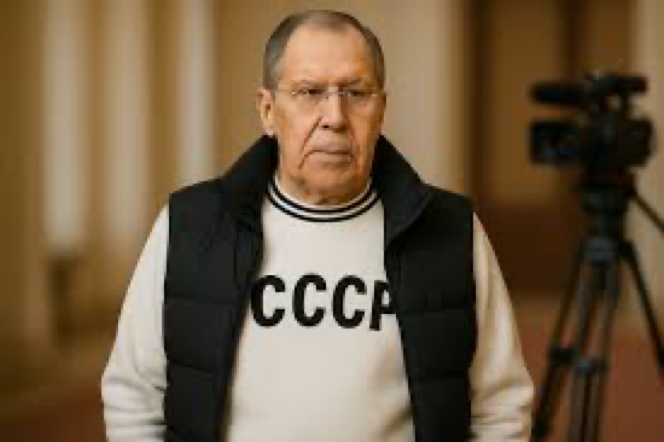
Russia’s veteran Foreign Minister Sergei Lavrov was not present at the US-Russia talks and has been largely sidelined in negotiations.
Witkoff was at a Florida summit on November 30 just before he flew to Moscow to meet with a Ukrainian delegation in a last ditch attempt to get the US to include Bankova’s demands. However, after six and half hours of talks, the main issues remained “unresolved,” according to reports.
That means the peace deal Witkoff presented to Putin on December 2 is now a purely US-Russian negotiation that takes little account of either Europe or Ukraine’s point of view.
In another sign of the growing divide between Washington and Brussels, General Major of the Bundeswehr and head of the coordination staff for Ukraine support in the German Ministry of Defence, Christian Freuding complained on December 2 that contact with the Pentagon has suddenly been cut off.
"The most alarming change in Europe is not on the battlefield, but in Washington. Direct contacts with representatives of the US defence, who had "day and night", "are terminated - really terminated,” he told German media. "Germany did not receive a warning when the Trump administration suspended the supply of weapons to Ukraine.”
"Now, to understand US politics, German diplomats in Washington "are trying to find someone in the Pentagon", who explains what is happening,” the General added. The Pentagon is under the control of Hegseth, who already cut off military supplies to Ukraine in July without warning.
Ushakov said that contact with the White House would continue, “at the level of representatives, aides and other representatives, in particular with these two people who arrived in the Kremlin today.”
Dmitriev posted a single word on X after the meeting: “Productive.”


