


Istanbul-listed Vestel hires New York-listed adviser Houlihan for $500mn eurobond restructuring
2 hours ago
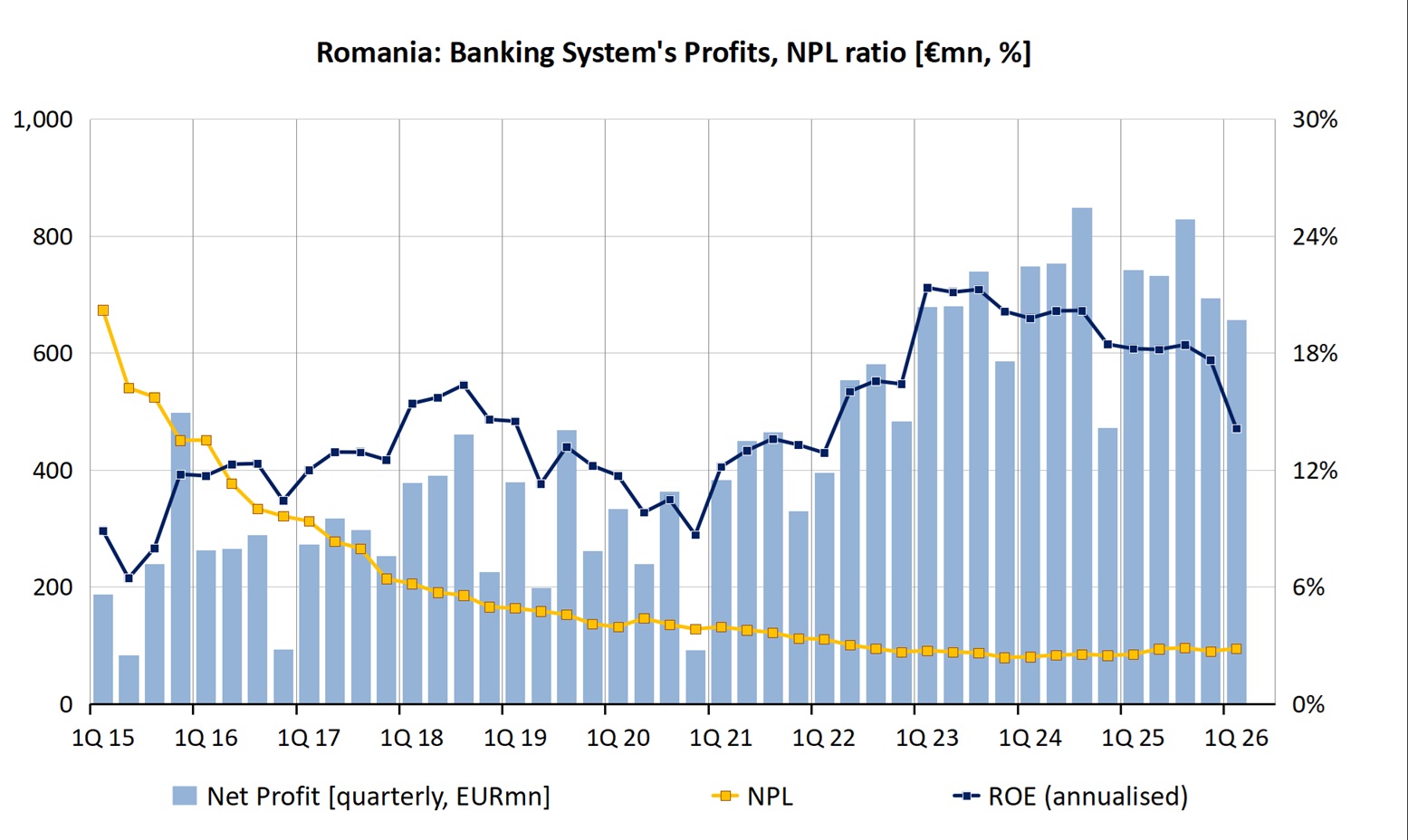
The aggregated profit of Romania’s banking system (chart) declined by 9.3% y/y to RON3.35bn (€657mn) in the first quarter of 2026, according to data published by the National Bank of Romania (BNR). Measured in euro terms, the banking sector’s profit fell by 11.5% y/y.
The decrease was not evenly spread among banks, with the market leader Banca Transilvania (BVB: TLV) still boasting 26% higher y/y profits in Q1. The bank achieved a profit of RON950mn in the quarter.
Since mid-last year, Romanian banks have been paying an additional bank tax (the so-called turnover tax) of 4% of gross revenues, up from 2%, which has contributed to a decrease in their profitability.
The sector’s profitability indicators dropped to their lowest levels in four years, after remaining well above the average of other European banking systems in recent years.
Annualised return on assets (ROA) declined to 1.39% in Q1 from 1.67% in the same period of 2025, while annualised return on equity (ROE) fell to 14.1% from 18.2%.
Romania’s banks have reported rising profits in recent years, with total sector earnings nearing €3bn in 2025, although profitability ratios had already started to moderate.
The banking system’s ROE fell to 17.6% in 2025 from 18.4% in 2024 and 20.1% in 2023.
Total banking assets continued to expand; however, they hardly matched overall price inflation.
Average assets of the banking system increased by 8.9% y/y to RON964bn in Q1 (versus average 9.6% y/y headline inflation and probably slightly lower GDP deflator), while assets at the end of the quarter reached RON970bn (€190bn).
Asset quality remained relatively stable, although the ratio of non-performing loans increased moderately.
The non-performing loan ratio rose to 2.8% in Q1 from 2.5% in the same quarter of 2025.
Romania’s banking sector has remained among the more profitable in Europe over the past several years, supported by high interest margins, although slower economic activity has begun to weigh on returns.
The IntelliNews PRO service includes access to reports, exclusive market data, and more news that decision-makers care about. Stay ahead of the market with IntelliNews PRO.
Sign Up Now


