
_1781529723.jpg)
_0_1781512110.jpg)
_1_1781474213.jpg)
Constitutional change shuts door on Viktor Orban comeback
3 hours ago
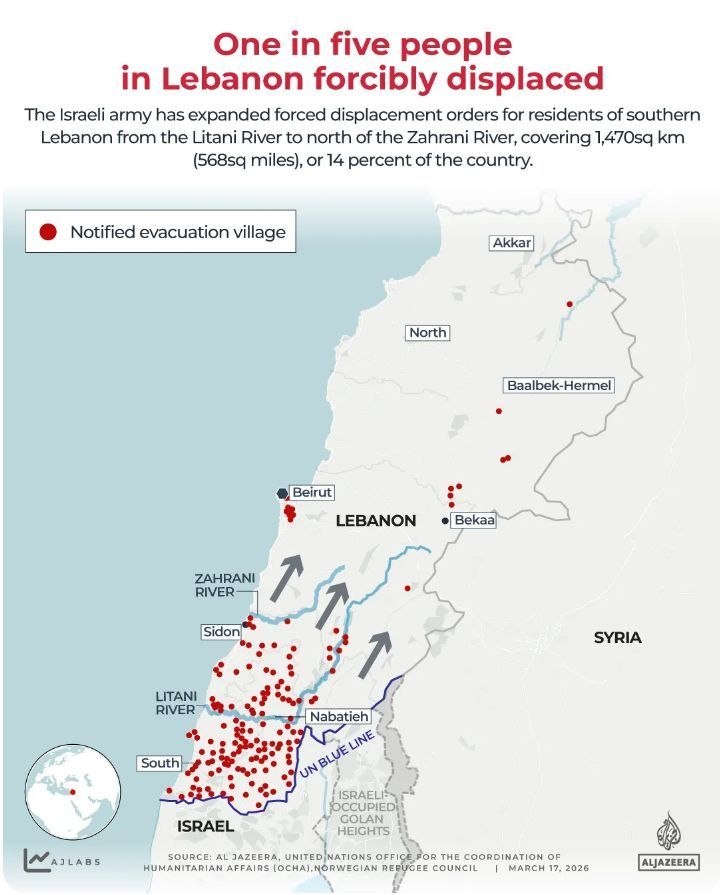
Lebanon is facing a humanitarian crisis after one in five Lebanese have been displaced following Israel’s invasion of the south of the country in the fastest displacement in recent history.
Israel is preparing to seize a third of Lebanon and annex it to the Golan Heights, which it annexed from Syria.
The head of the Knesset Committee on Internal Affairs and the Environment, Yitzhak Kroyzer, said about Lebanon: "There is no other choice but to expel and clear the entire territory up to the Litani River, to cleanse it of Lebanese civilians... Sovereignty and settlement."
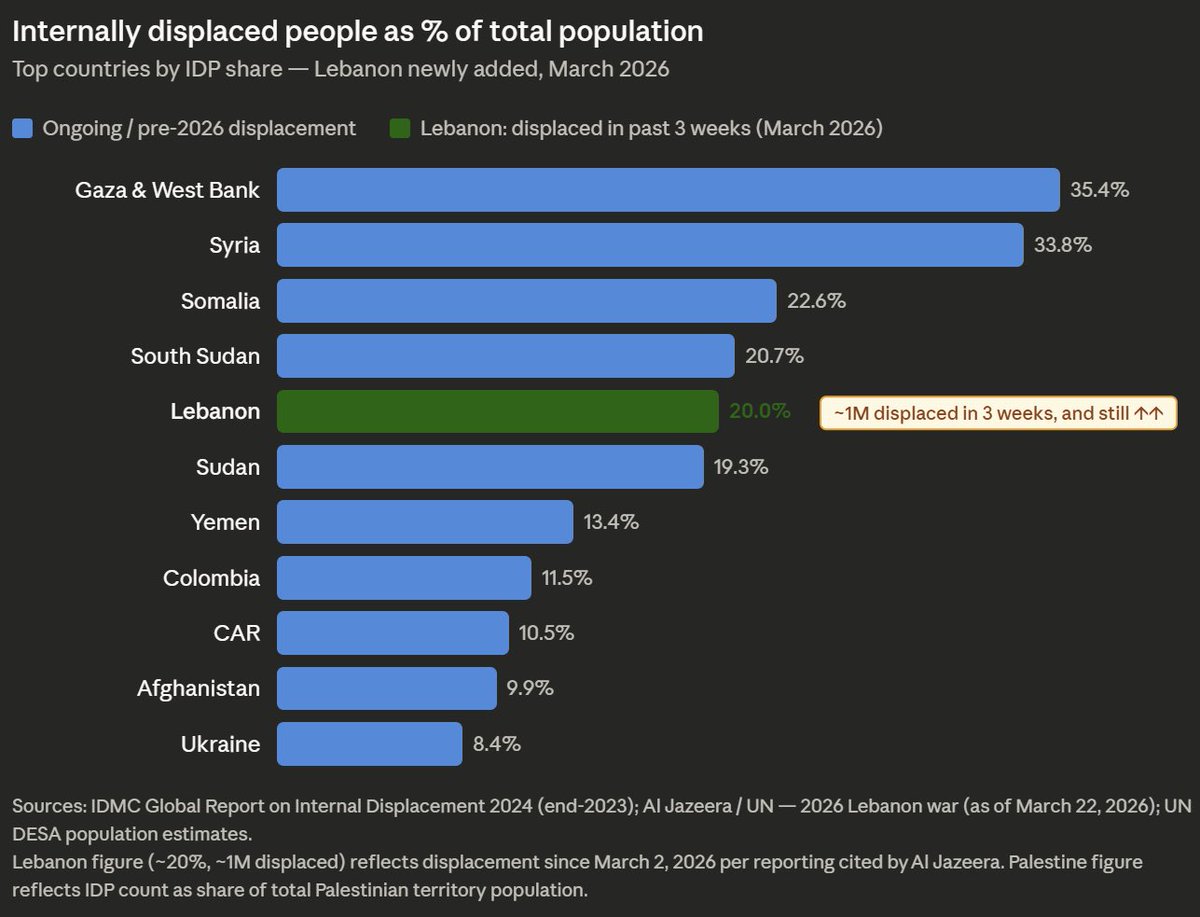
Gaza, Syria, Somalia and South Sudan have all seen larger displacements, ranging from 20% of the population in South Sudan to 35% in Gaza, but Israel has displaced around a million Lebanese, or 20% of the population in just three weeks since the war in Iran broke out three weeks ago, according to figures compiled from UN and IDMC data and cited by Al Jazeera.
“Israel has pushed Lebanon into the ranks of the world’s worst displacement crises almost overnight,” according to reporting shared with Middle East Eye. “Syria and Somalia took years to reach this level. Israel did this in three weeks.”
Tel Aviv launched a ground operation after Hezbollah joined in the fray in the first few days following the assassination of Supreme Leader Ayatollah Ali Khamenei on March 2 and says it wants to take permanent control of the south of the country up to the Litani River.
The surge follows intensified military activity that has expanded beyond southern border into more densely populated areas, triggering widespread civilian movement and straining already fragile infrastructure. Aid agencies have warned that a humanitarian is looming as Lebanon’s capacity to absorb further displacement is limited.
Regional spillover risks are also rising, as neighbouring countries monitor the potential for further population flows and instability. Analysts note that the size of the displacement in Lebanon is unusual even by recent Middle Eastern conflict standards, where mass internal movements typically build over extended periods.
The IntelliNews PRO service includes access to reports, exclusive market data, and more news that decision-makers care about. Stay ahead of the market with IntelliNews PRO.
Sign Up Now


