
Putin makes a rare call for a rate cut
1 hour ago
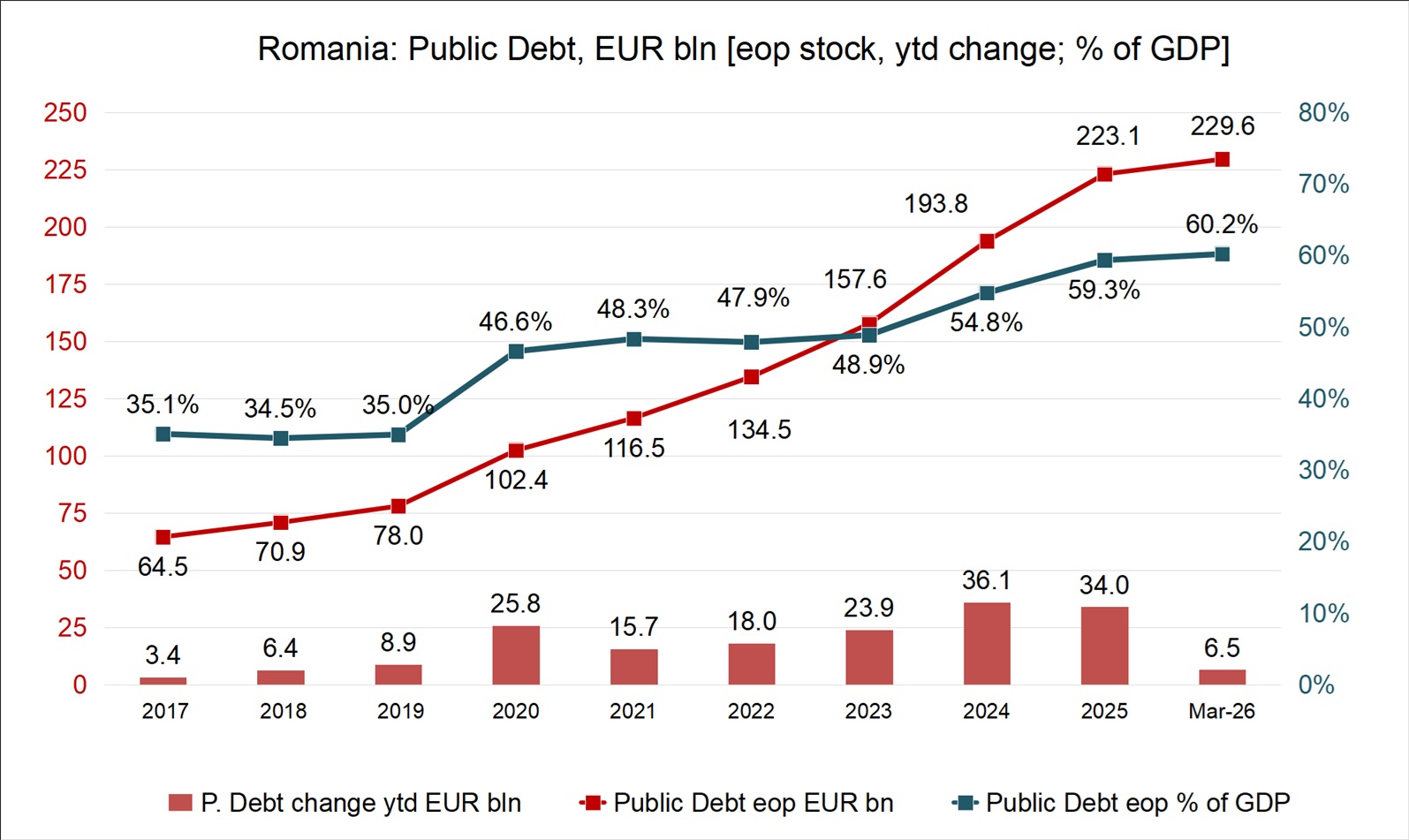
Romania’s public debt (chart) rose by RON33.2bn (€6.5bn) in the first quarter of 2026, reaching RON1.17 trillion at the end of March, according to data published by the Finance Ministry on June 10. The average cost of public debt eased to 4.7% in the first quarter of the year.
The debt-to-GDP ratio climbed to 60.2%, exceeding the 60% threshold for the first time under semi-definitive calculations based on rolling four-quarter GDP. Higher ratios had been reported on a preliminary basis in the past, but were subsequently revised downward following quarterly GDP updates.
The increase was driven in part by foreign-currency bond issues totalling €4.5bn in March, comprising €3bn and $1.73bn.
According to the European Commission’s Spring Forecast published on May 21, Romania’s public debt is expected to rise further to 61.6% of GDP at the end of 2026 and 63.4% by the end of 2027. This would represent a cumulative increase of 4.1 percentage points over two years, significantly below the 10.4 percentage-point rise recorded in the previous two years as fiscal consolidation efforts take effect.
During the first quarter, Romania repaid RON37.7bn in principal, out of the approximately RON145bn scheduled for the whole year.
This implies that the government issued around RON71bn in new debt during the January-March period. Total financing needs for 2026 are estimated at nearly RON280bn, comprising a budget deficit of RON128bn and refinancing requirements of roughly RON150bn.
Interest payments on the public debt amounted to RON13.4bn in the first quarter. This translated into an average borrowing cost of 4.7%, down from 5.1% in the corresponding period of 2025.
Romania remains under the European Union’s excessive deficit procedure and is pursuing fiscal consolidation measures aimed at slowing the pace of debt accumulation while maintaining access to international capital markets.
The IntelliNews PRO service includes access to reports, exclusive market data, and more news that decision-makers care about. Stay ahead of the market with IntelliNews PRO.
Sign Up Now


_1780932280.png)