

COMMENT: Kyrgyzstan’s New Nomadism
8 hours ago
Analysts have this week been declaring the death of Turkey’s main opposition party.
“Erdogan’s coup is complete,” runs the headline on one piece by Istanbul-based Hannah Lucinda Smith, published on the Engelsberg Ideas platform. “The Turkish president has pacified his country's political opposition, bringing about the culmination point of two decades of pragmatic authoritarianism,” argues the journalist.
Over at The Türkiye Analyst, the editor, Halil Karaveli, has some seriously unsettling observations for Ozgur Ozel, who was last month deposed by court order from the helm of the 103-year-old Republican People’s Party, or CHP. “Ozel,” he says, “needs to recognize that those who aspire to restore Turkish democracy no longer have any future in the CHP.”
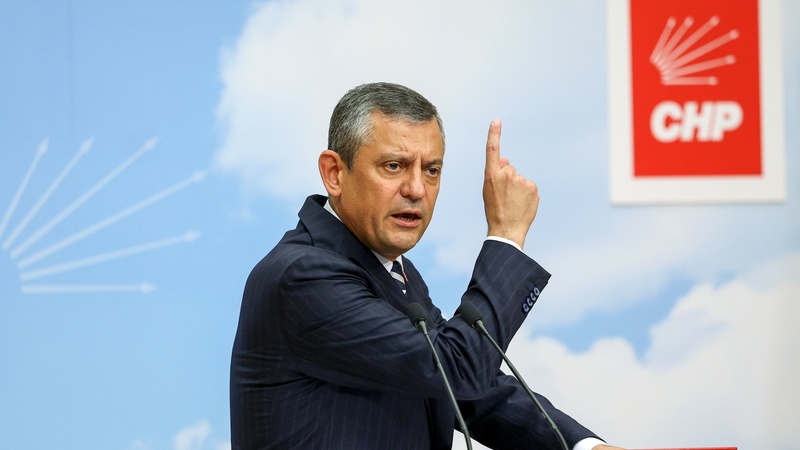
Deposed and struggling for a road back to relevance, Ozgur Ozel.
It was on May 21 that an appeals court in Ankara stripped 51-year-old Ozel of his leadership of the centre-left, secular CHP by annulling the party’s 2023 leadership contest. The court accepted allegations that Ozel’s ascent to the chairmanship of the CHP was due to irregularities and misconduct. It ordered with immediate effect that he be replaced by his 77-year-old predecessor, Kemal Kilicdaroglu, who, as the party’s leader between 2010 and 2023, was a serial loser in elections contested with Turkey’s leader of 23 years, President Recep Tayyip Erdogan.
Writes Karaveli: “Turkish legal experts contested the legality of the court ruling, pointing out that the appeals court had overstepped its jurisdiction, since according to the Turkish constitution the Supreme Electoral Board is the sole instance invested with the authority to cancel party elections.
“Yet Turkey’s justice system has been weaponised against the opposition, and the decision to depose Ozel represents but the final stage in the crackdown on the CHP that began a year ago with the arrest of the party’s presidential candidate, the mayor of Istanbul Ekrem Imamoglu. Since then, scores of CHP mayors have been arrested, charged with corruption, while others have been enticed – or blackmailed – to switch to the ruling Justice and Development Party (AKP). As a result, the results of the local elections in 2024, which the CHP carried, have largely been voided.”
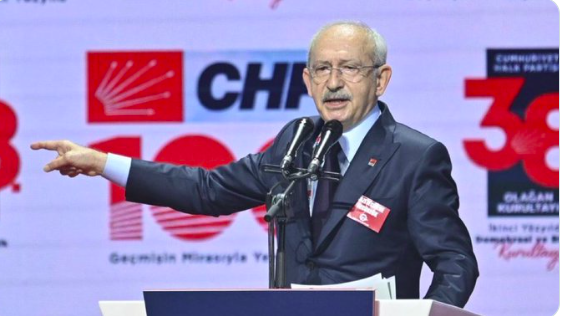
Consumed by vengefulness? Analysts argue that Kemal Kilicdaroglu has essentially been appointed "by the palace" and is cooperating with plans that will destroy the CHP.
In his moves against the CHP, Erdogan, says Karaveli, “seeks to make sure that his reelection isn’t endangered”. Ozel, meanwhile, from whom a potent response is desperately needed by those who seek to defend the CHP, is experiencing a public stymied by what Karaveli describes as “protest fatigue”.
“In a sign of the growing sense of resignation,” writes Karaveli, “Ozel’s ouster as party leader so far hasn’t elicited any wider popular protests. That’s also because the struggle over the CHP doesn’t only pit the courts of the regime against the party’s elected leadership but equally the former, now re-appointed, party head and his successor against each other, making it seem to be an internal matter of a deeply split party.
“Kilicdaroglu has consistently refused to admit the legitimacy of the election of Ozel and has since sought to return as party leader. Kilicdaroglu’s vengefulness and the interest of Erdogan in seeing the main opposition party consumed with internal strife converged.”
Lucinda Smith is nothing if not blunt in her advice to Ozel: “The best strategy for Ozel would be to leave the CHP entirely and start a new party, taking the vast majority of his members and supporters with him. But for Turkey’s democracy, it is too late.
“Erdogan’s move against the party is the final stage in his takeover – the culmination of his two decades of pragmatic authoritarianism. Like Russia, Turkey now has a systemic opposition, comprising a main Kurdish party that is likely to support him in elections due to the renewal of the peace process with the [Kurdish politico-militant group] PKK, a nationalist bloc that is fully aligned with Erdogan, and now the CHP, anointed with a leader of the president’s choosing.
“The future looks bleak for Imamoglu and Ozel. For Turkish democracy, it looks bleaker still.”

Protesters carry a mocked-up placard of their imprisoned "superhero" Ekrem Imamoglu in March last year (Afakii, cc-by-sa 4.0).
Lucinda Smith reflects that Imamoglu proved to be the first politician in 20 years able to build a broad grassroots power base to rival 72-year-old Erdogan’s, while Ozel, although not as personally popular, was step by step revitalising the opposition movement from within.
“That is what spooked Erdogan – and prompted him to move against them,” she says.
“In a technocratic sense,” adds Lucinda Smith, “Erdogan is a terrible leader. He has torpedoed the Turkish economy, downgraded its education system, and destroyed any small chance Turkey may have had of joining the European Union. But as a political player, he is a genius.”
Erdogan has gone for the jugular of the CHP at a time when the US is in the hands of a president who has no time for the rights of foreign peoples suffering harsh regimes far away and Europe is so consumed with its own strategic interests – amid the Ukraine and Iran wars, fears of new waves of migration and energy market shocks that threaten to destroy growth – that the plight of what’s left of Turkish democracy hardly makes the agenda.
The pressure on Ozel, receiving next to no support from Western capitals, to be a man of the moment is immense. But since the court verdict that took away his leadership of the CHP was read out, Ozel’s performance “has been unsteady, alternating between defiance and futile entreaties to Kilicdaroglu,” according to Karaveli.
He adds: “Ozel initially vowed to remain at the party headquarters, solemnly declaring that ‘I will stay in this building, I will not leave, until the CHP’s members have decided who’s going to lead the party.’ Yet two days later, when the police stormed the building, Ozel acquiesced to quietly leave it.”
In a damning admission highlighting how much he underestimated his foe, Ozel confessed: “I never expected that they would go this far.” That, says, Karaveli, betrayed “a surprising naïveté about a regime that doesn’t pull any punches and that has already shown that it will stop at nothing to crush the CHP. Ozel has, it seems, neither taken the full measure of Erdogan nor of Kilicdaroglu, and he has clearly underestimated their determination to get rid of him.”
Former European Court of Human Rights (ECtHR) judge Riza Turmen, in an interview published by Yeni Yasam daily on June 8, warns that democracy in Turkey has been dismantled and replaced by an authoritarian order. Contending that conventional political channels and parliamentary opposition alone will not be sufficient to reverse the trajectory, he urges democratic forces to come together in a grassroots social movement.
Ozel has been stubborn about the continuing relevance and prospects of the CHP, the party of the founder of the Republic of Turkey, Mustafa Kemal Ataturk, but, perhaps in a weak moment, he conceded that the CHP is now “de facto closed.”
Later, in a statement indicating he plans to pursue his struggle by extra-parliamentary means, he said “from now on we’ll primarily be in the streets, alongside the people.”
“But,” as Karaveli concludes, “it’s doubtful that the people will be in the streets alongside Ozel”.
The IntelliNews PRO service includes access to reports, exclusive market data, and more news that decision-makers care about. Stay ahead of the market with IntelliNews PRO.
Sign Up Now


