


South Korea - where missing people are found safe, then their bodies turn up
6 hours ago
Empires tend to last about a hundred years, and true to form the Pax Americana has passed its peak. What follows is several decades of instability and lower growth as the leading countries of the world vie to fill the void. The Interregnum has started.
The Chinese, Dutch, Portugese and Briitsh empires all had their days of wealth and glory but they all faded and fell eventually. What usually follows is decades of instability, competition, increasing multipolarism and often major wars. Despite its might, the Iran war has already exposed the US as a paper tiger, albeit a well-armed one.
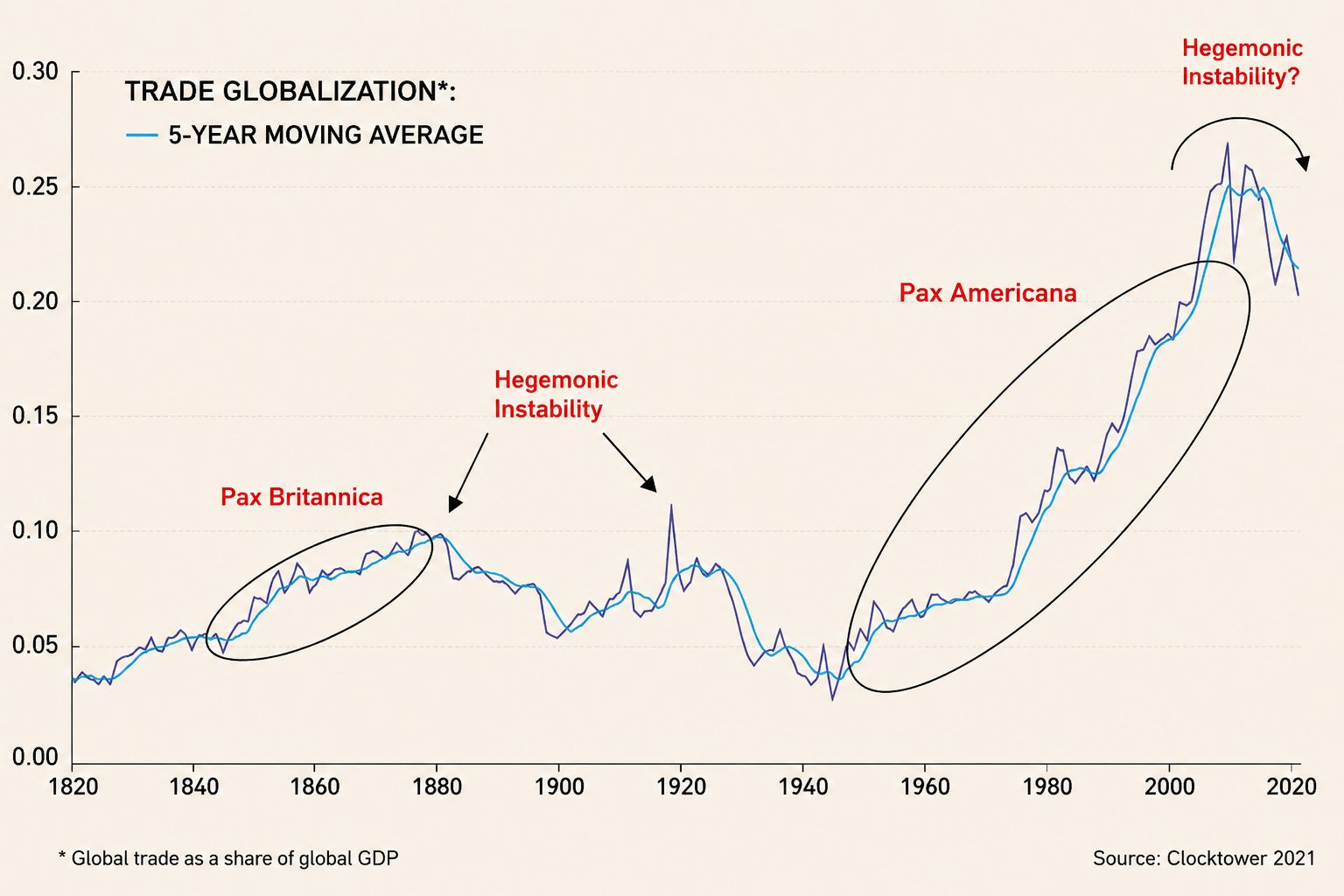
How did we get here? It all started with the collapse of the socialist experiment at the end of the 1980s when 3bn communists joined 3bn capitalists to unite the world under a single ideology, maybe for the first time in history.
CapitalismOS 2.0
The new countries installed a new operating system, CapitalismOS 2.0, and threw themselves into building a new system of peace and prosperity that can be divided into four major phases.
1990s: The collapse of Socialist experiments covered the economies of half the world and about 80% of its population. The first decade was taken up with installing new hardware: high quality, technologically advanced machinery developed in the West. Factories were modernised. Banks installed new IT systems. Fibre-optic cables overlays were put down to transform telecoms and communication. And trade logistics was built to cater to the burgeoning consumer demand. This was a golden era of globalisation and FDI as Global North companies rushed into to exploit vast new markets. But it was a hard time as the old system collapsed entirely, impoverishing anyone over 45 by destroying the socialist “cradle to grave” support system.
Noughties: By the second decade these markets began to flourish as machines whirled and cranked out never seen before goods. Investment into the hardware continued but now the emphasis shifted to installing new software to run the rapidly growing companies. Laws were overhauled. Arbitration courts were set up. Tax systems and labour codes were revamped. Market-based regulations were introduced. Capital markets were modernised and deepened. Retail flourished as market research, consumerism and advertising became a thing on the back of an emerging middle class. Local brands were born and raised, competing and then overtaking the multinational early entrants. The local market leaders began to move out of their home markets and expand regionally with an eye on eventually becoming global. IPOs at home and on foreign exchanges proliferated.
2010s: With economic success came the demands of geopolitical rebalancing as new countries wanted representation in global institutions. The new markets were putting on not just economic but military muscle. Russian President Vladimir Putin began a decade-long military modernisation programme in 2012 and China likewise has built up the PLA to the point where it is bigger than the US military. Both have developed hypersonic missiles, a class of weapon that the US has yet to develop. Increasingly they resented the West’s dual policy of trading with the new markets to make money, but lecturing them for illiberal values and punishing the reticent with sanctions. The demands for the multipolar world were born out of that rejection of the neo-colonial model that has ruled the world since the invention of the cannon and the launch of the spice ships. The most prominent example of these rising tensions was Russia’s invasion of Ukraine, when the US refused to accomodate Moscow's security demand of "never-Nato", and the festering trade war between the US and China.
2020s: What is happening this decade is that the Global South countries have moved beyond installing the Western software and are increasingly writing their own code. Traditionally, FDI brings technology transfer and skills. The idea is to bring emerging markets “up to the Western standard” but stop there. Today, the leading markets have already adopted the best in practice methods and are now moving beyond that to new and better systems. The rollout of China’s high speed rail network is a stunning example of this new operating system that surpasses anything in the "old world". Beijing's global leadership in green-tech and EV is another pragmatic example of leapfrogging existing technology. Solar panels were invented in Germany, but the last company, Meyer Burger, closed in 2024, crushed by superior Chinese technology. As these countries grew stronger, they started pushing back at the “unipolar” world order run by the US and tension rose. In Russia it came to a head with Russian Foreign Minister Sergei Lavrov’s “new rules of the game” speech in February 2021, where the Kremlin threatened to break off diplomatic and trade relations with the EU if it continued to interfere in Russia’s domestic politics with its dual policy of growing trade (like gas imports) and sanctions (over issues like LGBT rights).
East-West relations have broken down. As in any interregnum, supply chains have been disrupted. The EU believed it could sanction Russia with impunity, but discovered to its cost that Russia’s inputs – especially energy – were far more deeply integrated into the global economy than anyone calculated. The boomerang effect of sanctions on Europe are now doing more damage to European economies than they are to Russia. US President Donald Trump has only catalysed a process that has seen the old value system being abandoned and the long standing post-WWII transatlantic special relationship go up in smoke. That has led to an economic decline in the Global North that cannot be easily undone.
Empires
|
Period |
Dominant Power / Order |
Rough Dates |
|
Pax Romana |
Roman Empire |
27 BC – AD 180 |
|
Interregnum |
Fragmentation after Rome; competing European, Byzantine and Islamic powers |
AD 180 – c.1450 |
|
Pax Mongolica |
Mongol Empire secures Eurasian trade routes |
c.1250 – 1350 |
|
Interregnum |
Post-Mongol fragmentation; rise of maritime powers |
c.1350 – 1494 |
|
Pax Portugana |
Portuguese maritime dominance |
c.1494 – 1580 |
|
Interregnum |
Iberian Union and increasing Dutch challenge |
1580 – 1609 |
|
Pax Neerlandica |
Dutch commercial and naval dominance |
c.1609 – 1713 |
|
Interregnum |
Anglo-French rivalry; no clear hegemon |
1713 – 1815 |
|
Pax Britannica |
British naval and financial dominance |
1815 – 1914 |
|
Interregnum |
World Wars and unstable multipolar system |
1914 – 1945 |
|
Pax Americana |
US global dominance |
1945 – present (arguably weakening since c.2008) |
|
Possible Current Interregnum |
Emerging multipolar system (US, China, India, EU, others) |
c.2008/2020s – ? |
|
source: IntelliNews |
||
Past Paxes
Looking back over the last five centuries, the great pax periods of history — Pax Romana, Pax Mongolica, Pax Britannica and Pax Americana — were all associated with the dominance of a single hegemonic power.
And there is a clear pattern: the major maritime and commercial hegemonies each lasted roughly 80-100 years. Once they fade and fall, there is an unstable interregnum that can last decades, or even as long as a century, before a new dominant power emerges.
During the pax ("peace") the hegemon provides security and stability, allowing trade networks to flourish and financial systems that underpin the international order to grow. The currency of the ruling hegemon also tends to become the currency of choice for international trade and a change of hegemon is accompanied by a change in the dominant currency.
The first and longest of these was the Pax Romana, which lasted about 207 years from 27 BC to AD 180. After more than a millennium without a comparable Eurasian hegemon came the Pax Mongolica (c.1250-1350), which connected Asia to Europe for the first time along the legendary Silk Road for a century.
The modern era saw a succession of maritime and commercial hegemonies. Portugal dominated global sea routes for roughly 86 years (1494-1580), followed by the Dutch Republic, or the Pax Neerlandica, for about 104 years (1609-1713), which turned Amsterdam into the world's first modern financial centre. After a century-long period of Anglo-French rivalry, Britain emerged victorious from the Napoleonic Wars and established the Pax Britannica, which lasted 99 years from 1815 until the outbreak of the First World War in 1914 and coloured three quarters of the globe pink.
Following a 31-year interregnum marked by two world wars and the Great Depression, the United States established the Pax Americana in 1945. That order has now lasted more than 80 years – as long as the Portuguese, Dutch and British eras – but has now reached its zenith and is starting to fade.
Post Pax Americana
The interregna carry several identifiable characteristics. They are typically marked by increasing competition among major powers, weakening international institutions, regional conflicts, trade fragmentation and uncertainty over the rules of the international system.
Economically, interregnums tend to be less efficient than hegemonic eras. Trade becomes more politicised, supply chains fragment, capital flows become less predictable and states increasingly prioritise strategic industries and national security over pure economic efficiency. Inequality grows in the interregnum as those with access to power ring fence their access to wealth and entrepreneurship becomes more difficult. Politically and militarily, interregna are often periods of experimentation and contestation. Rising powers seek greater influence while established powers resist decline.
All of these signs are already present.
Trade: thanks to the East-West rivalry, we are increasingly living in a fractured world. The liberal free trade regimes of globalisation have given way to the transactional world view, championed by the Trump administration. At the same time, even before Trump’s Liberation Day, tariffs have been weaponised amongst allies and sanctions play the same role for enemies as major markets become more protectionist.
Supply chains: the pandemic broke supply chains and then accelerated the process of “friendshoring” as politics increasingly interfered with what were purely commercial decisions.
Capital flows: the dollar has also been weaponised by sanctions on Russia, causing a shock to the system and accelerating the de-dollarisation of trade and its share of reserves basket holdings, especially amongst the global emerging markets. Large geographical patches of dollar-free trade have emerged between countries like Russia and China that now conduct all their trade in national currencies and this is spreading throughout Asia where the yuan is rivalling the greenback. Alternatives to the SWIFT messaging service are emerging such as China’s Cross-Border Interbank Payment System (CIPS) and Russia’s Financial Communications System (SPFS).
Strategic industries: industrial policy has also been politicised. The introduction of the US CHIPS legislation was an attempt to monopolise the highest echelon of technology, but backfired badly. China has invested heavily in green-tech and EV automotive production, using state subsidies to undercut Western rivals that has caused trade imbalances to blow out alarmingly in recent years – especially between China and Europe.
Export controls: these have also been weaponised, most notably in China’s decision to throttle exports of rare earth metals (REMs) to the US after Trump threatened to impose 125% tariffs on Chinese goods. Russia banned the import of European agricultural goods in 2014 in tit-for-tat sanctions following the annexation of Crimea. More recently the Kremlin also restricted the imports of Armenian agricultural goods after the country decided to move closer to the EU, abandoning its long-standing ties with Moscow.
Weakening international institutions: Amongst the clearest indicators that the post Pax Americana interregnum has started has been Trump’s active dismantling of international institutions. He has pulled the US out of 66 international institutions, half of them leading UN institutions at the heart of international rules based order – and he hasn’t paid the US’ International Monetary Fund (IMF) fees of $4.5bn, plunging it into a budget crisis. He also pulled out of the Paris Agreements for a second time, gutting the global efforts to reverse the effects of the Climate Crisis. He has set up the Board of Peace, a multinational body, with Trump as chairman, clearly designed to undermine the authority of the UN. And a slew of other international organisation have been undermined. The World Trade Organization (WTO) that was supposed to regulate global trade is now dysfunctional. The World Health Organization (WHO) has also been scuppered by the US withdrawal. And the White House threatened to sanctions the judges of the International Criminal Court (ICC) after it issued an arrest warrant for Israeli Prime Minister Benjamin Netanyahu on war crimes charges. At the same time the Global South has been frenetically setting up a raft of new rival international organs designed to challenge the Western-founded bodies: the New Development Bank (NDB, formerly known as the BRICS Bank), BRICS+, G20 (which now includes all 54 African Union states), MECOSUR, ASEAN, the Eurasian Economic Union (EUU) and a raft of smaller Global Emerging Markets Institutions (GEMIs) to coordinate trade and security relations amongst countries of the Global South.
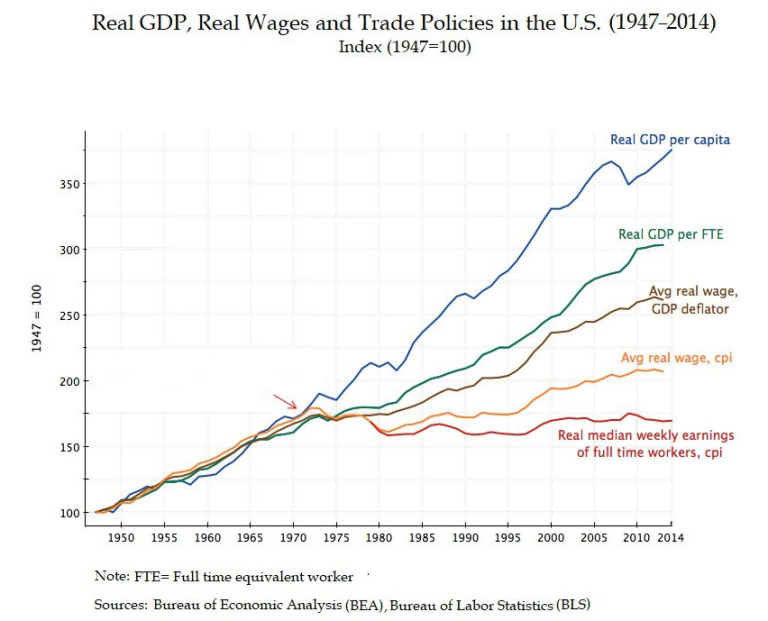
Corruption: A study by Scottish philosopher Sir Alexander Fraser Tytler found that all democracies are doomed to die after about 200 years as the descendents of the founding fathers use their access to wealth and power to form a self-serving and self-perpetuating elite. In the US this decay is well advanced with multiple money-making corruption scandals linked to the Trump family and accusations of routine insider trading that is earing those with proximity to power hundreds of millions of dollars on every announcement the president makes. Insider trading for members of the administration is illegal in the US, but not a single politician or high official has ever been prosecuted. The American dream is dying as the famed social mobility fades away and the rich act with impunity. Society has been split by the growing income inequality. Capital has taken over from labour as the main beneficiary of economic growth and profits to create the 1%, while the middle class is being hollowed out after real incomes have stagnated since the 1970s.
War: the US has been at war for most of its existance, but those conflicts have become bigger and more frequent in the last three decades, stepping up to a new level under Trump. Not only has he used force in Venezuela, Cuba and Iran, but he routinely threatens military action against countries that were once close allies like Canada and Greenland. The US has been already fighting a proxy war with Russia in Ukraine and threatens China over Taiwan.
Multipolar world
As the old order starts to crumble, rather than one dominant centre, the unipolar order is giving way to an increasingly multipolar world - another classic sign of an interregnum.
The idea of a multipolar world is at the core of both Putin and Chinese President Xi Jinping's thinking, as they made clear in a jointly authored 8,000 word essay last year. And in this goal they have already been largely successful as the emerging BRICS bloc becomes increasingly powerful and coordinated. Trade is the glue that holds this new world order together. This is not the emergence of a new hegemon, but a new style of asymmetric diplomacy that is built for a world run on the principle of national self-interest ahead of shared values in an increasingly patchwork world.
It is manifest in the plethora of Global Emerging Markets Institutions being set up to run these relationships, almost all of which exclude the former hegemons. for the Global North, which is becoming increasingly fissiparous as the old order breaks down.
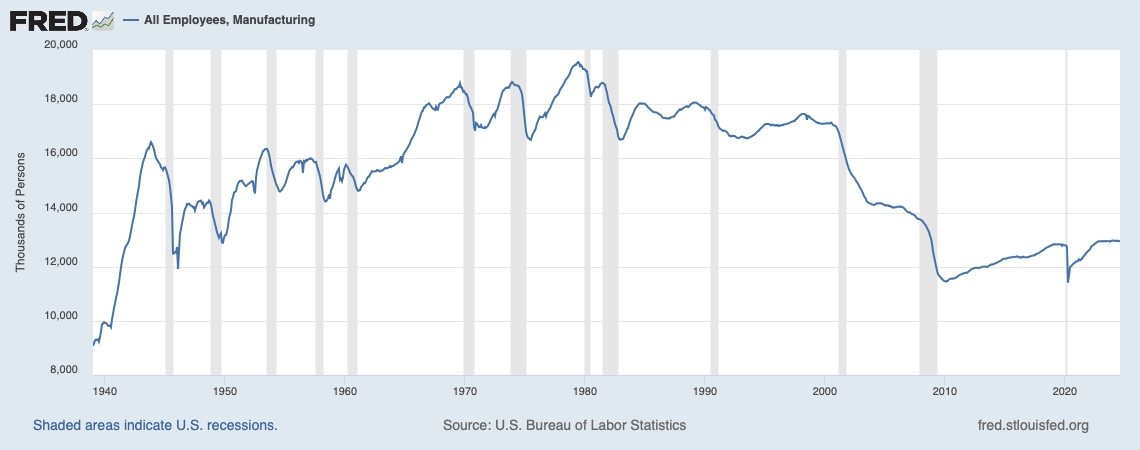
The rise of the rest is driving the change, as the combined GDP of the Global South has already overtaken that of the Global North in PPP (purchasing power parity) terms and will overtake in absolute terms too sometime in the next two decades. China and Russia have become global manufacturing powerhouses, after the Global North exported most of its manufacturing to the new markets – something Trump’s Liberation Day tariffs is belatedly trying to reverse. The old neo-colonialist model – politely rebranded “globalisation” – of capitalising on the wage differential between the North and South is breaking down as the income delta between North and South shrinks.
The great catch up
The United States imports $3 trillion in manufactured goods annually after it exported much of its production overseas as a result of the globalisation boom in the 1990s. That was profitable then. It’s a problem now as the geopolitical and technological landscapes shift. The problem has been made more acute as the US middle class is being hollowed out. Real incomes have stagnated since the 1970s as capital takes over from labour as the main beneficiary of economic growth and rising profits.
The Chinese in particular have embraced new technology and are pouring money into R&D: China is the largest contributor to global patent applications; Chinese patent applications surpassed US applications already in 2010. Sanctions have also forced Russia to innovate and it is catching up with the West in a number of strategic sectors. Conversely, the Draghi report highlighted Europe’s chronic underinvestment into innovation and recommended the EU invest €800bn a year for the next four years just to keep pace with China and the US. That is not happening as all the EU's spare money is going into arming Ukraine.
For the past five centuries, Western economic dominance rested on a simple structural fact: the rest of the world was poor. Low wages in the Global South meant the Global North could export the Global South’s human capital wealth home and enrich its citizens: iPhones assembled in Shenzhen and H&M jeans stitched in Bangladesh are a lot cheaper than those made in factories in Amsterdam or Detroit.
That gap has now closed faster than anyone expected. Speaking at the St Petersburg International Economic Forum in June, Putin said: "The BRICS share of purchasing power parity in global GDP is about 40%. The share of the G7 is less than 29%."
The numbers tell a story that is simultaneously about China's extraordinary rise and about the structural limits of Western growth. The US economy has grown 2.8 times in PPP terms since 2000. China has grown ten times. India has grown ten times. The BRIC bloc as a whole has expanded roughly nine times, starting from a low base — but the base is no longer low.
The BRICS countries accounted for half of annual global GDP growth in 2021-2025, against the G7's 18%. Within that growth total, BRICS contributed 2 percentage points annually against the G7's 0.8 points. And Putin is not making those numbers up. He is citing the IMF.
The combined GDP of the BRICS Plus countries in purchasing power parity terms already overtook of the G7 in 2015 — a crossover that went largely unremarked at the time but which in retrospect marks the structural turning point of the 21st century.
The picture looks very different in nominal dollar terms. The Global North is still well ahead of the South, but given the South’s faster pace of growth, it will take about two more decades for the emerging markets to overtake the developed world in nominal terms too.
Measured at market exchange rates rather than purchasing power parity, the US still towers over every other economy with a nominal GDP of approximately $30.6 trillion in 2025. China, despite its PPP dominance, registers $18.5 trillion in nominal terms — a gap of $12 trillion that reflects the fact that Chinese wages, services and assets are still priced far below their Western equivalents. The EU's aggregate nominal GDP of approximately $19 trillion places it broadly level with China in market-rate terms. India, the world's third-largest PPP economy, has a nominal GDP of around $4.3 trillion — barely a seventh of the US at current exchange rates.
There are still several decades left ahead before the Global South can claim to fully take over the role of hegemon from the Global North.
While it's tempting to assume the next hegemon will be a new Pax Sinica, it is too early to say as there are several contenders and their relations remain fluid. Just amongst the BRICS, China and India are rivals and have been in a low watt war for decades and Russia and China are not natural allies. Yet the essence of the new asymmetrical diplomacy is to put these tensions aside and cooperate on an issue-by-issue basis to promote national interests and cooperate where those overlap with the other members of the Global South in overlapping spheres of influence and shifting alliances.
Changing the money
One of the strongest indicators of a hegemonic era is that the dominant power's currency becomes the preferred medium for international trade, finance, reserves and debt issuance. Interestingly, while military dominance often lasts around a century, reserve currency dominance can persist much longer.
The accelerating de-dollarisation that has already started is one of the clearest indicators that a new interregnum has begun, but the continuing importance of the dollar also shows that the changeover will be a slow process.
Rome's gold aureus became the dominant currency throughout the Mediterranean world. More important than the coin itself was the fact that merchants could trade across thousands of kilometres under a common legal and monetary system. Even after the Western Roman Empire collapsed, the Eastern Roman (Byzantine) gold solidus remained one of the most trusted currencies for centuries.
The Dutch created arguably the first modern international reserve currency. Amsterdam became the centre of global finance, and the Dutch guilder became widely accepted throughout Europe and beyond. Merchants preferred it because Dutch institutions were reliable and Dutch public finances were credible. The pound sterling became the world's first truly global reserve currency. During the nineteenth century almost half of world trade was invoiced in sterling.
What comes after the dollar? History suggests that reserve currencies are replaced only when three conditions are met:
The incumbent power weakens.
A rival economy becomes sufficiently large.
The rival provides financial markets that are deeper, safer and more liquid.
Amongst the challengers to the dollar today, only the euro and the yuan are realistic contenders. China satisfies the second condition but only partially the third. The euro satisfies some financial criteria but lacks a unified fiscal and military state behind it. As a result, the most likely feature of a post-Pax Americana interregnum may not be a replacement reserve currency but a multi-currency system.
And that is more than likely going to be a digital currency. The BRICS have already floated the BRICS Pay coin and all of its members are currently rolling out digital versions of their currencies that they intend to use to settle international trade deals. Russia has even launched an experiment with a gold-backed digital coin as another option and its use of stablecoins in international trade to dodge sanctions is growing fast.
|
Pax Era |
Dominant Currency |
Role |
|
Pax Romana |
Roman aureus, later solidus |
Mediterranean trade and taxation |
|
Pax Mongolica |
No single currency |
Silver, gold and paper money circulated across Eurasia |
|
Pax Portugana |
Portuguese cruzado |
Maritime trade, but regional rather than truly global |
|
Pax Neerlandica |
Dutch guilder |
First genuinely international reserve and trade currency |
|
Pax Britannica |
Pound sterling |
Global reserve currency and unit of trade |
|
Pax Americana |
US dollar |
Global reserve, trade, commodity and financial currency |
|
source: IntelliNews |
||
War in the Gap
Interregna are dangerous periods as major wars are much more likely to happen due to the clash of interests between the incumbent powers and the rising powers. This warning was drummed home by Xi’s warning to Trump during his state visit to Beijing in May “not to fall into the Thucydides Trap”.
The reference is to the classical historian who argued that when a rising power (Athens) meets the incumbent power (Sparta), a war is likely. Xi used the expression in comments warning the US not to interfere with China’s attempt to reunite with Taiwan. It was an explicit, albeit thinly veiled, threat that China was prepared to go to war with the US if Washington blocked China's reunification with Taiwan.
The wars already started with the US refusal to negotiate with Russia over Ukraine’s Nato status that led to the full scale invasion four years ago. But since Trump took over, he has taken the military option with increasing frequency: the decapitation and abduction of Operation Absolute Resolve on January 3 where the US government removed the sitting president of Venezuela Nicolas Maduro; the unprovoked assault on Iran with Operation Epic Fury on February 28; and the naval embargo on Cuba. That is not to mention the threats to Greenland and Canada amongst other belligerent statements. America has become the most dangerous regime in the world, according to several recent polls including the global Democracy perception index.
The classic example is the transition from Pax Britannica to Pax Americana. Britain remained powerful but could no longer dominate the international system or maintain its empire. Germany was rising rapidly, Russia was modernising, Japan was emerging as a regional power, India led by Gandhi wanted independence, and the United States had not yet assumed global leadership. The result was a 31-year interregnum (1914-1945) that included the two deadliest wars in human history and the Great Depression.
The Dutch-British transition was less catastrophic but still involved roughly a century of conflict, including the Anglo-Dutch Wars, the War of the Spanish Succession, the Seven Years' War, the American War of Independence and the Napoleonic Wars. In effect, Europe spent much of the eighteenth century determining who would dominate the nineteenth.
That said, today's world differs from previous transitions in one crucial respect: nuclear weapons. The Ukraine war has shown very clearly that a great power with nukes will not be attacked by other great powers, making great power direct clashes much less likely. But as IntelliNews has argued, it will also promote nuclear proliferation.
That is already starting to happen. The nine nuclear states are walking away from disarmament commitments amid heightened escalation dangers, the Stockholm International Peace Research Institute (SIPRI) warned in its latest report, after decades of demobilisation efforts.
“The evidence is growing that the nuclear weapon states are sidelining, and even walking away from, their disarmament commitments and are instead flexing their nuclear muscles,” said SIPRI researcher Hans Kristensen.
Russia and the US remain the overwhelming nuclear powers, together possessing an estimated 83% of warheads available for military use and nearly 86% of all nuclear weapons globally. Bizarrely, Trump has refused to counter this growing threat by allowing the last of the Cold War missile treaties to expire in February, greatly increasing the chance of a new arms race.
In place of a new WWIII, what is more likely in this interregnum is more proxy wars, economic warfare, tariffs and sanctions, cyber-attacks, technological competition and regional conflicts. In a modern interregnum, likely hot spots are the South China Sea, Taiwan, Eastern Europe, the Middle East or the Arctic rather than through direct clashes between great powers.
The greatest danger in an interregnum is not simply that a rising power becomes stronger. It is that the rules become unclear, alliances become fluid, and states increasingly misjudge one another's intentions. Most major wars in history have occurred not when one power was clearly dominant, but when several powers believed they had a chance to reshape the international order.
The IntelliNews PRO service includes access to reports, exclusive market data, and more news that decision-makers care about. Stay ahead of the market with IntelliNews PRO.
Sign Up Now
_Cropped-2_1788892143.jpg)

_4_1788863025.jpg)
