
_0_1780930643.jpg)


Quarrel in Turkey as prosecutors go after 95-year-old Rahmi Koc for derogatory joke
51 minutes ago
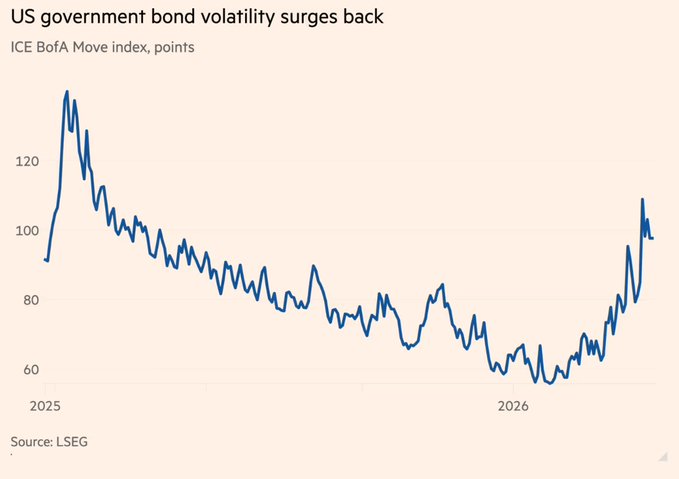
The $30 trillion US Treasury market is exhibiting mounting signs of stress as geopolitical tensions in the Middle East trigger heightened volatility in government bonds that underpin the global financial system.
Mohamed A. El-Erian, chief economic adviser at Allianz, wrote in a recent Financial Times comment that market conditions are deteriorating.
“The $30 trillion US Treasury market is showing growing signs of strain, as turmoil in the Middle East drives swings in bonds that underpin the financial system. The ease of trading in the world’s biggest and most important financial market has deteriorated in recent weeks.”
The US Treasury market, widely regarded as the bedrock of global finance, plays a critical role in pricing assets worldwide, from corporate debt to equities and mortgages. Any disruption to its smooth functioning raises concerns about broader financial stability.
Recent volatility has been driven in part by investor reactions to escalating geopolitical risks, which have prompted abrupt shifts in demand for safe-haven assets. Market participants have reported wider bid-ask spreads and reduced liquidity, making it more costly and difficult to execute large trades without affecting prices.
As bne IntelliNews reported, the BRICS countries were already selling off their T-bill holdings and that process accelerated since the US weaponised the dollar by freezing Russia’s central bank reserves in 2022, but took another step down after the Trump administration launched its Liberation Day tariffs last year. The shock of starting a major war in arguably the most geopolitically sensitive region in the world is expected to push that process even faster.
The pressure on the market comes at a time when the market was already adjusting to a higher interest rate environment and increased issuance of US government debt to fund an external debt that recently passed the $39 trillion-mark – its highest level ever. The cost of servicing US debt overtook defence spending this year, although that may climb this year. The US has already spent an estimated $200bn on the Iran campaign in just the first two weeks of the war and Congress is petitioning for another $500bn of funding. The US has already spent twice as much on Iran in two weeks as it has spent on the Ukraine war in four years.
With bond prices falling and yields rising, the deterioration in liquidity has revived longstanding concerns among regulators about the resilience of the Treasury market. Previous episodes, including the market dislocation in March 2020, prompted calls for structural reforms to improve transparency and trading capacity.
Investors and policymakers are now closely monitoring whether current strains remain contained or evolve into more persistent dysfunction. In related pessimistic news, Deutsche Bank argued in a note this week that the Iran war is a “perfect storm for the petrodollar” as amongst the many unintended consequences is countries will now accelerate their transition into green energy that will reduce demand for dollars, and the oil trade between the Gulf and Asia may be increasingly settled in currencies other than dollars if Iran retains complete control over the Strait of Hormuz. Oil sanctions on Russia have created a large and growing oil market that is settled primarily in yuan, as well as the national currencies of its other trading partners.
The IntelliNews PRO service includes access to reports, exclusive market data, and more news that decision-makers care about. Stay ahead of the market with IntelliNews PRO.
Sign Up Now

_0_1780931295.jpg)

