


Kazakhstan's manufacturing remained under pressure in May, PMI data shows
1 day ago
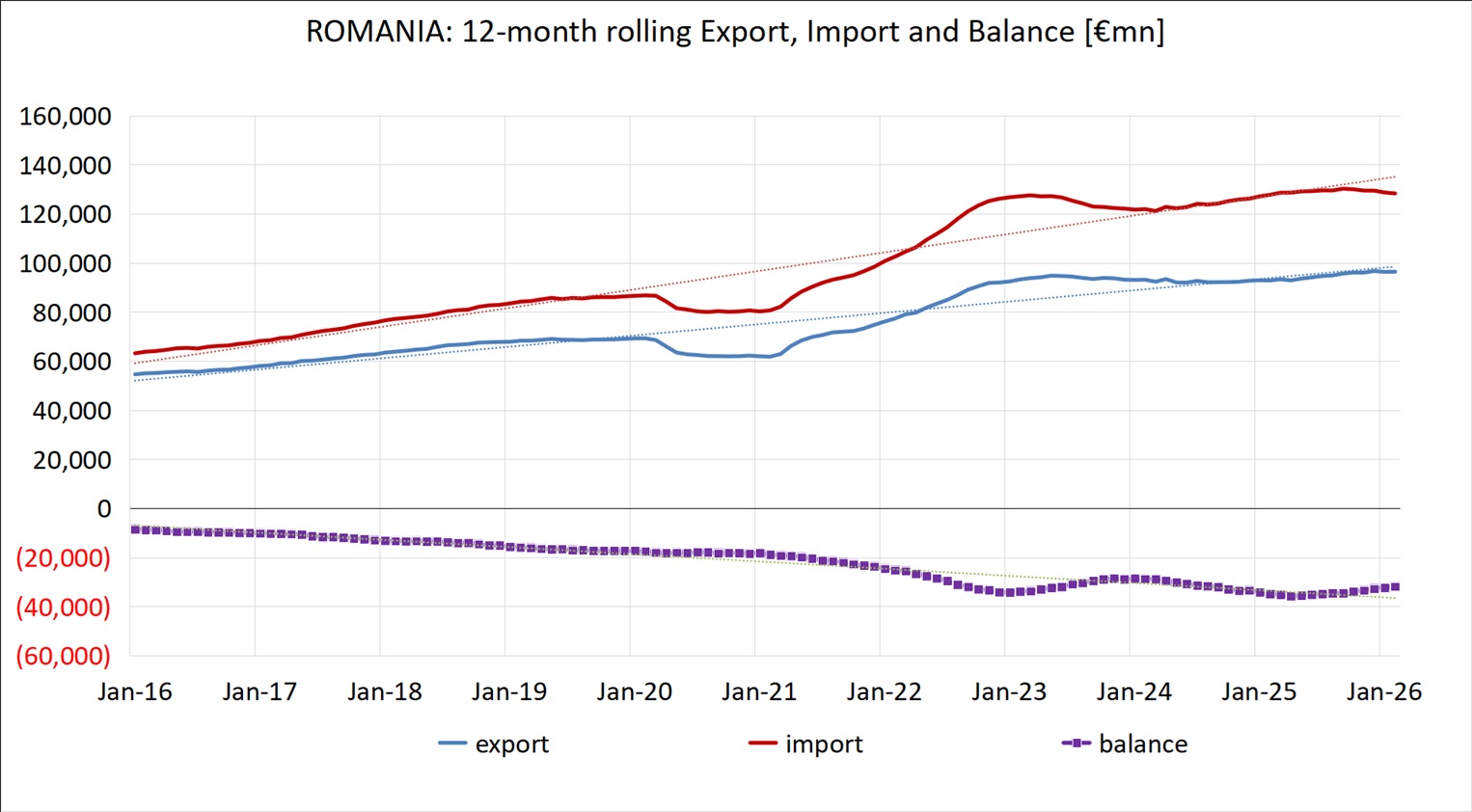
Romania’s trade deficit (chart) continued to shrink in early 2026, reflecting subdued domestic demand and the effects of ongoing fiscal consolidation, according to data published by the national statistics office INS.
In February, the trade deficit narrowed by 17% year-on-year (y/y) to €2.41bn. Exports rose modestly by 1.1% y/y to €7.97bn, while imports declined by 3.6% y/y to €10.38bn, indicating that the adjustment is primarily driven by weaker import demand.
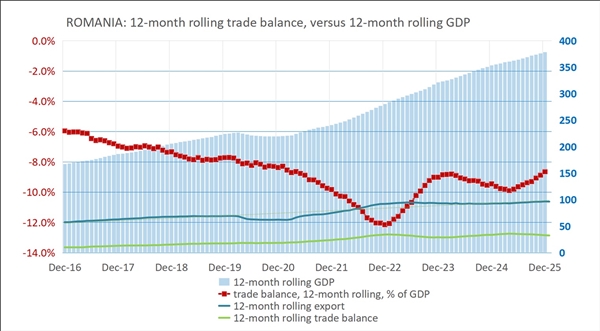
This marks the tenth consecutive month of improvement in Romania’s trade balance. The rolling 12-month deficit has declined by 10.8% y/y to €31.7bn, down from a peak of €35.7bn (9.9% of GDP) recorded in April 2025. The deficit-to-GDP ratio has also been on a downward path, easing from 8.7% as of December 2025, the latest available benchmark.
Authorities expect this trend to continue throughout 2026. According to the latest projections from the National Commission for Strategy and Prognosis (CNP), the trade deficit is set to contract in nominal terms this year, while the current account deficit is forecast to narrow more visibly—from around 8.8% of GDP in 2025 to 6.6% in 2026. The adjustment is largely attributed to fiscal tightening and persistently weak private consumption.
Romania’s external imbalance had widened steadily over the past decade, peaking during the 2022 energy shock triggered by the war in Ukraine, when the trade deficit reached around 12% of GDP (chart). A partial correction followed in 2023 amid lower energy prices and weaker economic activity, but imbalances widened again until early 2025.
Since April 2025, however, the trend has reversed. Imports have been contracting due to softer domestic demand (lower incomes, tighter budget deficit), while exports have continued to grow modestly in nominal terms. The rolling 12-month exports increased by 3.8% from April 2025 to February 2026, when they reached €96.3bn, while the exports-to-GDP ratio declined from some 25.7% to roughly 25.5% (subject to GDP update) due to GDP dynamics.
Imports, by contrast, edged down in nominal terms (-0.3% to €128.2bn) over the same period, contributing to a sharper improvement in the import-to-GDP ratio—from 35.6% in April 2025 to approximately 33.9% in February 2026.

The IntelliNews PRO service includes access to reports, exclusive market data, and more news that decision-makers care about. Stay ahead of the market with IntelliNews PRO.
Sign Up Now


