
Riot police deployed tear gas near Tehran's Aladdin mobile phone complex on December 29 as protests by traders and shopkeepers stretched into a second day, spreading across central districts whilst the rial continued its precipitous slide and the government confirmed Central Bank Governor Mohammadreza Farzin's departure.
The simultaneous eruption of street unrest and a sudden leadership vacuum at the Central Bank has exposed the severity of Iran's economic distress, with currency volatility escalating from inflationary pressure into a systemic breakdown.
Alleged footage captured tear gas canisters being fired at demonstrators outside the Aladdin mall on Jomhouri Street, which has become the focal point of unrest since December 28.
Crowds can be seen protesting outside the British embassy complex on Ferdowsi Street in the latest round of protests heading northwards towards Ferdowsi Square, a main focal point of forex trading in the city.
Shopkeepers once again shuttered their premises near Hafez Bridge and the Charsou Shopping Complex, chanting against soaring prices and calling for wider closures, some videos allegedly have men chanting for the former regime of the Shah in what has now become a sign of protest against the cackhanded nature of economic control in the Islamic Republic.
Police dispersed crowds after several hours, though no official casualty figures have been recorded, if any, as the feeling of sheer exhaustion from the collapsing rial in recent weeks has now manifested on the faces of shopkeepers.
As tensions mounted on the streets, Mohammad Mehdi Tabatabaei, deputy head of communications at the president's office, confirmed that Farzin's resignation had been accepted. Writing on X (once Twitter), he announced that President Masoud Pezeshkian had appointed Abdolnaser Hemmati as the new Central Bank governor.
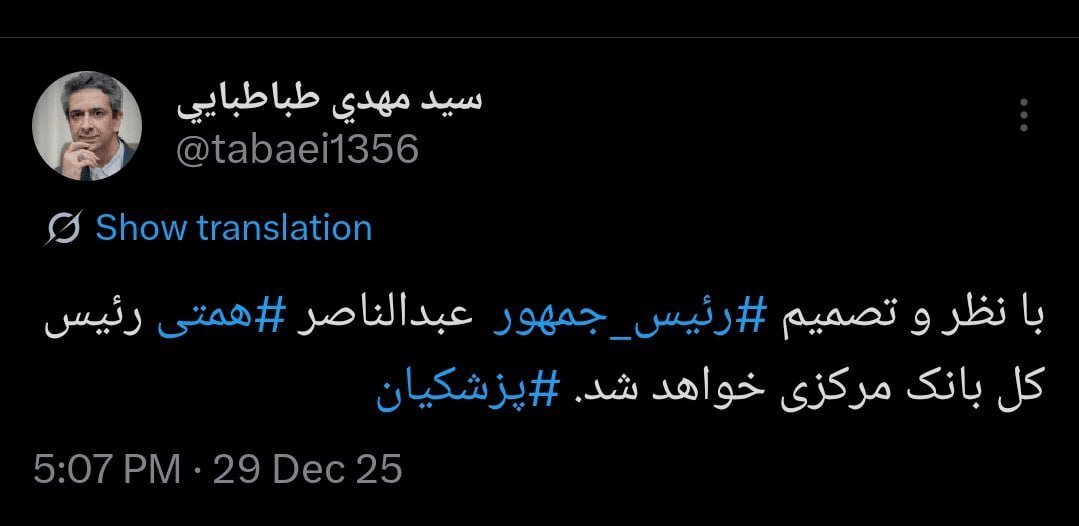
The appointment ended days of speculation over the fate of the embattled central bank leadership, following sharp swings in both currency and gold markets.
Tabatabaei sought to downplay the move as a panacea, stating that exchange-rate control did not "necessarily" hinge on changing the central bank governor.
He attributed part of the turbulence to market "excitement" and said the government was preparing a comprehensive currency and livelihood package to restore calm—though the leadership change itself suggested a broader reset in economic management.
Earlier, Ali Akbar Pourjamshidian, Iran's deputy interior minister for security affairs, warned of a "psychological war in the currency market", accusing hostile actors of exploiting public anxiety. He urged citizens to remain calm and insisted the state was determined to stabilise conditions.
The open-market dollar surged past IRR1.44mn on December 28, up sharply from levels seen just weeks ago, pushing imported goods and gold to record highs. Traders say intraday swings have rendered pricing impossible.
"We can neither buy nor sell," said one mobile phone retailer near Charsou Mall.
"This isn't about margins anymore. It's paralysis." The sense of desperation was palpable across Tehran's commercial districts, where the usual bustle of trade had given way to shuttered storefronts and anxious conversations.
Demonstrations on December 29 appeared broader and more dispersed than the previous day, with gatherings reported along Jomhuri Street and adjacent commercial zones.
While economic slogans dominated, some videos captured overtly political chants, marking a hardening of tone, unnerving authorities, and probably triggering PTSD for both sides.
The Islamic Revolutionary Guard Corps (IRGC) intensified pressure with a statement warning of attempts to "reproduce sedition" through cognitive warfare and psychological operations. The statement, issued on December 29, coincided with the anniversary of the state-backed rallies that ended the 2009 post-election protests.
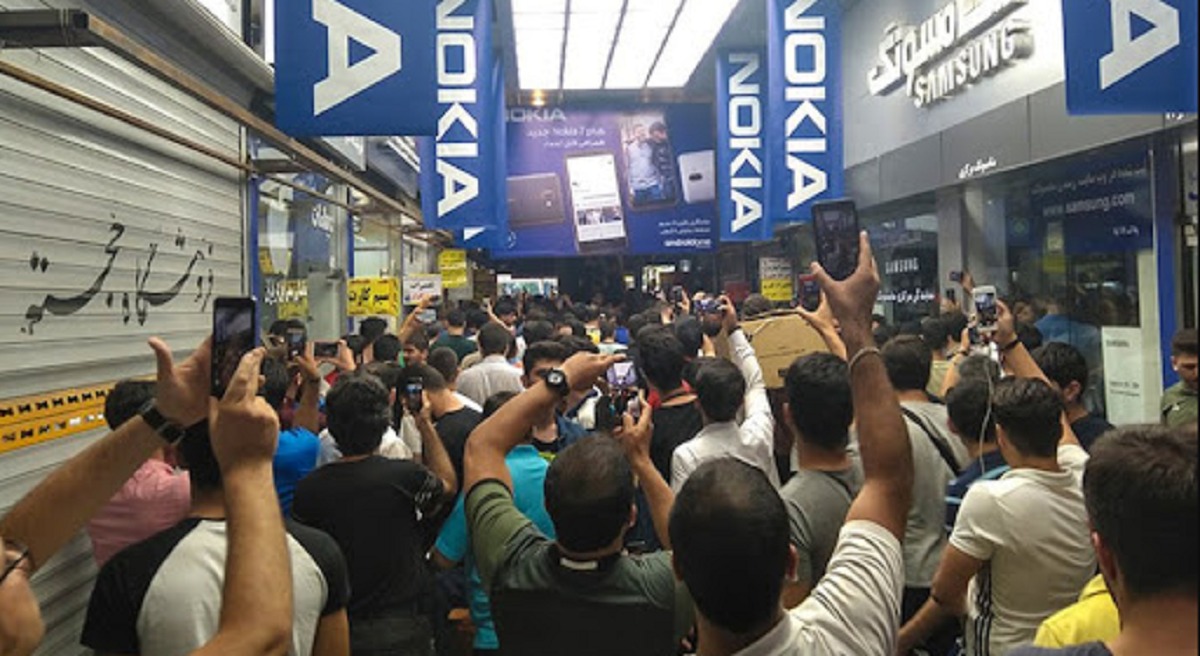
As Bne IntelliNews can confirm, misinformation has also been rife in recent hours, with photos from 2015 protests appearing as if they were taken in the past 24 hours. Through internal investigations, it was concluded that they were not recent (see below).
The judiciary followed suit, with Chief Justice Gholamhossein Mohseni Ejei vowing "decisive and deterrent" action against currency hoarders, market disrupters and any officials colluding with them.
By late afternoon, police had cleared key junctions, though shop closures persisted across parts of Tehran's electronics market. With the central bank leadership in flux and the currency still sliding, traders voiced little confidence in near-term stabilisation. "They talk about psychology," said one shopkeeper.
"But the numbers decide everything." That sentiment seemed to capture the mood across the capital—a weary resignation that official reassurances mean little when the economic fundamentals remain in freefall.
As protests spread across Tehran's commercial districts, Iranians have been sharing their frustrations online and in conversations captured over the past two days. The comments reveal a deep sense of betrayal, economic desperation, and anger at what many see as deliberate mismanagement.
"When we sit down and look at the situation ourselves, we expect others to do the same," said Arash, reflecting a widespread sentiment that the authorities have lost touch with reality on the ground.
The anger runs deeper for many. "We lost our lives to the great lie of the revolution and the revolutionaries," said one anonymous commenter, whilst another declared simply: " God, God, the people were deceived. Islamic revolution, ha!"
Hassan offered a more analytical view, suggesting the crisis was entirely predictable. " God, even an illiterate person could recognise that this way of managing the country's economy would lead to protests. They kept making the dollar more expensive and didn't pull the brake, until it made people rebellious and dragged them into the streets. Otherwise, if there was economic stability, people would never have come out onto the streets."
The sense that the government orchestrated its own crisis was echoed by another voice: "As everyone knows, the Central Bank and the government are responsible for the increase in the exchange rate. Out of fear of protests, they were forced to reduce it by five thousand tomans in one day. The nation will not sit quietly while calamity befalls them."
For many, the crisis has become deeply personal. "People's fridges are empty," said one commenter bluntly. Another asked: "Why do the government and regime expect people not to protest against the government's income from the currency market, collecting liquidity and filling its accounts from the pockets of the nation?"
Perhaps most tellingly, one Iranian questioned the entire ideological foundation of the state's foreign policy: "I don't know why the officials of the regime think they were sent by God to help the religion of Islam? Who said our enmity with Israel is over religion? No, it's over stubbornness. They are Jewish, America is Christian, Iran is Muslim. We don't have a religious war."
Don’t just follow the news—understand it.
The IntelliNews PRO service includes access to reports, exclusive market data, and more news that decision-makers care about. Stay ahead of the market with IntelliNews PRO.
Sign Up Now_0_1780491662.jpg)
_1780493038.jpg)
_0_1780421343.jpg)