


Vietnam's VN-Index slides below 1,700 points on energy rout
1 day ago

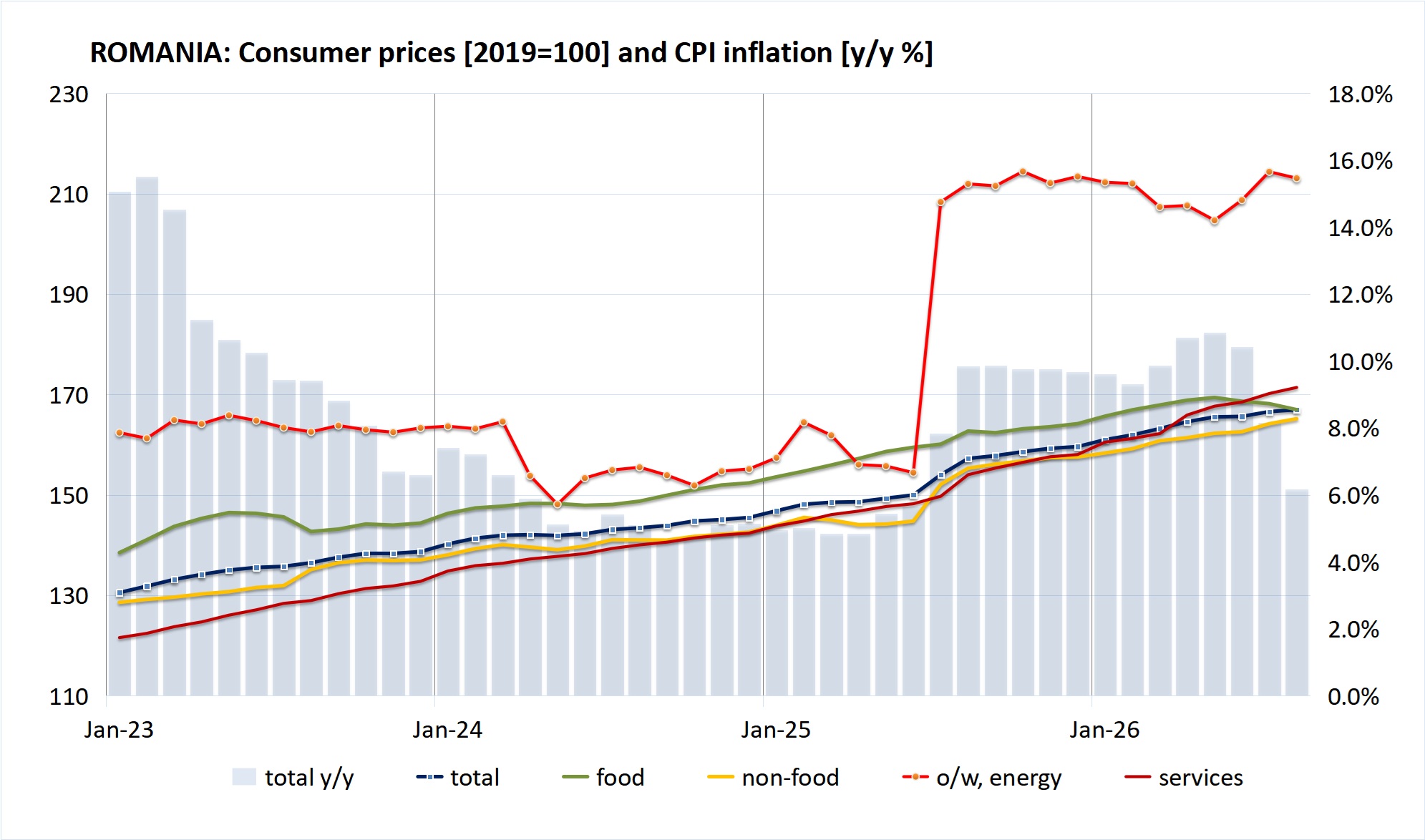
Romania’s annual inflation rate (chart) fell by 2 percentage points to 6.2% in August from 8.2% in July, mainly reflecting base effects from the VAT rate increase in August 2025, according to data from the National Institute of Statistics (INS).
The larger-than-expected decline (Bloomberg consensus median was 6.6% y/y) prompted Erste Research to lower its year-end inflation forecast to 6.4% from 6.9% previously. The National Bank of Romania’s latest projection, published in August, before the deterioration on the electricity market, puts year-end inflation at 6.1%.
Food prices fell for a third consecutive month, rising a mere 2.6% y/y in August. Non-food prices increased 6.4% y/y, including a 1.4 percentage point contribution from higher fuel prices. Excluding the impact of the Middle East war on petroleum products, non-food inflation would thus have been 5.0%.
Services recorded the strongest price growth, at 11.3% y/y, driven in part by rents, which increased 40%, reflecting higher rents charged by municipalities for residential properties. Utility prices rose 14% y/y.
Core inflation, measured by the central bank’s CORE2 indicator, also eased to 6.2% y/y in August, below the central bank’s 6.5% monetary policy rate.
Erste expects the policy rate to remain at 6.5% until May 2027 as supply-side inflationary pressures from the electricity market are expected to slow the disinflation process towards the end of this year. But “if inflation falls significantly below the key rate, a February rate cut could still be in play,” the financial group said.
Headline inflation remains above the 5.7% recorded in June 2025, before the electricity price liberalisation and VAT increase triggered last year’s inflation shock. Higher fuel prices, which rose 17% y/y in August, accounted for 1.4 percentage points of headline inflation.
Without the petroleum products shock, headline inflation would thus have been around 5.2% in August, below the June 2025 level and reflecting weaker demand. The central bank expects inflation at 3.4% at end-2027, while Erste forecasts 4.3%.
The IntelliNews PRO service includes access to reports, exclusive market data, and more news that decision-makers care about. Stay ahead of the market with IntelliNews PRO.
Sign Up Now


